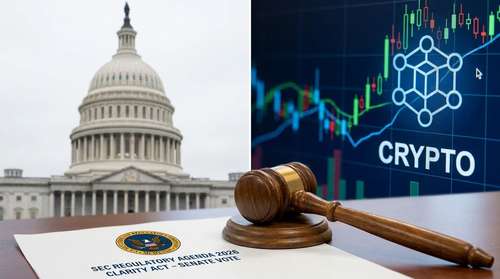
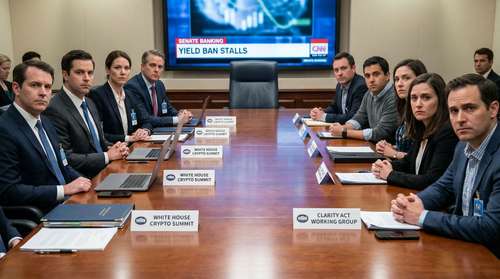
Negotiations for the landmark Digital Asset Market Clarity Act (CLARITY Act) hit a critical wall this week, leaving US crypto regulation 2026 in limbo. A high-stakes summit at the White House on February 10, intended to broker a truce between Wall Street giants and crypto innovators, ended in a deadlock. The sticking point? A fierce, ideological battle over stablecoin yield programs that has effectively split the financial sector into warring factions.
The "Civil War": Banks vs. Crypto Yields
The impasse stems from a fundamental disagreement over the nature of stablecoins. Traditional banking institutions, represented by leaders from JPMorgan, Bank of America, and Wells Fargo, arrived at the summit with a document outlining strict "prohibition principles." Their core argument is that high-interest crypto products—often offering yields of 3-5% or more—pose an existential threat to the stability of insured bank deposits.
Bank lobbyists warned administration officials that allowing stablecoin issuers to pass yield on to customers would incentivize a massive "deposit flight" from community and regional banks, potentially destabilizing the broader credit system. They are demanding a blanket stablecoin yield ban in the final text of the bill.
On the other side of the table, executives from Coinbase, Circle, and Ripple argued that such a ban would stifle American innovation and hand the competitive advantage to offshore jurisdictions. Dan Spuller, Executive Vice-President of the Blockchain Association, characterized the banks' stance as non-negotiable, stating they "did not come to negotiate" but rather to enforce a blockade on financial modernization.
Senate Banking Committee in the Crossfire
The breakdown in talks places the Senate Banking Committee in a precarious position. Committee Chair Tim Scott (R-S.C.), who has been pushing to get the CLARITY Act to a floor vote before the spring legislative window closes, now faces a fractured coalition. The bill, which passed the House in July 2025, was seen as the best chance to codify US crypto regulation 2026, but the yield controversy has poisoned the bipartisan well.
Treasury Secretary Scott Bessent has reportedly intervened, urging lawmakers to find a compromise. Bessent emphasized that legal certainty is "essential" for the U.S. to remain a global leader in digital finance. However, with Coinbase recently withdrawing its support for the draft legislation due to the proposed yield restrictions, the path forward is increasingly narrow.
The Innovation vs. Safety Dilemma
For lawmakers, the choice is stark. Siding with the banks ensures the safety of the traditional crypto vs banking sector dynamic but risks alienating the burgeoning digital asset industry. Siding with crypto firms could modernize the financial stack but invites systemic risks that regulators are desperate to avoid.
What This Means for the CLARITY Act
As it stands, the Digital Asset Market Clarity Act is stalled. Without a compromise on the yield issue, the bill risks dying in committee as the 2026 midterm election cycle heats up. Political analysts suggest that if the deadlock isn't broken by the end of February, comprehensive crypto legislation may be off the table until 2027.
For investors and industry participants, the message from the White House crypto meeting is clear: the "civil war" between traditional finance and the crypto economy is far from over, and the regulatory clarity everyone craves is being held hostage by the crossfire.