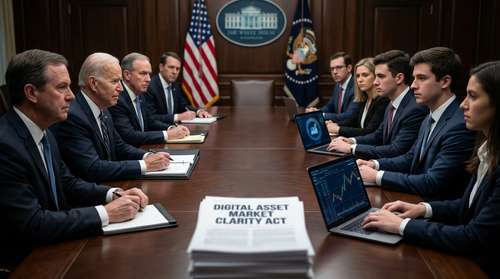
A high-stakes, closed-door meeting at the White House erupted into a fierce confrontation on Wednesday, exposing the deepening fracture between traditional banking powerhouses and the cryptocurrency industry. Leaked details from the February 11, 2026 session reveal that the Biden-Trump transition team—or rather, the current administration's economic council—issued a stern ultimatum to feuding lobbyists: break the legislative impasse on the Digital Asset Market Clarity Act by the end of February, or face a White House-imposed solution. With the Senate Agriculture Committee having just advanced the Digital Commodity Intermediaries Act (DCIA), the pressure is now squarely on the Senate Banking Committee to deliver its half of the regulatory framework.
The White House Crypto Meeting: An Ultimatum for Industry Leaders
Sources familiar with the White House crypto meeting describe the atmosphere as "combative" and "tense." Treasury Secretary Scott Bessent reportedly convened top executives from major U.S. banks and leading crypto exchanges to bridge the divide that has stalled the broader U.S. crypto regulation 2026 agenda. The core of the dispute lies in the stalled Digital Asset Market Clarity Act, a comprehensive bill designed to complement the GENIUS Act (passed in mid-2025) by establishing clear market structures for digital assets.
According to leaked notes, Administration officials expressed frustration that while the "commodity" side of the equation is moving forward, the "banking" and "security" components remain paralyzed. "The message was clear," said one K Street lobbyist present at the meeting. "The White House views the current deadlock as a national security vulnerability. If the industry can't agree on a stablecoin regulatory framework that protects the banking sector without stifling innovation, the Administration will intervene via executive order."
Senate Ag Advances Digital Commodity Intermediaries Act
The White House's urgency follows a major legislative breakthrough earlier this month. The Senate Agriculture Committee, led by Chairman John Boozman (R-AR), successfully advanced the Digital Commodity Intermediaries Act (DCIA) on a party-line vote. This bill (S. 3755) is a critical piece of the puzzle, as it grants the Commodity Futures Trading Commission (CFTC) primary oversight over "digital commodities" like Bitcoin and Ethereum, creating a registration regime for brokers and trading facilities.
However, the DCIA is only half the battle. Without the accompanying banking legislation, the regulatory landscape remains lopsided. The DCIA creates a "spot market" regulator for commodities, but it does not address the complex interplay between crypto assets and the traditional banking system—a gap that the stalled Clarity Act is supposed to fill. The advancing of the DCIA has effectively cornered the banking lobby, forcing them to the negotiating table under less-than-favorable terms.
Banking vs Crypto Lobby: The Battle for Deposits
The heart of the banking vs crypto lobby war is not about technology, but liquidity. Traditional banks are increasingly alarmed by the provisions in the proposed Clarity Act that would allow non-bank stablecoin issuers to offer yield-bearing products. Banking lobbyists argued at the White House meeting that such a framework would create "narrow banks" that siphon deposits away from community banks, potentially destabilizing the fractional reserve lending system.
On the other side, crypto advocates argue that restricting stablecoin yields stifles American competitiveness. "You cannot have a digital economy if you neuter the digital dollar," a representative for a major crypto exchange reportedly told officials. The stablecoin regulatory framework remains the stickiest point of the negotiation. While the GENIUS Act set reserve requirements for issuers, the Clarity Act must decide how these assets interact with the broader financial system—a decision that will determine winners and losers in the trillon-dollar payment market.
SEC vs CFTC Crypto Jurisdiction: The "Bright Line" Debate
Beneath the lobbying frenzy is the persistent bureaucratic tug-of-war regarding SEC vs CFTC crypto jurisdiction. The Clarity Act aims to draw a "bright line" test to determine when a digital asset transitions from a security (SEC oversight) to a commodity (CFTC oversight). The current draft proposes a decentralization test, which the SEC—under the guidance of its new leadership—has been hesitant to fully endorse without stricter consumer protection guardrails.
The leaked meeting details suggest the White House is siding with a clearer, more statutory division of power to end the era of "regulation by enforcement." The Administration appears ready to back the "innovation exemption" proposed in the Clarity Act, which would allow projects a grace period to decentralize before facing full securities registration. This stance has emboldened crypto proponents but alienated some institutional banking allies who prefer the SEC's more conservative approach.
Outlook for U.S. Crypto Regulation 2026
As the end-of-February deadline looms, the trajectory of U.S. crypto regulation 2026 hangs in the balance. If the Senate Banking Committee fails to mark up the Digital Asset Market Clarity Act, the Senate Majority Leader may attempt to bring the DCIA to the floor as a standalone bill—a move that would leave significant regulatory gaps. However, the White House's aggressive intervention suggests a compromise is the most likely outcome.
For investors and industry participants, the message is undeniable: the days of regulatory limbo are numbered. Whether through a bipartisan legislative package or aggressive executive action, the rules of the road are being paved right now. The question remains whether the final framework will be a bridge to the future of finance or a barrier protecting the incumbents of the past.