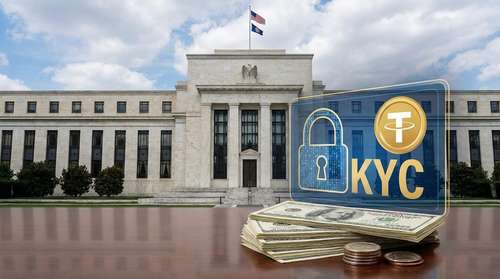

Washington, D.C. — The cryptocurrency market is facing its most significant correction of 2026, with Bitcoin plummeting below the critical $67,000 mark and Ethereum struggling to maintain the $2,000 psychological support level. The sharp sell-off follows a high-stakes deadlock at the White House on Tuesday regarding stablecoin legislation, compounded by an indefinite delay in the markup of the Digital Asset Market Clarity Act in the Senate Banking Committee. As regulatory uncertainty grips Capitol Hill, institutional confidence has waned, triggering a broader digital asset liquidation.
White House Stablecoin Talks End in Deadlock
A highly anticipated meeting convened by the White House on February 10 failed to break the legislative logjam between major U.S. banks and the cryptocurrency industry. The closed-door session, facilitated by Patrick Witt, Executive Director of the President's Council of Advisors on Digital Assets, was intended to hammer out a compromise on the contentious issue of stablecoin yields.
According to sources familiar with the discussions, the talks collapsed after banking representatives—including executives from JPMorgan and Bank of America—held firm on their demand for a complete ban on yield-bearing stablecoins. Traditional financial institutions argue that allowing non-bank entities to offer interest-like rewards on dollar-pegged assets constitutes "shadow banking" and poses a systemic risk to the $500 billion deposit base they forecast could migrate to stablecoins by 2028.
Conversely, industry leaders from Coinbase, Circle, and the Blockchain Association argued that a yield ban would stifle American financial innovation and drive the market offshore. With no compromise reached, the White House’s deadline for a legislative framework by late February now appears unattainable, leaving the fate of the broader regulatory package in limbo.
Senate Delays Digital Asset Market Clarity Act
The market turmoil was further exacerbated by news from Capitol Hill that the Republican-led Senate Banking Committee has indefinitely delayed the markup of the Digital Asset Market Clarity Act (CLARITY Act). The comprehensive bill, which passed the House in July 2025, was seen as the industry's best hope for regulatory certainty this year.
The delay comes after key industry players publicly withdrew their support for the bill's latest draft, which had been amended to include the strict "no-yield" provisions favored by the banking lobby. "The momentum behind the Clarity Act has effectively evaporated," said a senior policy analyst. "Without industry buy-in on the stablecoin components, the entire market structure bill is stuck."
This legislative paralysis leaves the Commodity Futures Trading Commission (CFTC) and the SEC without the clear jurisdictional boundaries promised by the act, prolonging the enforcement-heavy environment that companies had hoped to escape in 2026.
Bitcoin Price Crash 2026: Technical Levels Under Siege
The regulatory double-whammy sent immediate shockwaves through trading desks. Bitcoin price crash 2026 became a trending search topic as the asset broke through the $68,400 support zone, tumbling to test the $67,000 level. Technical analysts warn that a confirmed daily close below this threshold could open the floodgates for a deeper correction toward $60,000 or even $54,000.
"We are seeing a classic 'risk-off' rotation," explained a lead analyst at a major digital asset fund. "Institutional investors, who were banking on the Clarity Act to provide a safe harbor for entry, are de-risking. The institutional crypto market outlook has shifted from 'cautiously optimistic' to 'wait-and-see' overnight."
Ethereum Support Levels and Altcoin Bleeding
Ethereum (ETH) has not been spared, currently hovering precariously at the $2,000 support line. The asset has formed a bearish technical structure on the weekly charts, with analysts eyeing $1,800 as the next line of defense if the Ethereum support levels at $2,000 fail to hold.
Data from on-chain analytics firms shows a spike in exchange inflows for ETH, suggesting that long-term holders may be preparing to sell. The lack of clarity on whether staking rewards will be classified as securities under the stalled legislation continues to weigh heavily on the asset's valuation.
Incoming Fed Chair’s Role
Market participants are now looking toward incoming Federal Reserve Chair Kevin Warsh for any signs of relief. While Warsh has advocated for a new Fed-Treasury accord to improve market liquidity, his stance on the stablecoin yield dispute remains a wildcard. Until Washington provides concrete crypto regulatory news today that points toward a resolution, volatility is expected to remain the market's only constant.