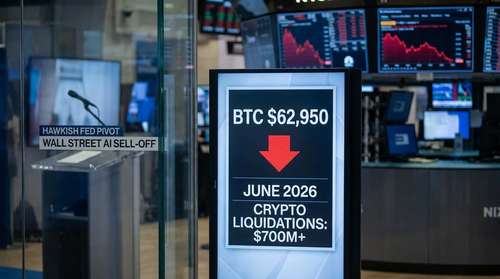

The cryptocurrency ecosystem is facing its first major hurdle of the spring. Following a historic, record-breaking rally in April, a sharp Bitcoin price rejection has sent immediate shockwaves through the digital asset landscape. After repeatedly testing the highly anticipated $80,000 psychological barrier over the past 48 hours, the flagship cryptocurrency has rapidly retreated below the $78,000 mark. This sudden pullback is being driven by a potent mix of heightening global geopolitical tensions and a surprising reversal in institutional sentiment. For traders and retail investors alike, the failure to breach this critical milestone raises serious questions about the longevity of the current bullish momentum.
Spot Bitcoin ETF Outflows Signal Shifting Momentum
Wall Street's seemingly insatiable appetite for digital assets appears to be taking a calculated pause. For the first time since late April, the financial market has recorded consecutive days of spot Bitcoin ETF outflows, marking a significant shift in institutional behavior. During the historic April surge, institutional capital flowed freely into these regulated financial products, creating massive upward price pressure. However, as Bitcoin approached uncharted territory, strategic profit-taking quickly became the dominant strategy among fund managers.
The resulting crypto market correction highlights a temporary cooling in institutional crypto demand. Major portfolio managers are actively de-risking their overarching positions, moving capital to the sidelines as they wait for clearer macroeconomic signals. This institutional hesitation right at the top of the trading range demonstrates that even the most well-capitalized Wall Street players remain highly cautious about overextending their cryptocurrency exposure during periods of elevated market volatility.
Geopolitical Uncertainty Weighs on Risk Assets
The broader macroeconomic landscape is heavily influencing the latest cryptocurrency market news. Heightening geopolitical tensions across key global regions have spooked traditional and alternative financial markets alike. When international stability feels threatened, institutional investors instinctively flee from "risk-on" assets to secure capital. Bitcoin, despite its long-term narrative as a decentralized global safe haven, is still trading very much like a high-beta technology stock in the short-term market environment.
The rising uncertainty has prompted a broader sell-off in global equities over the last 48 hours, and digital assets have not been spared from the contagion. Institutional investors and retail traders are currently prioritizing capital preservation over speculative market gains. This distinct risk-off environment created the perfect storm for a localized top, effectively capping the buying pressure needed to sustain the April rally and pushing the digital asset back into a prolonged consolidation phase.
Analyzing the 80k Resistance Level
From a purely technical perspective, the 80k resistance level has proven to be a formidable psychological and structural barrier. Market order books across major exchanges showed massive clusters of retail and institutional sell limits stacked tightly between $79,500 and $80,000. When the price action approached this massive supply zone, buyers simply lacked the sheer volume and momentum required to absorb the overwhelming selling pressure.
The Impact of Derivatives and Liquidations
Beyond the spot market selling, the complex derivatives sector played a major role in accelerating the downside price action. The open interest in Bitcoin futures had reached record highs just days prior. When the price failed to decisively break $80,000, funding rates remained unsustainably elevated. The initial dip below $79,000 triggered a cascading wave of leveraged long liquidations, forcing automated sell orders into an already weakening market structure. This sudden flush-out of leverage is a textbook characteristic of a standard market correction, successfully resetting funding rates back to healthy baseline levels and removing excessive speculative froth from the trading system.
Bitcoin Price Prediction 2026: Looking Ahead
As the dust settles on this latest volatile market movement, traders are urgently re-evaluating their allocation strategies for the remainder of the year. Any credible Bitcoin price prediction 2026 must now carefully account for this newly established heavy supply zone at $80,000. While the immediate short-term outlook suggests a period of choppy, sideways consolidation, the underlying fundamentals of the blockchain network remain incredibly robust.
A healthy, volume-backed correction after an explosive multi-month rally is standard financial market behavior, allowing over-leveraged positions to wash out entirely so new support bases can successfully form. If geopolitical anxieties begin to subside in the coming weeks and spot ETF inflows resume their traditional upward trajectory, Bitcoin could easily mount a secondary assault on the current resistance barrier. Until then, market participants should expect elevated volatility as bulls and bears violently battle to establish the next definitive trend in the 2026 financial landscape.