
The cryptocurrency landscape is experiencing unprecedented tension this week as the flagship digital asset tests critical resistance levels. A highly anticipated Bitcoin price prediction $80k breakout is currently hanging in the balance, caught between domestic monetary policy and a major geopolitical flashpoint. As markets digest the latest guidance from the FOMC meeting April 2026, a groundbreaking development is unfolding in the Middle East: an Iran Bitcoin trade payment mandate for maritime transit. Together, these forces are introducing intense crypto market volatility, reshaping how institutional investors and sovereign nations view decentralized finance.
FOMC Meeting April 2026: Inflation Fears Stall the Rally
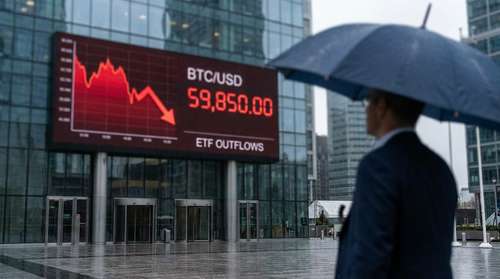
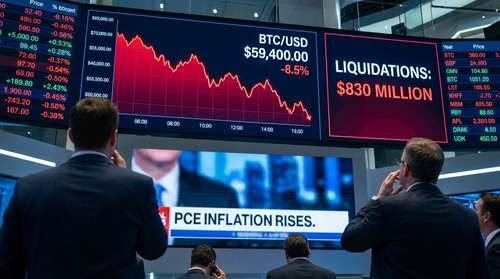
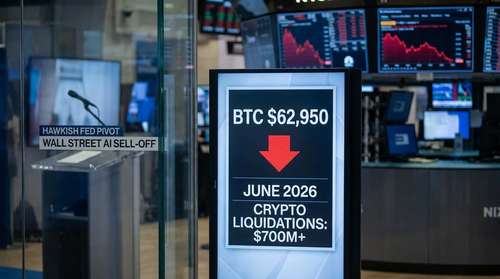
Going into late April, Bitcoin hovered near $76,000, struggling to pierce the dense supply zone between $78,000 and $80,000. The primary headwind preventing an immediate breakout stems directly from the Federal Reserve. During the FOMC meeting April 2026, Fed Chair Jerome Powell maintained a staunchly hawkish stance, holding rates steady at 3.5% to 3.75% while warning that elevated global energy prices are reviving inflation concerns.
With Brent crude averaging over $100 per barrel in recent weeks, the broader macroeconomic environment has become increasingly complex. Futures markets are now rapidly pricing out the likelihood of aggressive rate cuts this year, effectively putting risk-on assets in a holding pattern. For Bitcoin, this means incoming spot demand must absorb significant overhead supply before any sustained rally can take hold.
Strait of Hormuz BTC Payments: A Geopolitical Paradigm Shift
While the Fed tightens its grip on dollar liquidity, the Middle East is accelerating the use of digital assets for sovereign settlement. In an unprecedented move, Iran has formally begun demanding cryptocurrency to allow oil tankers passage through a critical global shipping lane. The new Strait of Hormuz BTC payments system requires vessels to pay a transit toll of roughly $1 per barrel.
For a fully loaded supertanker carrying two million barrels of crude oil, shipping companies face a staggering $2 million fee payable almost instantly on the blockchain. By executing this Iran Bitcoin trade payment strategy, Tehran is directly utilizing decentralized infrastructure to bypass traditional banking rails.
Why Bitcoin Over Stablecoins?
Interestingly, Iranian authorities specifically highlighted Bitcoin's utility over dollar-pegged stablecoins like USDT and USDC. Because central issuers can freeze stablecoin wallets in compliance with global sanctions, Bitcoin's permissionless, neutral architecture offers a seizure-resistant alternative for the sanctioned state.
This controversial adoption creates significant friction regarding digital asset regulation 2026. Lawmakers in the United States and Europe are now faced with the complex reality of decentralized settlement acting as a bypass for economic restrictions. For the global shipping industry, this introduces an unparalleled compliance nightmare. Maritime operators are forced to weigh the immediate physical safety of their crew and cargo against severe penalties for violating strict international sanctions by paying crypto tolls. Regulatory bodies are scrambling to establish new frameworks that can trace these transactions, but Bitcoin's pseudonymous nature drastically complicates enforcement.
Institutional Demand and Bitcoin ETF Institutional Inflows
Despite the overarching crypto market volatility triggered by these macroeconomic and geopolitical shockwaves, the underlying market structure remains surprisingly resilient. On-chain analysts note that while short-term holders are eager to take profits near the $79,000 true market mean, Bitcoin ETF institutional inflows are beginning to stabilize after a brief period of uncertainty.
Wall Street's integration with digital assets has matured significantly over the past year. Large-scale wealth managers and institutional players recognize the complex dual narrative currently at play. On one hand, Bitcoin is reacting as a standard risk-sensitive asset heavily influenced by the Fed's interest rate policies and global liquidity conditions. On the other hand, it is actively proving its original use case as a non-sovereign, censorship-resistant global settlement layer in the Persian Gulf. Perpetual futures positioning has even flipped to historically negative levels, indicating that speculative traders are heavily short. This imbalance is quietly building deep structural fuel for an explosive short-squeeze if spot demand surges.
The Verdict: Validating the Bitcoin Price Prediction $80k
Will the bulls finally break through the psychological resistance? The market essentially faces two distinct paths as April concludes. In a bearish scenario, sticky energy-driven inflation forces the Federal Reserve to delay rate cuts indefinitely, pushing Bitcoin back toward its established $65,000 to $70,000 structural support floor.
However, if energy markets cool and institutional buying continues to absorb the current distribution phase, the stage is set for a massive upside move. A confirmed push past $80,000 would likely trigger a cascade of dealer buying in short-gamma zones, propelling the asset toward the next major supply cluster at $84,000. For now, traders must carefully navigate a fragmented landscape where central bank rhetoric and sovereign maritime tolls dictate the immediate future of the digital economy.