In a watershed moment for the financial technology sector this week, SEC Chairman Paul Atkins has officially rolled out the much-anticipated Project Crypto SEC innovation exemption. This regulatory safe harbor represents a profound departure from the agency’s historical enforcement-first posture, offering blockchain firms a compliant path to operate within the United States. Unveiled as the centerpiece of a modernized US digital asset framework, the exemption allows decentralized networks and tokenized securities to trade on-chain under a protective "cabined framework". Coupled with recent landmark joint guidance from the CFTC, the move fundamentally rewrites the rules of engagement for digital asset companies.
Understanding the SEC Innovation Exemption
For years, blockchain developers operated under a cloud of legal ambiguity, often forced offshore to avoid crippling lawsuits. The new SEC innovation exemption fundamentally changes that calculus. Designed as a conditional relief framework, the exemption allows both registered and non-registered entities to launch on-chain products without immediately triggering the full weight of traditional securities obligations.
By functioning as a crypto regulatory safe harbor, the policy provides a crucial runway. Startups and established institutions alike can now test tokenized securities, smart contracts, and decentralized finance (DeFi) protocols in a live market environment. Participants must adhere to strict principles-based conditions—such as transparent disclosures, self-custody protections, and anti-fraud measures—while the Commission formalizes permanent rules.
Chairman Atkins described the rollout as an essential step to reverse the "innovation flight" that plagued American markets. Instead of facing immediate litigation over novel decentralized structures, compliant builders will receive the regulatory breathing room needed to mature their networks.
Official Digital Commodity Classification
The innovation exemption arrives closely on the heels of a historic 68-page joint interpretive release published by the SEC and the Commodity Futures Trading Commission (CFTC). This unprecedented interagency coordination directly addresses the most pressing question in the industry: which assets fall under SEC jurisdiction, and which do not?
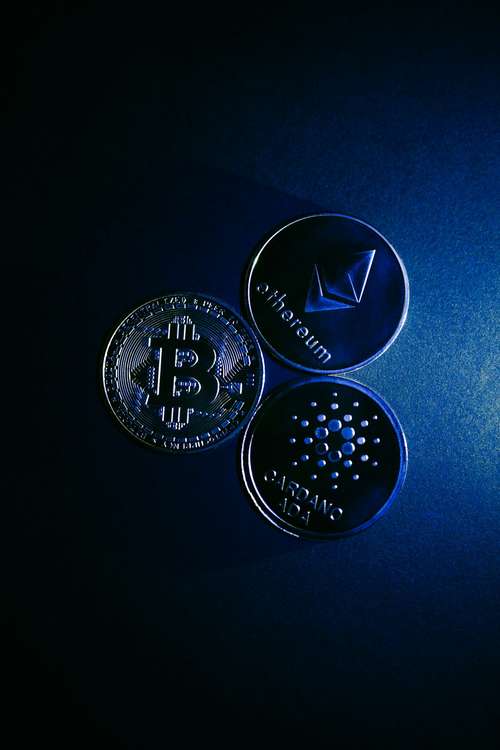
Under the new taxonomy, 16 major cryptocurrencies—including Ethereum (ETH), Solana (SOL), Cardano (ADA), and Avalanche (AVAX)—have received official digital commodity classification. Because these assets derive their value from the decentralized operation of functional networks rather than the "essential managerial efforts" of a central enterprise, they now fall squarely under CFTC oversight.
This classification dismantles the controversial legal theory that tokens initially sold as investment contracts must remain securities forever. By acknowledging that decentralized networks mature and investment contracts end, regulators have cleared the path for spot market expansion and institutional adoption.
The New US Digital Asset Framework
The driving force behind this regulatory renaissance is Chairman Paul Atkins. Since taking the helm, Atkins has championed the "Advance, Clarify, Transform" (ACT) strategy, actively working to dismantle the "securities-law minefield" that defined the previous administration. Paul Atkins crypto regulation policies prioritize economic reality over rigid, century-old legal interpretations. He has repeatedly noted that applying traditional intermediary rules to self-executing software code is an exercise in futility.
Furthermore, the agency is now offering technical assistance to Congress to help codify these changes. By harmonizing efforts with lawmakers and the CFTC, the SEC is actively building a durable foundation that will survive future political transitions and provide lasting certainty for enterprise-level investors.
Clearing the Path for Tokenized Securities
The innovation exemption specifically targets bottlenecks for tokenized real-world assets (RWAs). Wall Street banks can now tokenize traditional financial instruments—such as stocks, bonds, and private credit—and trade them on public blockchains with absolute legal clarity. Institutions are given the framework to operate on-chain under a protective shield, provided they adhere to robust valuation, transparency, and credit quality standards.
Impact on Bitcoin 2026 News and the Broader Market
The implications of the SEC's revised stance are already sending shockwaves through the financial sector. With Ethereum, Solana, and other layer-one protocols legally recognized as commodities, institutional compliance departments no longer face barriers to holding or trading these assets. This development is dominating Bitcoin 2026 news cycles, as analysts predict a massive influx of traditional capital into the broader digital ecosystem.
The turf war between federal regulators is officially over. By offering a pragmatic, innovation-friendly approach, the US digital asset framework is rapidly positioning the United States as the premier global hub for blockchain technology, ensuring the next generation of financial infrastructure is built on American soil.