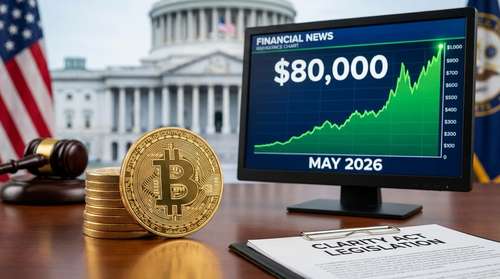
Bitcoin is testing the critical $80,000 resistance level this weekend, recovering from late-April turbulence with a sudden surge to $79,000. This bullish price action is primarily being driven by breaking US Iran diplomatic proposal news that suggests a potential de-escalation in the Middle East. However, the broader financial landscape remains highly complex. Investors are attempting to map out a reliable Bitcoin price prediction May 2026 while navigating two historical domestic catalysts: an impending change in leadership at the Federal Reserve and a monumental vote on digital asset regulation in the U.S. Senate.
The mix of geopolitical relief, steady institutional accumulation, and a looming shift in monetary policy has created an environment ripe for rapid price swings. Understanding how these distinct forces interact is essential for anyone tracking crypto market volatility today.
Geopolitical Relief Sparks Bitcoin ETF Inflows
The recent spike in Bitcoin's valuation didn't happen in a vacuum. Throughout early 2026, global markets have been weighed down by the conflict involving Iran, which disrupted global oil supplies and kept inflation uncomfortably sticky at 2.8%. The sudden emergence of credible US Iran diplomatic proposal news over the last 48 hours has provided risk assets with a much-needed pressure release valve. Easing energy prices directly translate to less pressure on central banks to maintain punishingly high interest rates.
Institutional investors immediately reacted to this de-escalation narrative. Early data points to a massive acceleration in Bitcoin ETF inflows May 2026, reversing the outflow trend seen during the late-April Warsh shock. Wall Street asset managers are increasingly utilizing Bitcoin exchange-traded funds as a hedge against fiat currency debasement. A stabilizing geopolitical backdrop gives these funds the confidence to deploy sidelined capital, making the climb to $79,000 feel less like a speculative retail jump and more like a calculated institutional rotation.
The Jerome Powell Federal Reserve Exit
While international affairs dominate the headlines, the U.S. central bank is undergoing a seismic transition. The Jerome Powell Federal Reserve exit from the chairman's seat is officially slated for May 15. In a highly contentious move that defied the expectations of the White House, Powell announced he will remain on the central bank's rate-setting board as a governor until his term ends in early 2028. He aims to protect the institution's political independence as a new administration seeks sweeping changes to monetary policy.
The incoming Fed Chair, Kevin Warsh, presents a fascinating paradox for the digital asset sector. He recently cleared a crucial 13-11 Senate Banking Committee vote, effectively securing his path to the top job. The Kevin Warsh Bitcoin stance has historically been viewed as favorable yet cautious; he previously praised Bitcoin as the new gold for investors under 40. At the same time, Warsh is a notorious monetary hawk who has criticized the Fed's bloated balance sheet and advocates for strict monetary discipline.
What the Warsh Shock Means for Crypto
Warsh's confirmation initially sent Bitcoin plunging toward $68,000 as traders priced in a tighter liquidity environment. The market is now beginning to digest the nuance of his policy preferences. While he may keep the benchmark overnight interest rate higher for longer—currently sitting in the 3.50% to 3.75% range—he is vehemently opposed to launching a retail Central Bank Digital Currency (CBDC). Warsh views a retail digital dollar as a threat to financial privacy and private sector innovation. This ideological opposition effectively removes the threat of a government-backed competitor to private stablecoins, handing the crypto industry a massive fundamental tailwind.
Senate Fast-Tracks Clarity Act Stablecoin Legislation
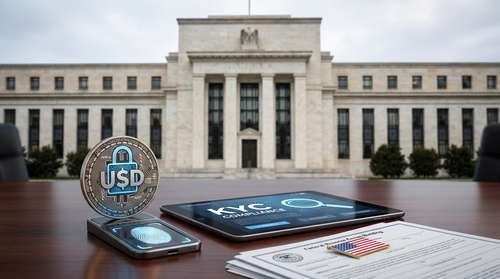
As the Federal Reserve prepares for its new leadership, lawmakers on Capitol Hill are moving aggressively to codify the rules of the road for digital assets. The U.S. Senate is currently fast-tracking the Clarity Act stablecoin legislation, marking a watershed moment for the industry. This framework builds upon earlier proposals to create standardized guardrails for payment stablecoins.
The legislation addresses one of the most stubborn stumbling blocks in crypto regulation: the division of power between state and federal authorities. Under the current discussion draft, stablecoin issuers with a market capitalization under $10 billion would be exempt from overarching federal regulation, allowing them to operate under state-level oversight. Larger entities would still face rigorous, bank-like capital and liquidity requirements.
By establishing a clear, bifurcated regulatory pathway, lawmakers are giving traditional financial institutions the legal certainty required to interact with blockchain networks. Stablecoins act as the primary liquidity plumbing for all decentralized finance and centralized exchange trading. Institutional-grade regulation is therefore expected to dramatically increase the total addressable market for digital assets, helping to buffer crypto market volatility today against the headwinds of high borrowing costs.
The Verdict: Bitcoin Price Prediction May 2026
Synthesizing these macroeconomic and regulatory developments paints a cautiously optimistic picture. Any accurate Bitcoin price prediction May 2026 must weigh Warsh's hawkish monetary policies against the structural upgrades provided by Wall Street adoption and the pending stablecoin bill.
If the diplomatic negotiations in the Middle East hold firm and inflation continues to cool, the $80,000 resistance level looks increasingly fragile. Strong Bitcoin ETF inflows May 2026 suggest that major buyers are eager to accumulate before the new regulatory framework fully legitimizes the stablecoin ecosystem. While the transition from Powell to Warsh may trigger fleeting periods of turbulence over the next two weeks, the foundational mechanics of the crypto market have never looked stronger. A decisive daily close above $80,000 could rapidly accelerate price discovery, making the mid-$80K range a highly probable target before the end of the month.