
Bitcoin continues to face a formidable ceiling heading into the second quarter, with the Bitcoin price $80,000 resistance level proving too stubborn for bulls to crack. Following the Federal Reserve's latest policy meeting on May 1, 2026, the central bank opted to maintain its benchmark interest rate at 3.5%–3.75%. The decision arrives during a precarious moment for global markets, which are grappling with skyrocketing energy costs fueled by a 10-week blockade in the Middle East. For digital asset investors, the intersection of sticky inflation and geopolitical friction has sharply dampened institutional risk appetite.
The Macro Picture: Fed Holds Steady as Leadership Shifts
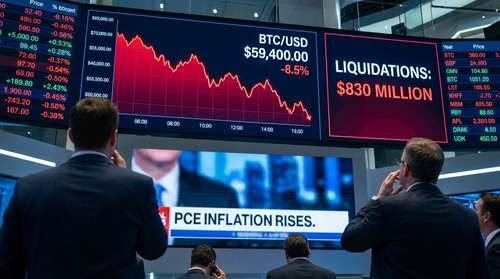
The much-anticipated Fed interest rate decision May 2026 delivered exactly what anxious markets expected: absolutely no relief for risk assets. Policymakers cited lingering inflationary pressures as the primary catalyst for leaving rates untouched, ignoring calls to ease financial conditions. Elevated borrowing costs historically siphon liquidity away from speculative investments, and the current trading environment is no exception. This dynamic serves as a textbook example of the negative macroeconomic impact on cryptocurrency, demonstrating how traditional financial levers can directly throttle digital asset momentum.
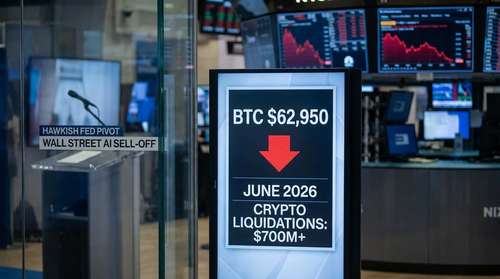
Adding another layer of complexity to the central bank's trajectory is the ongoing, highly publicized leadership transition. Jerome Powell successor Kevin Warsh recently advanced through the Senate Banking Committee in a narrow 13-11 vote, moving one step closer to a full Senate confirmation. Known for his traditionally hawkish stance during his previous tenure as a Fed governor, Warsh's impending elevation signals that the era of tight monetary policy may extend far beyond Powell's departure. Traders are already aggressively pricing in the reality that a return to loose monetary policy is effectively off the table for the foreseeable future.
Energy Shocks and Geopolitical Fallout
A primary driver of the Federal Reserve's reluctance to initiate rate cuts is the rapidly deteriorating situation in the Middle East. The Strait of Hormuz oil crisis crypto investors are currently monitoring stems from a devastating maritime blockade that has paralyzed commercial shipping. With roughly 20% of the world's liquid energy supply effectively choked off by regional hostilities, Brent crude has violently spiked above the $115 per barrel mark.
While Bitcoin miners operating in regions powered by stranded renewables have seen marginal relief, the broader macro implications for the digital asset class are undeniably grim. Surging fuel costs act as a regressive tax on the global consumer, driving up core inflation metrics and forcing central banks into a defensive, reactionary posture. When basic economic inputs become this prohibitively expensive, large capital allocators inevitably rotate out of high-beta tech assets and into safer traditional harbors, such as short-dated government bonds.
Capital Flight: Institutional Retreat from Crypto
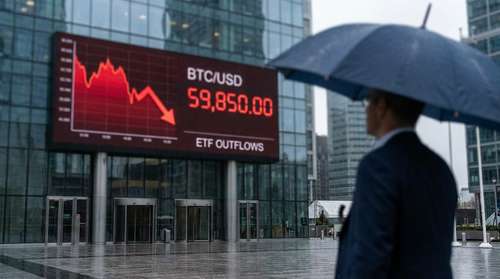
The immediate casualty of this perfect macroeconomic storm has been institutional conviction. Over a span of just three days leading up to the May Fed meeting, U.S. spot markets recorded nearly $490 million in net institutional Bitcoin ETF outflows. Heavyweights in the space, including Fidelity and BlackRock, witnessed significant redemptions—shedding $191 million and $167 million respectively—as allocators rushed to de-risk their broader portfolios.
This aggressive institutional profit-taking represents a stark, concerning reversal from the euphoric accumulation seen earlier in the first quarter of the year. Hedge funds and pension managers who originally piled into these regulated investment vehicles are now assessing the horizon with deep skepticism. The persistent outflow trend highlights that Wall Street is treating Bitcoin less like a safe-haven digital gold and more like a leveraged technology play. Until the global energy shock subsides and Treasury bond yields begin to cool, large-scale capital will likely remain firmly on the sidelines.
Options Barriers and Volatility Forecast
On the purely technical front, derivatives market makers are actively defending the upper bounds of the current trading range. Data from major options exchanges reveals a massive concentration of call options stacked squarely at the $80,000 strike price, representing roughly $1.5 billion in notional value. Because institutional traders often sell into spot market rallies to hedge their "long gamma" options positions, any upward momentum is continually smothered by sell walls before it can ignite a true structural breakout.
Key Technical Levels to Watch
With the prevailing crypto market volatility forecast pointing toward a highly unpredictable and choppy summer trading session, market participants are anxiously eyeing crucial support and resistance zones:
- $84,000: The next major upside target if macroeconomic conditions suddenly improve and bulls regain control.
- $80,000: The immediate resistance wall, defended heavily by options market makers and short-term sellers.
- $75,000: Critical short-term support that must hold to prevent a bearish technical breakdown.
- $70,000: The ultimate safety net where long-term buyers are expected to step in if a liquidation cascade occurs.
The path to price discovery requires a shift in global fundamentals. If back-channel diplomatic efforts successfully reopen the Strait of Hormuz and relieve the immense pressure currently suffocating global energy markets, the sticky inflation narrative could rapidly cool. A daily candle close firmly above the $80,000 barrier would finally clear the massive options overhang, setting the stage for a strong structural recovery.