
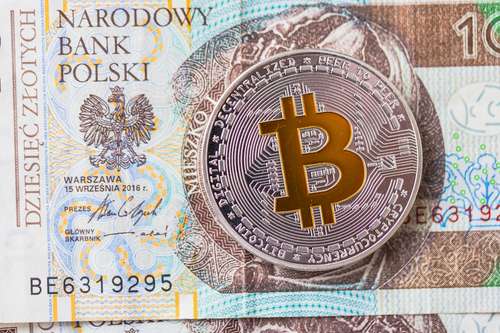
The conversation around sovereign wealth is undergoing a seismic shift. In a landmark moment for global finance at the Bitcoin 2026 conference in Las Vegas, a top European central banker broke from traditional monetary orthodoxy. Aleš Michl, Governor of the Czech National Bank, publicly advocated for adding digital assets to the institution's official foreign exchange reserves.
Speaking to an audience of industry leaders and institutional investors, Michl laid out a pragmatic, data-backed argument for a 1% allocation. This development injects a massive dose of credibility into the concept of Bitcoin as a reserve asset, moving the narrative from speculative theory to active monetary policy. The prospect of Czech National Bank Bitcoin reserves is no longer just a thought experiment—it is a live strategy being evaluated at the highest levels of European finance.
The Math Behind the Czech National Bank Bitcoin Reserves Strategy
The Czech Republic currently sits on one of the largest reserve piles in the world relative to the size of its economy, managing approximately $180 billion. For traditional central banks, protecting that wealth means fighting inflation and managing geopolitical risk through a mix of gold, sovereign bonds, and foreign currencies.
However, recent internal research conducted by the Czech National Bank revealed a compelling inefficiency in classic portfolio models. The study demonstrated that allocating just 1% of total reserves to Bitcoin could lift overall expected returns without a corresponding increase in portfolio risk.
A Low-Correlation Hedge
The driving force behind this phenomenon is correlation—or rather, the lack of it. Because Bitcoin does not move in tandem with standard central bank holdings like US Treasuries or the euro, it acts as a unique diversifier. By folding a highly volatile but uncorrelated asset into a massive, conservative portfolio, the risk is diluted while the upside remains intact.
"When you add an asset like this, the whole portfolio can work better," Michl explained during his keynote. "Return can go up, and risk stays about the same."
Ales Michl Bitcoin 2026: A Measured Approach to Sovereign Wealth Crypto
The push for central bank crypto adoption in Prague didn't happen overnight. The foundation was laid in November 2025 when the Czech National Bank established a $1 million experimental digital asset portfolio. Ring-fenced from the core $180 billion reserves, this test fund included Bitcoin, tokenized deposits, and stablecoins.
That pilot program allowed the institution to test the logistical and security realities of managing on-chain assets. Now, the transition from a sandbox experiment to a proposed structural allocation marks a critical milestone in institutional Bitcoin news 2026. While Michl had floated ideas of up to a 5% allocation in early 2025, the revised 1% target is a calculated, pragmatic figure designed to win over a cautious bank board.
Michl's tone at the conference was notably measured. He framed the digital currency not as a replacement for fiat money or a revolutionary crusade, but as a standard tool for portfolio diversification. He acknowledged the asset's notorious volatility, conceding the price could surge or plummet, but pointed out that equity and bond markets carry their own structural risks.
Defying Orthodoxy: Will Other Central Banks Follow?
The geopolitical implications of Prague's strategy are immense. If the bank board officially greenlights the proposal, the Czech Republic will become the first European central bank to hold Bitcoin on its balance sheet. Such a move is guaranteed to create friction within the European Union.
European Central Bank President Christine Lagarde has historically been a vocal opponent of integrating cryptocurrencies into sovereign reserves. Despite the Czech Republic retaining its own currency, the koruna, the nation is closely watched by the European economic bloc. Breaking ranks to pursue sovereign wealth crypto strategies could pressure other EU nations to reevaluate their own stances, especially if the Czech portfolio begins significantly outperforming its peers.
The Broader Impact of Bitcoin 2026 Conference News
The latest Bitcoin 2026 conference news underscores a transition phase for digital assets. The early days of retail-driven volatility are increasingly giving way to calculated, institutional game theory. When a sitting central bank governor steps onto a stage in Las Vegas and declares, "Most people wouldn't link central banks and Bitcoin—I would. This is the future," the market is forced to pay attention.
For market analysts watching the price action in late 2026, the key catalyst has always been the entry of nation-states. Corporate treasuries and spot ETFs brought massive liquidity, but central bank adoption represents the ultimate validation.
Whether the Czech National Bank finalizes the 1% purchase next week or next year, the blueprint is now public. Other sovereign wealth funds and monetary authorities are undoubtedly running the same risk-adjusted return models right now. As the barrier between traditional banking and digital assets continues to erode, the race for sovereign Bitcoin accumulation may have officially begun.