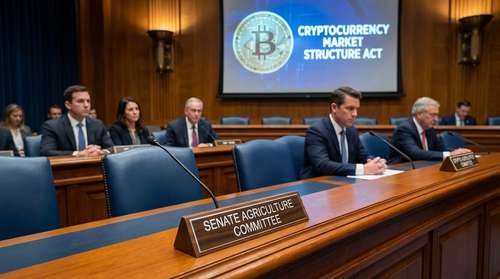
The U.S. Senate Agriculture Committee is bracing for a pivotal showdown this Tuesday, January 27, as it moves to markup the highly anticipated Cryptocurrency Market Structure Act. The hearing, scheduled by Committee Chair John Boozman (R-AR), represents the most significant legislative step yet in the 2026 push to overhaul how digital assets are regulated in the United States. At the heart of the debate is the Digital Commodity Exchange Act (DCEA), a core component of the package designed to transfer primary spot market oversight from the Securities and Exchange Commission (SEC) to the Commodity Futures Trading Commission (CFTC).
While the Republican-led committee aims to fast-track the legislation to provide regulatory clarity, the markup has been complicated by a last-minute wave of ethics-focused amendments from Democratic leadership. Ranking Member Amy Klobuchar (D-MN) and other senior Democrats are pushing for strict provisions that would prevent high-ranking government officials from profiting from the very digital asset policies they craft—a move seen by insiders as a direct response to the current administration's pro-crypto stance.
Defining the Lanes: CFTC Spot Market Oversight
For years, the crypto industry has clamored for a regulatory framework that treats digital assets more like commodities than securities. The Cryptocurrency Market Structure Act seeks to codify this by granting the CFTC exclusive jurisdiction over the spot market for digital commodities, including Bitcoin and stablecoins. Under the proposed legislation, digital asset exchanges would register directly with the CFTC, subjecting them to federal standards on custody, trade monitoring, and consumer protection without the looming threat of SEC enforcement actions.
"This markup is about finally providing the rules of the road that innovators have been asking for since the early 2020s," said a senior aide to Chair Boozman. "We are moving from a regulation-by-enforcement model to a fit-for-purpose statutory regime." The bill’s momentum has accelerated in recent weeks, following Chair Boozman's January 21 announcement of updated market structure language intended to bridge gaps between traditional finance and decentralized protocols.
The 'Ethics' Hurdle: Democrats Target Conflicts of Interest
The path to passage, however, faces a new obstacle. Democratic senators have introduced a series of "crypto ethics amendments" slated for debate during the Tuesday markup. These provisions would impose rigorous divestment and recusal requirements on federal regulators holding digital assets.
Political analysts view this maneuver as a targeted response to the appointment of Paul Atkins as SEC Chair in April 2025. Atkins, a known advocate for the industry who holds significant personal investments in digital assets, has been a lightning rod for criticism from regulatory hawks. By attaching these ethics riders to the must-pass market structure bill, Democrats hope to force a conversation about the intersection of personal financial interests and public policy in the US crypto regulation 2026 landscape.
Klobuchar's Strategy
Ranking Member Klobuchar has argued that while regulatory clarity is necessary, it cannot come at the expense of public trust. "If we are going to legitimize this market with federal oversight, we must ensure the referees aren't betting on the game," Klobuchar stated in a press briefing Monday. The amendments could delay the markup or force a difficult negotiation, potentially threatening the bipartisan support the DCEA previously enjoyed.
The Paul Atkins Factor and SEC Policy
The dynamics of this week's hearing are fundamentally different from previous years due to the shift at the SEC. With Paul Atkins' SEC policy favoring deregulation and a rollback of the aggressive enforcement tactics seen under the previous administration, the urgency for the CFTC to step in has changed. Previously, the DCEA was a shield against a hostile SEC; now, it is viewed as a necessary complement to a friendly SEC, establishing clear statutory lanes to prevent future jurisdictional turf wars.
Industry lobbyists generally support the DCEA but are wary of the ethics amendments, fearing they could be used to sideline pro-crypto officials. "The industry wants clarity, not a political witch hunt," noted a representative from the Digital Chamber of Commerce. "We are optimistic that Chair Boozman can navigate these amendments and get the bill to a floor vote by spring."
Outlook for US Crypto Regulation in 2026
As the Senate Agriculture Committee convenes on January 27, the stakes extend far beyond the specific text of the bill. A successful markup would signal that the U.S. Congress is finally capable of legislating on complex technological issues, setting the stage for a broader adoption of digital assets by institutional investors. Conversely, if the ethics amendments derail the process, it could leave the market in a continued state of legislative limbo, reliant solely on the goodwill of current regulators.
With the CFTC spot market oversight provisions widely popular among Republicans and moderate Democrats, the bill has a strong chance of advancing. However, the markup will likely be a marathon session, testing the committee's ability to balance innovation with rigorous ethical standards.