The highly anticipated CLARITY Act 2026 has abruptly hit a legislative wall in the United States Senate. Following a sudden White House ultimatum that shifts congressional focus entirely toward election legislation, the landmark crypto market structure bill is officially on ice. However, the regulatory vacuum is already being filled. In an unprecedented move, leadership at the Securities and Exchange Commission and the Commodity Futures Trading Commission have accelerated an interagency alignment, issuing new frameworks to provide the industry with much-needed jurisdictional certainty.
For digital asset investors and blockchain developers, the latest U.S. crypto regulation news presents a complex landscape of stalled laws and proactive regulators stepping into the breach.
The SAVE America Act Impact on Crypto
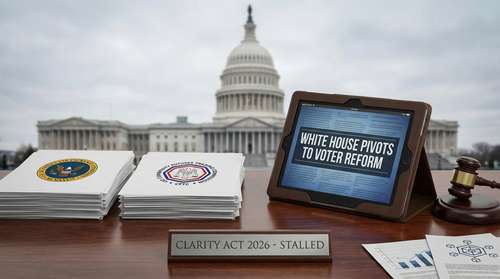
The momentum for the Digital Asset Market Clarity Act—which comfortably passed the House of Representatives in July 2025 by a bipartisan 294-134 margin—was derailed on March 8. President Donald Trump posted on Truth Social that he would refuse to sign any new legislation until Congress passes the SAVE America Act. This controversial voting reform bill, which mandates proof of citizenship and government-issued photo identification for federal voter registration, has now become the administration's singular legislative priority.
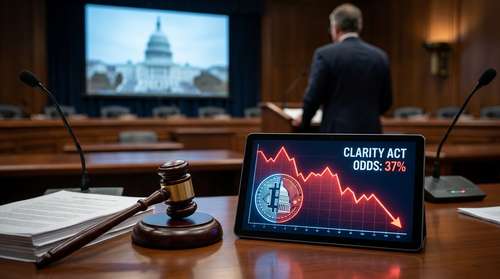
The SAVE America Act impact on crypto has been immediate and chilling. Because Senate floor time is exceptionally finite, prioritizing a highly contested voting rights bill essentially freezes the calendar. For the digital asset sector, which viewed the legislation as the ultimate solution for dividing oversight between federal watchdogs, the pathway is virtually blocked, with prediction markets currently placing the odds of passage in 2026 at just 18 percent.
Paul Atkins SEC Updates and Project Crypto
With Capitol Hill sidelined, federal watchdogs are stepping in to prevent a compliance nightmare. Recent Paul Atkins SEC updates reveal a profound pivot in how the agency handles digital commodities and securities. On March 10, SEC Chairman Atkins announced a formal Memorandum of Understanding (MOU) with the CFTC, explicitly designed to end the turf wars that defined previous administrations.
Working alongside CFTC Chair Michael Selig, Atkins has championed "Project Crypto," a sweeping initiative aimed at upgrading market rules. The agencies are launching a joint harmonization website that allows blockchain firms to request coordinated discussions. "Firms should not be shuffled back and forth between regulators when a product touches elements of both regulatory frameworks," Atkins stated during his address at the FIA Global Cleared Markets Conference in Florida. He further emphasized the need to accommodate super-apps that seamlessly integrate multiple services across different jurisdictions without forcing users to toggle between separate systems.
Establishing a Crypto Safe Harbor 2026
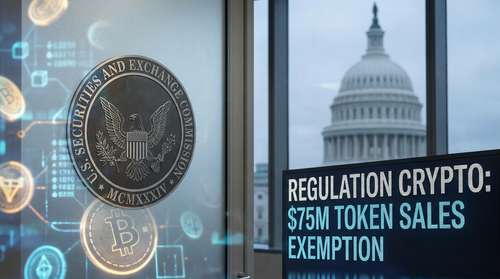
Because statutory definitions remain trapped in the Senate, this unprecedented SEC and CFTC joint guidance operates as a functional stopgap. The agencies are organizing shared examinations and joint product application reviews, effectively creating a crypto safe harbor 2026 for compliant businesses. This represents a stark departure from the regulation-by-enforcement era, highlighted by the SEC recently dropping numerous enforcement actions that were predicated solely on registration failures.
On March 3, the SEC also submitted comprehensive interpretive guidance to the White House. This documentation clarifies exactly how federal securities laws apply to specific digital tokens, establishing an interim token taxonomy while Congress stalls. By mapping out transparent registration pathways and utilizing exemptive authority, the commissions are attempting to protect investors without crushing domestic innovation.
Why the Digital Asset Market Clarity Act Was Already Struggling
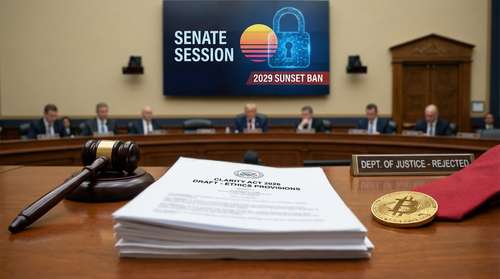
Even before the White House's election-focused ultimatum, the proposed market structure bill was facing stiff headwinds inside the Senate Banking Committee. A planned markup session scheduled for January 14 was abruptly postponed due to fierce internal industry debates and aggressive lobbying from traditional banking institutions.
A primary dispute revolves around stablecoins and yield generation. Following the passage of the Genius Act in 2025, commercial banks grew alarmed by loopholes that could allow crypto exchanges to offer high-yield rewards on pegged assets. Lenders warned that unrestricted crypto yields—often reaching 3.5 percent—could trigger massive deposit flight, with analysts estimating up to $500 billion could shift from traditional savings accounts by 2028. Furthermore, prominent industry figures like Coinbase CEO Brian Armstrong publicly withdrew support for the Senate draft, citing restrictive DeFi provisions and the erosion of CFTC authority.
Looking Ahead: Adaptation Over Legislation
The digital asset sector is rapidly realizing that it cannot afford to wait on Congress. While the formal passage of a comprehensive statutory framework remains the ultimate objective, the immediate future of U.S. market structure relies squarely on regulators maintaining their newfound collaborative alliance. For now, institutional capital and blockchain developers must navigate a landscape shaped by executive branch directives rather than congressional ink.