
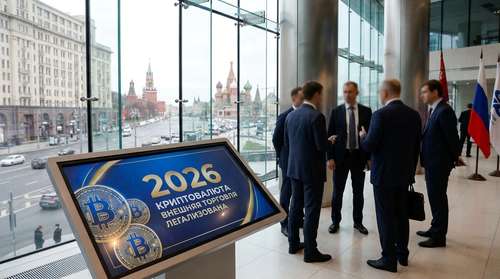
In a monumental shift for the international financial landscape, the Russian State Duma crypto bill has officially cleared its first major legislative hurdle. On April 22, 2026, lawmakers voted overwhelmingly—with 327 out of 340 deputies in favor—to advance draft legislation that integrates digital assets into the country's formal economic structure. This sweeping Russia crypto regulation 2026 framework, formally titled "On Digital Currency and Digital Rights," marks an unprecedented pivot for Moscow. The state is transitioning from years of skepticism toward a strictly regulated, pragmatic embrace of decentralized assets to bypass mounting financial friction. The legislation does something few traditional economists would have predicted even two years ago: it structurally embeds digital currencies into the nation's foreign trade infrastructure, creating a sanctioned legal channel for global commerce.
The Digital Currency Property Law: Redefining Ownership
At the core of this breakthrough is a pivotal digital currency property law provision. For the first time, Russian legislation will explicitly recognize Bitcoin, Ethereum, and other digital assets as legal property. This classification is not merely semantic; it carries profound legal weight. By treating digital currencies as property, Russian citizens and businesses can now secure legal protection for their holdings in court. This encompasses dispute resolutions, bankruptcy proceedings, and even divorce settlements, finally pulling crypto wealth out of the legal gray area.
Kaplan Panesh, deputy chairman of the State Duma Committee on Budget and Taxes, highlighted that this property designation is essential for safeguarding investor rights. However, lawmakers have drawn a distinct and unyielding line regarding domestic use. While citizens can own and invest in these assets, the Russian ruble remains the absolute and exclusive legal tender within the nation's borders. Buying groceries, paying rent, or settling domestic commercial transactions with cryptocurrency remains strictly prohibited.
Sanction-Proofing Commerce with Bitcoin Cross-Border Payments
The most globally consequential aspect of this legislation is the crypto foreign trade legalization. Severed access to the SWIFT banking system and relentless international sanctions have forced Russian businesses into severe logistical bottlenecks when dealing with overseas partners. The new bill introduces a targeted exception to the domestic payment ban, officially authorizing Bitcoin cross-border payments for international commerce.
Anatoly Aksakov, Chairman of the State Duma Committee on Financial Markets, has openly acknowledged the pragmatic nature of this move. Rather than an ideological embrace of decentralized finance, the legislation provides a sanctioned, permissionless settlement layer that keeps Russian imports and exports flowing. Exporters and importers can now leverage digital currencies to settle invoices, transfer intellectual property rights, and pay for services without relying on Western financial rails.
Regulatory Whitelists and Market Liquidity
Not all cryptocurrencies will qualify for these corporate transactions. The state plans to establish a whitelist of approved, highly liquid digital assets. Initial reports suggest that established assets like Bitcoin and Ethereum will be among the first approved mediums of exchange, ensuring deep liquidity and stable trade settlement.
Securing the Market: The Bank of Russia Crypto License
This newfound openness is coupled with stringent state supervision. The legislation establishes a comprehensive oversight mechanism centered around the Bank of Russia crypto license. The central bank will operate as the ultimate gatekeeper of the digital asset economy, tasked with authorizing, regulating, and policing all market participants.
Under the new framework, five distinct categories of entities must secure formal licensing to operate:
- Cryptocurrency exchanges
- Brokerage firms
- Digital depositories
- Management companies
- Specialized exchangers
Unlicensed peer-to-peer (P2P) trading platforms will face a phased ban, culminating in a blanket prohibition of direct transactions without licensed intermediaries by July 2027. Authorities are also drafting accompanying measures that could impose criminal penalties—including steep fines and up to seven years in prison—for conducting illegal, unlicensed cryptocurrency operations.
Custody Rules and State-Monitored Mining
Beyond trading, the proposed legislation outlines rigorous rules for digital asset custody. A newly conceptualized digital depository system will manage the bulk of crypto holdings. To maintain capital controls, the law restricts transfers to personal, unhosted wallets and strictly limits withdrawals to foreign financial institutions unless explicitly approved by the central bank. Moreover, the booming cryptocurrency mining sector will be formalized. Miners must register their hardware, operate strictly within domestic power infrastructure, and comply with state accounting standards, giving the government unprecedented visibility into the creation of new digital wealth.
Tiered Access for Retail Investors
While institutions gain new trade mechanisms, everyday citizens face a highly structured tiered system. Unqualified retail investors will be required to pass mandatory testing to gauge their financial literacy before they can touch digital assets. Furthermore, their market participation will be capped at 300,000 rubles (approximately $3,900) per year. Qualified, professional investors will face no such purchasing restrictions, a move explicitly designed to limit risk exposure for inexperienced traders.
Accelerating Global Crypto Adoption 2026
Pending standard second and third readings, followed by Federation Council and presidential approval, the law is slated to take effect on July 1, 2026. This timeline gives the Bank of Russia just over two months to finalize the regulatory infrastructure and begin issuing operational licenses.
This development serves as a massive catalyst for global crypto adoption 2026. By institutionalizing Bitcoin within the foreign trade architecture of a major global economy, Russia is validating the utility of borderless digital currencies on the macroeconomic stage. While domestic retail use remains heavily restricted, the integration of blockchain settlements into state-sanctioned international commerce signals a profound geopolitical shift—one where decentralized networks increasingly function as critical infrastructure for global trade.