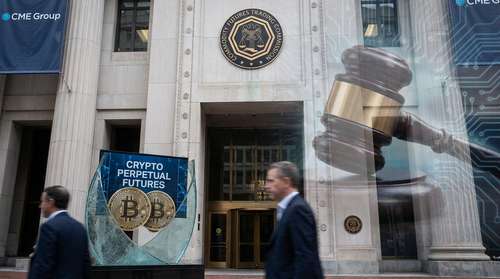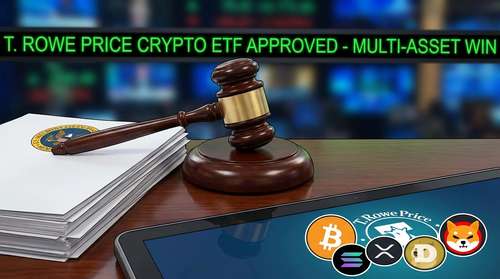

In a definitive move that signals the end of the "regulation by enforcement" era, Paul Atkins, SEC Chair, has unveiled a groundbreaking regulatory pivot that reclassifies functional utility tokens as commodities rather than presumptive securities. This major policy shift regarding SEC crypto regulations 2026 comes just days before the Senate Agriculture Committee is set to mark up the Digital Commodity Intermediaries Act on January 29. The new framework aims to harmonize oversight between the SEC and CFTC, potentially resolving years of jurisdictional friction that has stifled American digital asset innovation.
Atkins Definitions: Commodity Token vs Security
Speaking to industry leaders earlier this week, Chair Atkins dismantled the previous administration's broad interpretation of the Howey Test. Under the emerging crypto compliance framework 2026, the SEC will now distinguish between "tokenized securities"—which represent ownership in a financial instrument—and "functional utility tokens." Atkins emphasized that tokens acting as mechanisms for accessing goods or services, similar to airline miles or arcade credits, do not carry the expectation of profit required to be deemed a security.
"We are moving away from a regime of ambiguity to one of precise economic reality," Atkins stated. "If a token functions as a tool for network utility and carries no equity-like rights, it belongs under a commodities framework." This distinction is central to the commodity token vs security debate that has plagued the industry for a decade. The new guidance provides immediate relief for projects that have long operated in a legal gray zone, allowing them to register compliant functional tokens without the burden of securities registration.
Senate Prepares for Digital Commodity Intermediaries Act Vote
The timing of the SEC's pivot is synchronized with legislative action on Capitol Hill. The Senate Agriculture Committee has rescheduled its markup of the Digital Commodity Intermediaries Act for January 29, following delays caused by severe winter weather in Washington. This US crypto market structure bill is designed to codify the role of the Commodity Futures Trading Commission (CFTC) as the primary regulator for digital commodity spot markets.
The bill's advancement is critical for the industry's stability. It proposes a clear statutory lane for digital commodity exchanges and broker-dealers, complementing the SEC's new guidance. However, the markup remains a high-stakes political event. While the legislation is Republican-led, proposed amendments by Democratic senators regarding consumer protection and disclosures will determine if the bill can secure the bipartisan support needed to survive a full Senate vote later this year.
GENIUS Act Stablecoin Rewards Under Fire
While the market structure debate moves forward, friction remains regarding stablecoins. The GENIUS Act stablecoin rewards provision has ignited a fresh conflict between crypto platforms and traditional banks. Passed in July 2025, the GENIUS Act explicitly restricted stablecoin issuers from paying interest to prevent direct competition with bank deposits. However, major exchanges have circumvented this by offering "rewards" based on platform loyalty and transaction volume rather than direct yield.
Banking Lobby Pushback
Traditional financial institutions argue these rewards violate the spirit of the law. "What we are seeing is a deposit substitute by another name," noted a representative from the American Bankers Association. The upcoming committee debates are expected to address this loophole, with some lawmakers threatening to tighten the language around what constitutes a "reward" versus an "interest payment" in the broader market structure legislation.
A Unified Crypto Compliance Framework for 2026
The convergence of the SEC's new administrative stance and the Senate's legislative efforts points toward a unified crypto compliance framework 2026. For the first time, the executive and legislative branches appear to be moving in tandem. Jamie Selway, the SEC's Director of Trading and Markets, recently outlined that the agency's priority is no longer litigation, but "building a bridge" to the CFTC to ensure dual registrants can operate seamlessly.
Investors and developers should watch the January 29 vote closely. A successful markup of the Digital Commodity Intermediaries Act, combined with Atkins' deregulation initiatives, could finally cement the United States as a safe harbor for digital asset innovation, reversing the exodus of talent seen over the last four years.