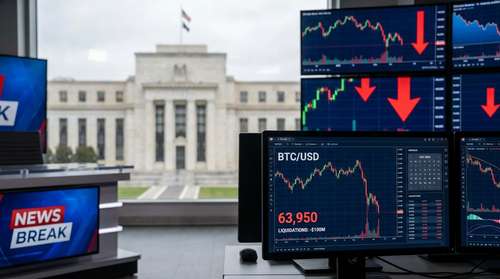

For most of this year, digital assets and technology stocks moved in lockstep. But as the books close on July 2026, a dramatic shift has materialized. While Wall Street endured a brutal tech and semiconductor rout, dragging chip stocks down 22%, the cryptocurrency sector quietly absorbed the macroeconomic shocks and ground upward. This sudden crypto stock market decoupling has left institutional investors recalibrating their portfolios as digital assets demonstrate unprecedented resilience.
Crypto Stock Market Decoupling Solidifies in July 2026
The contrast in asset performance over the last 30 days is stark. The Nasdaq 100 surrendered roughly 9% in July, hammered by earnings jitters and skepticism over massive AI infrastructure capital expenditures. Semiconductor stocks fared even worse, erasing nearly a third of their year-to-date gains in a swift rotation out of tech. Major megacap players saw billions in market value evaporate virtually overnight as investors abandoned the artificial intelligence premium.
Yet, the Bitcoin price July 2026 narrative took an entirely different path. Rather than following equities down the drain, Bitcoin steadily added approximately 9% for the month, trading confidently in the mid-$64,000 range. This divergence confirms a structural shift: Bitcoin is no longer trading as merely a high-beta extension of the tech sector. Instead, it is capturing a unique liquidity rotation as investors seek alternatives to overheated semiconductor valuations.
Fed Interest Rate Decision: Crypto Shrugs Off Warsh's Hawkish Hold
The most severe stress test for this decoupling arrived during the latest Federal Open Market Committee meeting. The highly anticipated Fed interest rate decision crypto traders were bracing for culminated in a 9-3 vote on July 29 to hold the benchmark federal funds rate at 3.5% to 3.75%. Three dissenting policymakers pushed for an immediate hike, signaling genuine internal concern over sticky inflation driven by elevated global pressures.
Under normal circumstances, the Kevin Warsh FOMC hawkish press conference would have triggered a severe crypto liquidation. Warsh, who assumed the Federal Reserve chair position in May, bluntly stated there is no soft inflation target, reiterating that the central bank will not tolerate prints above 2%. Despite this aggressive posture and a spike in the 10-year Treasury yield, Bitcoin barely flinched. The lack of a panic sell-off reinforces the thesis that the market had already priced in the hawkish reality, allowing digital assets to maintain their footing even as traditional bond yields spiked.
Institutional Momentum: Bitcoin ETF Inflows BlackRock Leads the Pack
Beneath the surface of this price resilience lies a steady foundation of institutional capital. Following a brief period of summer volatility, spot Bitcoin ETF inflows BlackRock helped stabilize the market structure. The asset management giant's IBIT vehicle continues to absorb the lion's share of available capital, routinely pulling in tens of millions on heavy volume days and acting as the primary conduit for traditional finance allocations.
These consistent ETF inflows serve a dual purpose. First, they provide a continuous bid that offsets retail selling pressure. Second, they signal to the broader market that large-scale allocators are utilizing the current macroeconomic uncertainty to build long-term positions rather than retreating entirely to cash. The institutional guardrails are visibly strengthening the asset's floor.
Liquidity Shifts: $500M USDT Binance Tether Transfer Explained
As trading activity heats up, backend exchange infrastructure is rapidly adjusting to handle the volume. On July 30, blockchain monitoring services detected a massive USDT Binance Tether transfer. Exactly 500 million USDT moved from Binance's hot wallet directly to the Tether Treasury.
While massive stablecoin withdrawals can sometimes trigger market anxiety regarding liquidity crunches, on-chain data and spot market stability suggest this was a routine technical cross-chain swap. Binance frequently returns excess ERC-20 tokens on the Ethereum network to receive the equivalent amount on faster, cheaper networks to optimize settlement. This half-billion-dollar maneuver ensures the exchange has adequate margin capacity on the right rails to meet escalating trader demand as market sentiment turns increasingly bullish.
Ethereum Price Prediction August: Will the Momentum Hold?
While Bitcoin grabbed the macroeconomic headlines, Ether quietly outperformed. After gaining nearly 20% in July, the asset successfully defended a critical breakout trendline near the $1,860 to $1,900 range. This technical fortitude brings the Ethereum price prediction August timeline into sharp focus for derivative traders looking for the next upside explosion.
On-chain metrics reveal that heavy-hitting whales have been accumulating Ethereum aggressively. Prominent industry figures and institutional wallets scooped up millions of dollars worth of ETH throughout late July. Furthermore, an MVRV Golden Cross recently flashed on the ETH charts—a rare on-chain signal that has historically preceded rallies of 50% or more. If Ethereum can maintain its structural support, the momentum established during July's historic market decoupling could easily propel the asset toward its next major resistance block, setting the stage for a highly active August trading session.