
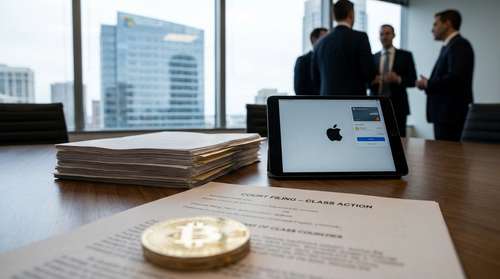
Apple's reputation for rigorous security is facing intense legal scrutiny. A newly filed Apple Sparrow Wallet lawsuit alleges the tech giant allowed a fraudulent cryptocurrency application to remain on the App Store, ultimately costing three investors a staggering $1.8 million in Bitcoin. The federal class-action complaint, filed in California on July 24, 2026, accuses Apple of negligence for failing to remove the malicious software despite receiving repeated warnings from the actual developer.
For users who trust the walled garden approach of iOS, this major App Store crypto scam serves as a wake-up call. The plaintiffs argue that Apple's marketing, which heavily promotes the App Store as a safe and trusted place, gave them false confidence to download what turned out to be a financially devastating spoof.
The Anatomy of the Fake Sparrow Wallet App
To understand how the theft occurred, you have to look at the software itself. The legitimate Sparrow Wallet is a highly regarded, open-source Bitcoin tool designed exclusively for desktop environments—specifically Windows, macOS, and Linux. The real developer, Craig Raw, has never released an official iOS application.
Recognizing a lucrative opportunity, malicious actors bypassed Apple's app review process and listed a fake Sparrow Wallet app that perfectly mimicked the authentic brand's look and feel. Between May and August 2025, plaintiffs James Ramirez, Christopher Ellis, and Jalen Delgado unknowingly downloaded the malicious iOS client.
Once installed, the fraudulent application executed a classic phishing maneuver. It prompted users to input their 12- or 24-word recovery seed phrase—the master key to any digital wallet. As soon as the victims provided this sensitive data, the scammers instantly seized control of their funds. According to court filings, Delgado saw 1.05 Bitcoin (worth about $120,000 at the time) vanish around May 2025, Ramirez lost an estimated $875,000 in July, and Ellis lost roughly $840,000 just days later in August.
Developer Warnings Ignored in Bitcoin Wallet Scam
The most damning allegation in the Apple sued over crypto theft case is that the Cupertino-based tech giant allegedly knew about the counterfeit software long before the victims were targeted. The lawsuit asserts that Sparrow Wallet's creator, Craig Raw, spent more than a year actively flagging unauthorized mobile versions to Apple's review team.
Raw had publicly documented his frustrations since early 2024, noting that scammers were repeatedly publishing copycat apps. In a bizarre twist of enforcement, when Raw attempted to publish a text-only placeholder application to explicitly warn iPhone users that no mobile version existed, Apple reportedly threatened to terminate his developer account instead of addressing the core issue.
Systemic Failures in App Review
Court documents indicate that Apple not only hosted the counterfeit software but inadvertently ranked it in search results. The iOS Sparrow Wallet fake even appeared in curated cryptocurrency app collections, artificially boosting its credibility among users. The plaintiffs claim this represents a clear violation of California's Consumers Legal Remedies Act, arguing that Apple's negligence directly facilitated the $1.8 million heist.
Can You Trust the App Store with Your Digital Assets?
This high-profile Bitcoin wallet scam Apple case highlights a growing vulnerability in the mobile ecosystem. While Apple representatives have stated that the company blocked over $2.2 billion in fake app transactions and shut down 193,000 malicious developer accounts in 2025, crypto impersonators remain a persistent threat. Security researchers recently identified 26 malicious applications mimicking prominent digital asset brands across the iOS platform.
Apple has since removed the offending fake app and suspended the associated developer accounts, declining to comment publicly on the active litigation. However, the plaintiffs are seeking more than just reimbursement for their lost funds and punitive damages; they are demanding a court order that would force Apple to implement explicit fake app warnings and stricter vetting protocols for financial software.
How to Protect Your Crypto from Mobile Phishing
As legal battles unfold, investors must take their digital security into their own hands. The sophisticated nature of mobile phishing means even seasoned crypto veterans can fall victim if they rely solely on corporate safeguards. If you are managing significant cryptocurrency holdings, rely on these foundational safeguards:
- Verify platform availability: Always check the developer's official website to confirm if a mobile app actually exists. In Sparrow Wallet's case, a quick check would reveal it is desktop-only software.
- Never share your seed phrase: A legitimate wallet interface will never ask you to input an existing seed phrase unless you are actively restoring a wallet on a trusted, completely secure offline device.
- Doubt the app store: Do not assume an application is safe simply because it passed a corporate review process. Thoroughly inspect publisher names, review histories, and linked support pages.
The ongoing lawsuit serves as a harsh reminder that when it comes to self-custody in the crypto space, blind trust is a severe liability. Until app marketplaces can guarantee the absolute authenticity of every financial tool they host, the ultimate responsibility for asset protection remains squarely with the individual user.