
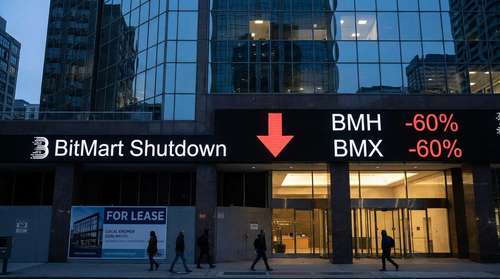
The cryptocurrency landscape is experiencing an unprecedented seismic shift this week. In a sudden announcement late Sunday, July 26, 2026, veteran trading platform BitMart revealed it will permanently cease its global operations by August 26. The unexpected news of the BitMart shutdown 2026 sent immediate shockwaves through the market, instantly triggering a catastrophic BMX token crash. Within a mere 24 hours, the exchange's native digital asset plummeted by more than 60%. This abrupt exit marks the third major casualty in a brutal month for the digital asset space, amplifying fears of a broader wave of crypto exchange closures driven by newly enforced regulatory frameworks.
The Anatomy of the BMX Token Crash and Market Panic
BitMart previously weathered intense storms, including a devastating $196 million security breach in 2021. Yet, surviving a hack proved easier than navigating modern compliance costs. As soon as BitMart published its orderly wind-down timeline, traders scrambled to liquidate their holdings, leading to a severe BMX token crash. Liquidity evaporated across trading pairs, and the token dropped from its weekend support levels to multi-year lows, erasing millions in market capitalization almost overnight.
Panic among retail and institutional investors fueled heavy network congestion as users rushed to withdraw their spot and derivative assets. While BitMart's management assured clients that user funds remain backed 1-to-1 and withdrawals will process normally until the final August 26 deadline, market sentiment remains incredibly fragile. For a centralized platform that spent years building its user base under founder Sheldon Xia, the sudden unraveling highlights the inherent vulnerability of utility tokens tied directly to exchange revenues.
BitMEX Closing and Unprecedented Crypto Market Consolidation
BitMart's demise does not exist in a vacuum. July 2026 will undoubtedly be remembered as a massive tipping point for crypto market consolidation. Earlier this month, AscendEX quietly began winding down its services, and just days ago on July 23, legendary derivatives pioneer BitMEX stunned the industry. HDR Global Trading Limited, the operator behind BitMEX, confirmed that after 11 years, the venue will shutter entirely by September 23, 2026.
This rapid succession of crypto exchange closures—first AscendEX, then the monumental BitMEX closing, and now BitMart—signals a fundamental restructuring of global trading infrastructure. Mid-sized platforms are facing an existential crisis. The liquidity that once freely flowed through dozens of offshore platforms is rapidly consolidating into a handful of heavily regulated, institutional-grade giants. The days of operating a competitive platform without full regulatory backing are over, as smaller venues simply cannot subsidize the operational overhead required to survive the current climate.
How MiCA Regulations Crypto Triggered the Collapse
The root cause of this widespread centralized exchange wind down phenomenon points directly to Europe. July 1, 2026, marked the official end of the transitional period for the European Union's Markets in Crypto-Assets (MiCA) framework. The European Securities and Markets Authority (ESMA) explicitly mandated that any digital asset service provider without full MiCA authorization must execute credible, orderly exit strategies or face severe consequences.
These MiCA regulations crypto mandates created a compliance nightmare for mid-tier offshore operators. Securing the necessary licenses demands robust anti-money laundering (AML) controls, transparent onboarding processes, and massive capital reserves. As global jurisdictions increasingly model their own policies after MiCA's benchmark, platforms like BitMart found themselves squeezed out entirely. The regulatory moat has simply grown too wide, leaving non-compliant exchanges with no choice but to fold before regulators force their hands.
Navigating the Centralized Exchange Wind Down
If you currently hold assets on BitMart, the immediate priority is securing your capital. While the platform has committed to processing withdrawals through late August, historical precedents involving crypto exchange closures suggest that users should act swiftly. Moving funds to a self-custodial hardware wallet or transferring them to a fully regulated entity mitigates the risk of assets becoming trapped if liquidity crunches worsen.
To safely navigate this transition, follow these immediate steps:
- Audit your balances: Check both spot and derivative accounts for any residual funds you might have forgotten.
- Cancel open orders: Ensure no limit orders remain active to prevent unexpected trade executions as liquidity dries up.
- Withdraw to self-custody: Use a hardware wallet for long-term storage to completely eliminate counterparty risk.
The BitMart shutdown 2026 is more than just the end of a single company; it represents the death knell for the wild west era of cryptocurrency trading. As we witness this ongoing crypto market consolidation, investors must adapt to a landscape where compliance and regulatory approval heavily outweigh high leverage and loose listing standards. The platforms that survive this summer's culling will be the ones that embraced regulation early, paving the way for a vastly different digital asset market.