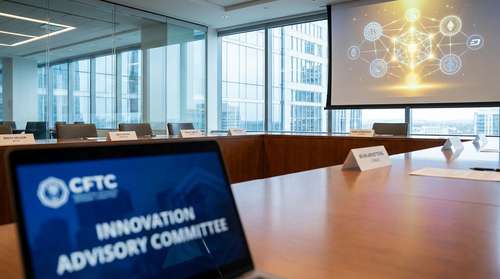
In a watershed moment for the U.S. digital asset industry, the Commodity Futures Trading Commission (CFTC) has officially launched its new Innovation Advisory Committee (IAC), appointing Coinbase CEO Brian Armstrong and a roster of industry titans to help draft the regulatory "rules of the road." Announced on Thursday by CFTC Chairman Mike Selig, the 35-member panel represents a decisive shift from the enforcement-heavy tactics of previous years toward a collaborative, industry-led approach to policy formation. Selig described the initiative as the cornerstone of a new "Golden Age" for American financial markets, aiming to solidify the United States' position as the global leader in blockchain and digital asset innovation.
The "Crypto Dream Team" Meets Traditional Finance
The formation of the IAC marks the first time federal regulators have granted such extensive formal influence to crypto-native executives. Alongside Brian Armstrong, the committee features a veritable "who's who" of the digital asset world, including Ripple CEO Brad Garlinghouse, Uniswap Labs CEO Hayden Adams, and Gemini co-founder Tyler Winklevoss. The inclusion of decentralized finance (DeFi) pioneers like Adams and Solana Labs CEO Anatoly Yakovenko signals a sophisticated understanding that future regulations must account for protocols, not just centralized intermediaries.
However, the CFTC has been careful to balance this crypto-heavy lineup with heavyweights from traditional finance (TradFi). Executives from Nasdaq, CME Group, Cboe Global Markets, and the Depository Trust & Clearing Corporation (DTCC) will sit alongside their crypto counterparts. This hybrid composition reflects the reality of US crypto regulation in 2026: a converging landscape where digital assets are increasingly integrated into the plumbing of mainstream global finance. The committee's mandate is to foster dialogue that bridges the gap between legacy infrastructure and the 24/7 nature of blockchain markets.
Brian Armstrong's Appointment: A Turning Point
For years, Brian Armstrong has been a vocal critic of regulatory ambiguity, often sparring publicly with agencies over the lack of clear guidance. His appointment to the IAC is widely viewed as an olive branch and a strategic pivot by Washington. By bringing the Coinbase CEO inside the tent, the CFTC is acknowledging that effective policy cannot be written without the technical expertise of the builders operating on the front lines.
"Coinbase is committed to fostering innovation while ensuring the crypto ecosystem remains secure and compliant," Armstrong stated following the announcement. "Working hand-in-hand with the CFTC allows us to build a regulatory framework that supports growth and protects consumers." Analysts suggest that Armstrong's primary focus will likely be on codifying market structure standards that allow compliant U.S. exchanges to compete on a level playing field with offshore rivals.
Agenda 2026: The Digital Asset Market CLARITY Act and Beyond
The committee hits the ground running with a packed agenda, heavily influenced by the recently debated Digital Asset Market CLARITY Act. One of the most pressing issues on the docket is SEC vs CFTC crypto jurisdiction. For too long, the industry has navigated a confusing turf war between the two agencies. Chairman Selig has hinted that the IAC will play a crucial role in operationalizing "Project Crypto," a joint initiative designed to harmonize oversight and eliminate duplicative registration requirements for firms that deal in both securities and commodities.
Stablecoin Yield Regulation Takes Center Stage
Another critical policy area for the committee is stablecoin yield regulation. As tokenized money becomes a standard settlement layer, clarity on how yield-bearing stablecoins are treated—whether as banking products, securities, or commodities—is essential. With leaders from Circle and other issuers involved in the broader conversation, the IAC is expected to propose guidelines that allow for yield generation while maintaining strict reserve audits and consumer protections.
Market Reaction and Future Outlook
The markets responded positively to the news, with Bitcoin pushing firmly past the $66,000 mark and major DeFi tokens seeing double-digit gains. Investors interpret the creation of the IAC as a sign that the regulatory headwinds that characterized the early 2020s are finally subsiding. By institutionalizing the voice of the industry, the CFTC is signaling that the U.S. is ready to provide the regulatory certainty needed to attract institutional capital and retain top engineering talent.
As the committee begins its work this month, the crypto industry will be watching closely. The hope is that this "Golden Age" rhetoric will translate into concrete, actionable rules that foster innovation rather than stifle it. With Armstrong, Garlinghouse, and other leaders now holding a direct line to the regulators, the path forward looks clearer than it has in a decade.