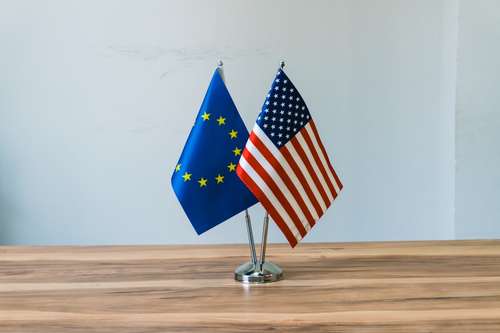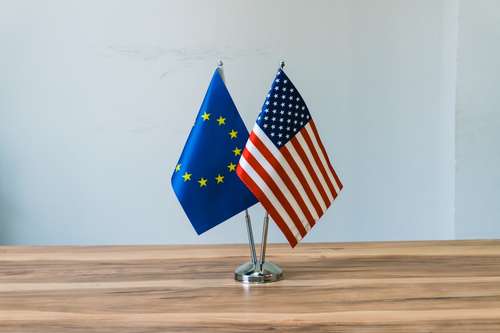

President Donald Trump has dramatically escalated his campaign to acquire Greenland, issuing a stark ultimatum to NATO allies: support the U.S. annexation or face punishing economic tariffs. The threat, delivered Friday from the White House, marks a volatile new chapter in the administration's push to secure the Arctic territory, which Trump has labeled indispensable for his ambitious "Golden Dome" missile defense project.
Tariff Threat Deepens Rift with European Allies
Speaking to reporters during a rural healthcare roundtable on January 16, President Trump explicitly linked trade penalties to his geopolitical goals in the Arctic. "I may put a tariff on countries if they don't go along with Greenland, because we need Greenland for national security," Trump declared. While he did not specify the exact rate, administration insiders suggest the White House is considering blanket levies of up to 25% on nations that actively block the acquisition—a move that would primarily target Denmark and the broader European Union.
The threat comes just days after a high-stakes meeting in Washington between Vice President JD Vance, Secretary of State Marco Rubio, and Danish Foreign Minister Lars Løkke Rasmussen ended in a "fundamental disagreement." The administration argues that the current lease agreements for Pituffik Space Base (formerly Thule Air Base) are insufficient for the scale of the proposed "Golden Dome" defense shield, requiring full U.S. sovereignty over the island to counter hypersonic threats from Russia and China.
The "Golden Dome" Defense Justification
At the center of the controversy is the President's flagship national security initiative: the Golden Dome. Billed as a $175 billion multi-layered missile defense system, the project aims to create an impenetrable shield against intercontinental ballistic missiles (ICBMs). Administration officials argue that Greenland's geography—situated directly on the "polar route" for missiles launched from Eurasia—is the only viable location for the system's next-generation interceptors and tracking arrays.
"If we don't have it, we have a big hole in national security," Trump warned, dismissing existing diplomatic arrangements. However, defense experts remain skeptical. Analysts have pointed out that the U.S. already enjoys sweeping military rights under the 1951 defense treaty with Denmark, leading critics to view the Golden Dome argument as a pretext for territorial expansion.
Bipartisan Delegation Lands in Crisis Zone
In an unprecedented move to reassure a rattled ally, a bipartisan delegation of U.S. lawmakers arrived in Copenhagen on Friday. Led by Senator Chris Coons (D-Del.) and including Republicans Thom Tillis (N.C.) and Lisa Murkowski (Alaska), the group aims to distance Congress from the President's annexation threats.
"Greenland needs to be treated as our ally, not as an asset," Senator Murkowski told reporters in the Danish capital, emphasizing that a hostile takeover of a NATO partner's territory would undermine the alliance's core principles. The delegation's presence highlights a widening chasm between the White House and Capitol Hill regarding Arctic policy, with many lawmakers fearing the standoff could fracture NATO unity at a time of rising global instability.
NATO Response and Arctic Militarization
The diplomatic crisis has already triggered tangible military maneuvers. In a show of solidarity with Copenhagen, several European nations, including France and Germany, have reportedly deployed small "reconnaissance" units to Greenland to support Danish sovereignty patrols. This quiet militarization of the dispute raises the stakes significantly, transforming a diplomatic spat into a potential standoff between NATO members.
Danish Prime Minister Mette Frederiksen has remained firm, reiterating that Greenland is "not for sale" and that the semi-autonomous territory belongs to its people. "This is an absurd discussion," Frederiksen stated, forcing the Trump administration to resort to the economic leverage of tariffs to break the deadlock.
What Happens Next?
As the trade war threat looms, markets are bracing for volatility. If the Trump administration follows through with tariffs, the European Union is expected to retaliate swiftly, potentially triggering a transatlantic trade war that could derail the global economic recovery. For now, the world watches to see if the "Golden Dome" will become a shield for America or a wedge that shatters the Western alliance.