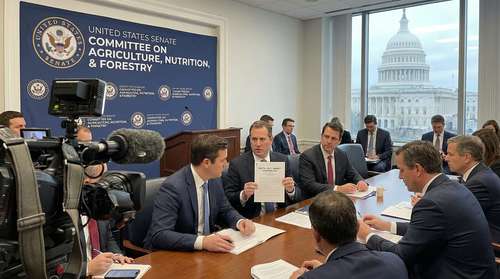
WASHINGTON — In a decisive move to end the years-long regulatory deadlock stifling the American crypto industry, the Senate Agriculture Committee today officially released its revised "Market Structure" draft bill. The landmark legislation, spearheaded by Committee Chair John Boozman (R-AR), aims to finally draw a bright red line between the jurisdictions of the Securities and Exchange Commission (SEC) and the Commodity Futures Trading Commission (CFTC). Coming just days before a scheduled January 27 markup, this draft represents perhaps the last best hope for passing comprehensive US Crypto Market Structure Bill legislation in 2026.
Breaking the SEC-CFTC Deadlock
The core promise of the new Senate Agriculture Committee crypto draft is clarity. For over a decade, digital asset firms have navigated a minefield of conflicting guidance, often described as "regulation by enforcement." This new framework seeks to reconcile the House-passed Digital Asset Market Clarity Act (CLARITY Act) with the more controversial amendments recently proposed by the Senate Banking Committee.
Under the proposed legislation, the CFTC would gain exclusive jurisdiction over "digital commodities"—a category explicitly defined to include assets that are decentralized and functional, stripping them of the "security" label that triggers SEC oversight. "We are ending the turf war," Senator Boozman stated during the press briefing. "This bill ensures that the SEC retains authority over capital-raising investment contracts, while the CFTC is empowered to police the spot markets where these assets trade as commodities."
Key Provisions of the 2026 Draft
The draft introduces several critical mechanisms designed to stabilize the market:
- Digital Commodity Certification: A streamlined process for projects to certify their decentralization status, moving them officially under CFTC purview.
- Qualified Custodians: Strict requirements for "Qualified Digital Commodity Custodians," mandating the segregation of customer funds to prevent FTX-style collapses.
- DeFi Safe Harbors: Unlike previous iterations, this draft includes tentative language protecting software developers from being treated as financial intermediaries, provided they do not control user funds.
The Legislative Context: A Race Against Time
The release comes at a volatile moment for crypto regulation 2026. Just last week, the Senate Banking Committee released a competing draft that faced immediate backlash, with industry giant Coinbase withdrawing support due to what it termed "unworkable" provisions regarding tokenized equities. This puts immense pressure on the Agriculture Committee's draft to bridge the gap.
"The failure of the Banking Committee's draft to garner industry consensus has raised the stakes for today's release," explains political analyst Sarah Jenkins. "If Boozman's bill can satisfy the rigorous consumer protection demands of Democrats while keeping the pro-innovation stance of the CLARITY Act, we might actually see a bill on the President's desk by summer."
Building on the Success of the GENIUS Act
Proponents are optimistic that the momentum from last year's legislative wins will carry this bill over the finish line. The GENIUS Act 2025, signed into law last July, successfully established a federal framework for stablecoins, proving that bipartisan consensus on digital assets is possible. The new Market Structure bill is seen as the necessary "Part Two" of that effort, addressing the broader and more complex market of volatile crypto assets.
However, hurdles remain. The draft must still be reconciled with the Senate Banking Committee's 2025 amendments regarding anti-money laundering (AML) compliance for decentralized finance (DeFi) protocols—a sticking point that has previously derailed negotiations. The Senate Agriculture draft proposes mandating the U.S. Treasury to study DeFi AML compliance rather than imposing immediate, unworkable strictures, a move likely to be welcomed by privacy advocates.
Industry Reaction and Next Steps
Early reactions from the blockchain sector have been cautiously optimistic. "This draft reflects a nuanced understanding of the technology that was missing in previous Senate attempts," noted the Blockchain Association in a statement released shortly after the text went public. "It respects the unique nature of digital asset legislation while providing the consumer safeguards necessary for mass adoption."
With the markup scheduled for January 27, lobbyists and lawmakers will spend the next week in intense negotiations to fine-tune the language. If the Committee can successfully vote the bill out next week, it sets the stage for a historic floor vote that could finally codify the rules of the road for the digital economy.