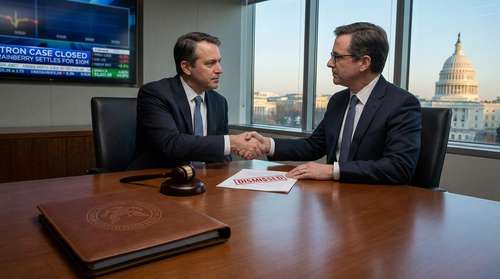
In a watershed moment for the cryptocurrency industry, the U.S. Securities and Exchange Commission (SEC) has officially ended its high-profile legal battle against Tron founder Justin Sun. As of March 6, 2026, the regulator has agreed to dismiss all personal claims against Sun and the Tron Foundation with prejudice, marking a decisive conclusion to the Justin Sun SEC settlement saga. Rainberry Inc., a Sun-affiliated entity formerly known as BitTorrent, agreed to pay a $10 million civil penalty to resolve the dispute, signaling a definitive shift in SEC crypto enforcement 2026 strategies under the new administration.
A Historic Victory for Tron and Justin Sun
The settlement, filed in the U.S. District Court for the Southern District of New York, effectively closes the chapter on one of the most aggressive enforcement actions from the previous regulatory regime. By dismissing the charges "with prejudice," the SEC is legally barred from refiling the same allegations against Sun or the Tron Foundation in the future.
This outcome is being hailed as a "complete vindication" by Tron supporters. While Rainberry Inc. will pay the $10 million fine, neither Justin Sun nor his companies admitted to any wrongdoing regarding the allegations of wash trading or selling unregistered securities. This nuance is critical, as it allows the Tron ecosystem to move forward without the stain of admitted fraud or market manipulation.
"Today's resolution brings closure, but I never stopped building," Sun stated in a post on X (formerly Twitter). "I will continue to focus on accelerating innovation in the United States and around the world and look forward to working with the SEC to develop guidance and regulations for crypto going forward."
The End of the SEC's 'Scorched Earth' Policy?
Legal analysts view this settlement as a bellwether for crypto regulation US 2026. Under the leadership of new SEC Chairman Paul Atkins, the agency appears to be pivoting away from the "regulation by enforcement" tactic that defined the Gary Gensler era. The dismissal of such a major case—one that sought to pin personal liability on a high-profile founder—suggests a new, more pragmatic approach to oversight.
The 'scorched earth' policy, which involved pursuing existential threats against major protocols, seems to be winding down. Instead, 2026 represents a year where the SEC is prioritizing clear guidelines over courtroom battles. This shift is further evidenced by the agency's decision to remove crypto assets from its list of "special risk" examination priorities for the year, a move that would have been unthinkable just two years ago.
Political Undertones and Market Reactions
The timing of the settlement has not escaped political scrutiny. Senator Elizabeth Warren criticized the move, linking it to the broader pro-crypto stance of the current administration. Critics point to Sun's recent investments in U.S.-based crypto projects as a potential factor, though no evidence suggests political interference in the legal process.
TRX Price News: Market Response to the Dismissal
Following the breaking news, the TRX price news was positive but surprisingly measured. Tron's native token, TRX, saw a swift bounce, trading firmly around the $0.28 mark. While it remains roughly 35% below its all-time high, analysts believe the removal of this legal overhang creates a massive tailwind for the asset.
For years, the looming threat of an SEC victory acted as a suppressor on TRX's valuation. With the Tron lawsuit dismissed, institutional investors who were previously wary of regulatory contagion may now view the Tron network as a safer environment for deployment. The settlement clears the path for potential ETF applications or deeper integration with U.S. financial rails, prospects that were previously dead on arrival.
What This Means for the Future of Crypto Regulation
The Rainberry $10 million fine is a drop in the bucket compared to the billions in value locked within the Tron ecosystem, but its symbolic value is immense. It establishes a precedent that companies can resolve legacy disputes with monetary penalties without sacrificing their leaders or admitting to existential flaws in their business models.
As we move deeper into 2026, expect to see other legacy crypto cases potentially resolved in similar fashion. The Tron Foundation legal news serves as a blueprint: a corporate fine, a permanent injunction against future violations, and a dismissal of personal liability. This model balances the SEC's need to enforce laws with the industry's need for certainty and survival.
For Justin Sun, the "bad boy" of crypto who once paid millions for a lunch with Warren Buffett only to postpone it, this settlement legitimizes his standing in the U.S. market. No longer a fugitive from U.S. regulators, he is now free to engage with the American market, potentially reshaping the competitive landscape for Layer-1 blockchains in 2026.