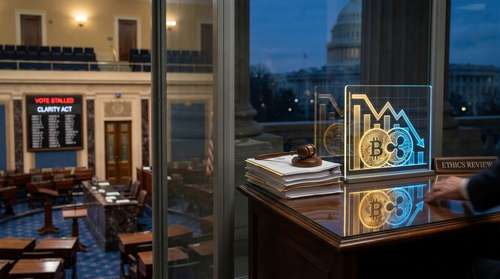
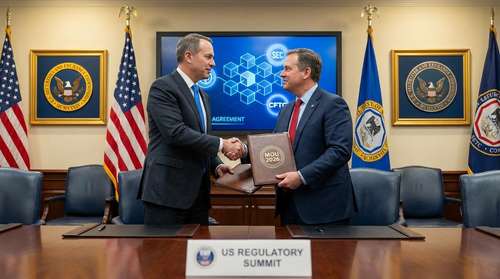
The U.S. cryptocurrency market has operated in a legal gray area for years, caught in a high-stakes tug-of-war between two of the nation's most powerful financial watchdogs. However, on March 11, 2026, a historic breakthrough permanently reshaped the financial landscape. A sweeping SEC CFTC crypto agreement was officially signed, establishing a landmark 'peace treaty' between the Securities and Exchange Commission and the Commodity Futures Trading Commission. This monumental policy shift promises to end decades of bureaucratic infighting and sets the stage for an unprecedented era of market clarity. For investors following crypto market news today, this development is the ultimate catalyst the industry has been demanding.
The Core of the SEC CFTC Memorandum of Understanding
The newly minted SEC CFTC Memorandum of Understanding (MOU) is far more than a ceremonial gesture. It represents a binding operational commitment to foster lawful innovation, protect retail and institutional investors, and streamline market oversight. SEC Chairman Paul S. Atkins openly acknowledged the friction of the past, noting that 'regulatory turf wars, duplicative agency registrations, and different sets of regulations between the SEC and CFTC have stifled innovation' and pushed lucrative businesses to foreign jurisdictions. By partnering with CFTC Chairman Michael S. Selig, the agencies are officially closing the curtain on the highly criticized 'regulation by enforcement' era.
Both regulatory bodies are now embracing a strategic approach they call the 'minimum effective dose' of regulation. Borrowed from pharmacology, this concept dictates applying the smallest amount of regulatory structure needed to produce the desired therapeutic benefit—in this case, maintaining market integrity without suffocating technological progress. The agreement creates a united front to provide comprehensive, seamless supervision while eliminating the burdensome, overlapping rules that previously bogged down digital asset trading platforms.
Resolving the Crypto Securities vs Commodities Debate
For years, the most paralyzing question for blockchain enterprises and token issuers has been the fundamental classification of their assets: how do we navigate the divide of crypto securities vs commodities? This ambiguity created a regulatory 'no man's land,' leaving firms highly vulnerable to sudden enforcement actions and keeping vital legal questions unresolved. To permanently address this, the regulators have formally launched the Joint Harmonization Initiative.
Co-led by the SEC's Robert Teply and the CFTC's Meghan Tente, this specialized initiative focuses directly on clarifying product definitions and establishing a unified rulebook for assets that exhibit characteristics of both asset classes.
Key Pillars of the Joint Harmonization Initiative
- Substitute Compliance: In a major win for the industry, firms registered with both agencies will be granted 'substitute compliance,' meaning their adherence to one regulator's rules effectively satisfies the similar regulations of the other. This drastically cuts administrative red tape.
- Modernized Clearing and Margining: The agreement opens the door for cross-margining in derivative markets. Traders and institutions can now use the same collateral across different platforms, freeing up massive balance sheet capacity and cutting capital costs.
- Unified Product Launch Portal: A joint regulatory website will be established where crypto startups can seek direct guidance and apply for pre-launch approvals efficiently, bypassing the need to navigate two separate agency processes.
This streamlined approach directly modernizes US digital asset regulation 2026, ensuring that complex tokens no longer leave companies paralyzed by legal doubt.
Building a 'Fit-for-Purpose' US Crypto Regulatory Framework
The new US crypto regulatory framework aims to be strictly technology-neutral yet highly adaptable to the realities of on-chain infrastructure. Traditional jurisdictional lines have been increasingly blurred by automated smart contracts, decentralized finance (DeFi) protocols, and hybrid digital assets. The priority now is providing a 'fit-for-purpose' rulebook that natively understands these emerging technologies.
With this unified front, the U.S. is positioned to greenlight advanced financial products that were previously blocked or endlessly delayed. Industry analysts note that this harmonization paves the way for the legal introduction of perpetual contracts on American soil—derivative products without an expiration date that have long dominated offshore exchanges. Furthermore, the collaboration is expected to accelerate the mainstream listing of event contracts and prediction markets, allowing traders to legally speculate on real-world outcomes under a transparent legal umbrella.
Accelerating Institutional Crypto Adoption in 2026
This regulatory treaty is perfectly aligned with the broader presidential administration mandate to establish the United States as the undisputed 'crypto capital of the planet'. With a predictable, unified rulebook finally taking shape, the invisible barriers keeping traditional finance (TradFi) sidelined are rapidly dissolving.
We can expect institutional crypto adoption 2026 to surge as Wall Street banks, pension funds, clearinghouses, and major asset managers gain the certainty required to deploy massive capital. When transparent policy replaces bureaucratic friction, risk officers at major financial institutions can confidently authorize digital asset custody, trading, and institutional-grade investment operations.
The days of navigating disjointed oversight are officially over. By combining their resources, aligning their definitions, and committing to shared data surveillance, the SEC and CFTC have unlocked the next golden age of American finance. As the joint task forces begin executing these sweeping changes, the global financial sector is witnessing the birth of a dominant, innovation-friendly market in the United States.