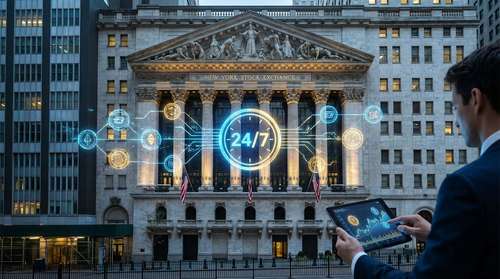
In a historic move that blurs the line between traditional finance and the digital asset economy, the New York Stock Exchange (NYSE) has officially announced the development of a revolutionary 24/7 blockchain-powered trading platform. Unveiled on January 19, 2026, this ambitious initiative by NYSE parent company Intercontinental Exchange (ICE) promises to bring continuous trading, instant settlement, and tokenized utility to blue-chip U.S. stocks and ETFs. By integrating distributed ledger technology with the exchange's world-class matching engine, the NYSE is poised to reshape the future of stock trading and reclaim market dominance from the crypto sector.
A New Era: 24/7 Stock Market Access
For over two centuries, the opening and closing bells of the NYSE have dictated the rhythm of global finance. That era is coming to an end. The newly unveiled NYSE blockchain trading platform is designed to operate 24 hours a day, seven days a week, effectively removing the constraints of traditional market hours. This shift addresses the growing demand from global investors for round-the-clock liquidity, a feature previously exclusive to cryptocurrency markets.
Beyond continuous access, the platform introduces tokenized stocks and ETFs that are fully fungible with their traditional counterparts. This means an investor could buy a tokenized share of Apple or a generic S&P 500 ETF on a Sunday night and sell it during traditional trading hours on Monday morning. The system also supports fractional share trading with orders sized in specific dollar amounts, drastically lowering the barrier to entry for retail investors who want to build diversified portfolios without purchasing expensive whole shares.
Blockchain Meets Institutional Grade Tech
The technological backbone of this initiative is a hybrid model that marries the speed of the NYSE's existing Pillar matching engine with the transparency and efficiency of blockchain post-trade systems. Unlike current settlement cycles that can take up to one business day (T+1), the blockchain equity platform will facilitate near-instant settlement. This "delivery versus payment" model reduces counterparty risk and frees up capital that would otherwise be tied up in clearing processes.
NYSE digital assets strategy also includes support for stablecoin-based funding. By allowing investors to use digital stablecoins for transactions, the exchange is bridging the gap between the $2 trillion crypto economy and the $50 trillion U.S. equity market. "We are leading the industry toward fully on-chain solutions," stated Lynn Martin, President of NYSE Group. "We are marrying trust with state-of-the-art technology to meet the demands of a digital future."
Banking on Tokenized Collateral
The ecosystem extends beyond just trading. ICE is actively collaborating with major financial institutions, including BNY and Citi, to support tokenized deposits across its clearinghouses. This infrastructure will allow clearing members to transfer and manage funds outside of traditional banking hours, ensuring that the 24/7 trading environment is supported by an equally always-on banking layer.
Regulatory Road Ahead
While the technology is ready, the platform's launch is subject to regulatory approval from the Securities and Exchange Commission (SEC). The announcement comes at a time when regulators are increasingly engaging with digital market structures. With tokenized ETFs and equities becoming a focal point for institutional growth, the NYSE's proposal offers a regulated, compliant alternative to offshore crypto exchanges.
Michael Blaugrund, Vice President of Strategic Initiatives at ICE, emphasized that supporting tokenized securities is a "pivotal step" in operating on-chain market infrastructure. As the SEC reviews the proposal, industry analysts suggest that the NYSE's reputation and existing surveillance capabilities may fast-track approval compared to crypto-native startups.
Impact on Global Investors
The introduction of a 24/7 stock market fundamentally changes the game for international investors. Previously, traders in Asia or Europe had to operate during U.S. business hours to trade American equities effectively. With this new platform, a trader in Tokyo can execute real-time trades during their own business day, utilizing tokenized stocks that offer the same dividends and governance rights as traditional shares.
This initiative marks the most significant evolution in market structure since the adoption of electronic trading. By validating the utility of blockchain for high-volume, regulated securities, the NYSE is not just adopting new tech—it is setting the standard for the next century of global capital formation.