JANUARY 13, 2026 – The "flippening" has finally arrived, but not the one cryptocurrency purists spent a decade predicting. In a historic shift for the digital infrastructure sector, aggregate revenue from Artificial Intelligence (AI) and High-Performance Computing (HPC) hosting has officially surpassed Bitcoin mining rewards for top publicly traded U.S. miners. New data released this morning by CoinShares and VanEck confirms that the Bitcoin mining AI pivot is no longer a speculative strategy—it is the dominant financial reality for the industry.
The Great Revenue Crossover of 2026
According to the latest industry reports, Q4 2025 marked the tipping point where AI cloud hosting revenue eclipsed legacy mining income for diversified giants like Core Scientific (CORZ) and IREN (formerly Iris Energy). The trend has accelerated into the first two weeks of 2026, driven by a stabilizing Bitcoin price—currently hovering around $90,400 after retreating from its October 2025 highs—and an insatiable appetite for compute power from hyperscalers.
"We are no longer just Bitcoin miners; we are energy infrastructure managers for the AI age," noted a lead analyst at VanEck. The numbers back this claim: AI workloads are currently generating an estimated $3.50 to $5.00 per megawatt-hour (MWh) in revenue, compared to the fluctuating $0.07–$0.09 per kWh equivalent often seen in pure-play Bitcoin mining. This 3-5x revenue multiplier has effectively split the market into two distinct tiers: the diversified "Compute 2.0" infrastructure firms and the struggling pure-play miners.
Core Scientific and the $8.7 Billion Validation
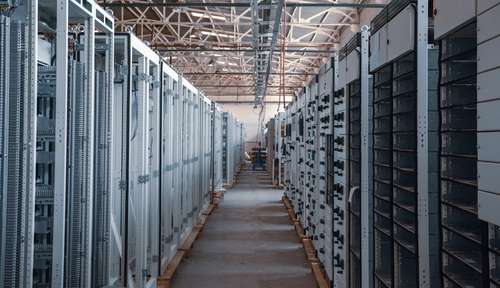
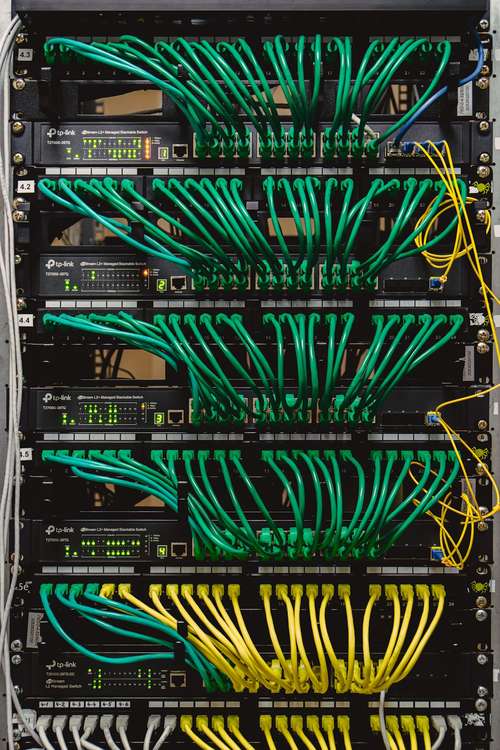
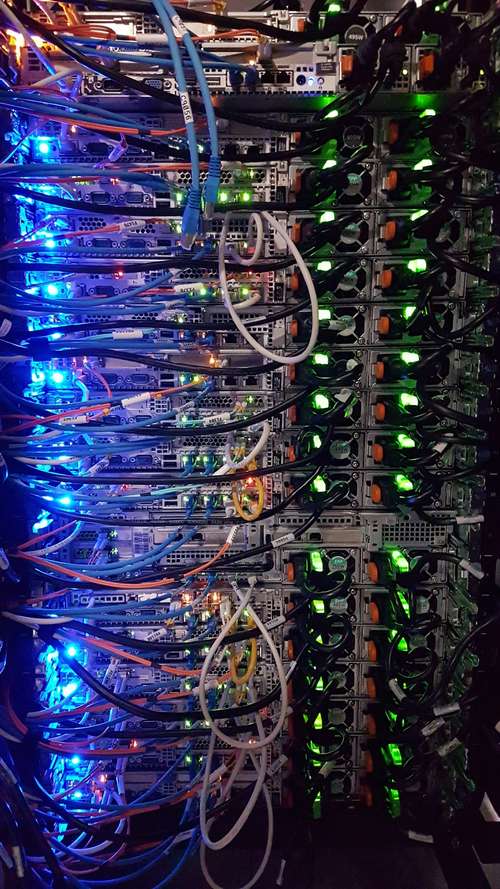
At the center of this transformation is Core Scientific. Following their landmark deal with CoreWeave, the company has successfully energized over 500 MW of HPC infrastructure as of this week. The partnership, projected to generate over $8.7 billion in revenue over its 12-year lifespan, has proven to be the blueprint for the entire sector.
While skeptics in 2024 questioned the feasibility of retrofitting mining facilities for the strict uptime and cooling demands of NVIDIA H200 and Blackwell GPUs, Core Scientific’s Q3 and Q4 2025 performance silenced critics. Their high-density colocation business is now the primary driver of free cash flow, insulating the company’s balance sheet from the recent 28% correction in Bitcoin prices since late 2025.
Sustainable Energy Mining Meets Silicon Valley
The pivot is also reshaping the environmental narrative. Sustainable energy mining has morphed into sustainable AI compute. IREN, a leader in renewable-powered operations, reported record quarterly revenue of $148.1 million recently, with their AI Cloud segment growing at a blistering 33% quarter-over-quarter. By securing "Preferred Partner" status with NVIDIA and deploying massive clusters of liquid-cooled GPUs, IREN has demonstrated that the same grid connections used to secure the blockchain are even more valuable when powering Large Language Models (LLMs).
HPC Infrastructure News: The "Land Grab" for Power
The driving force behind this shift is the scarcity of immediate power capacity. Building new greenfield data centers takes 3-5 years due to grid interconnection delays. Bitcoin miners, sitting on gigawatts of energized capacity, became the only viable bridge for tech giants desperate to deploy capital.
- Bit Digital (BTBT): Reported that AI services now account for the majority of their revenue, driven by their "WhiteFiber" business line.
- Cipher Mining (CIFR): Recently secured a multi-billion dollar joint venture to develop greenfield HPC sites, moving further away from hashrate dependence.
- TeraWulf (WULF): Continues to leverage its nuclear-powered Nautilus facility to offer carbon-free compute, commanding a premium in the AI hosting market.
This "power grab" has turned mining sites into prime real estate. As Morgan Stanley analysts noted in a note to investors yesterday, "The value of a mining company in 2026 is measured not in exahash, but in megawatts of transferable power capacity."
Bitcoin Mining Profitability 2026: The Pure-Play Struggle
For miners who refused to pivot, the landscape in early 2026 is unforgiving. With the Bitcoin network hashrate holding steady despite price drops, Bitcoin mining profitability is being squeezed. The "hashprice"—a measure of revenue per unit of computing power—dropped below $40 per petahash/day in late 2025 and struggles to recover.
Companies solely reliant on the block reward are facing a crisis of identity. Without the cushion of stable, high-margin AI contracts, high-cost producers are capitulating or becoming acquisition targets for their power assets. The industry is rapidly consolidating, with AI cloud hosting stocks commanding significantly higher valuation multiples (20x-30x earnings) compared to the single-digit multiples of traditional miners.
Green Data Centers Crypto: What Lies Ahead
As we look fast-forward through 2026, the distinction between a "crypto miner" and a "data center operator" will vanish. The winners of this cycle are the firms that recognized early that their true asset was not their ASICs, but their plug into the energy grid.
Investors are voting with their wallets. Since the start of the year, diversified mining stocks have outperformed Bitcoin itself by a wide margin. The message from Wall Street is clear: Bitcoin is the foundation, but AI is the growth engine. As the industry celebrates this revenue crossover today, it marks the end of the "Wild West" era of mining and the beginning of its institutional maturity as the backbone of the global AI economy.