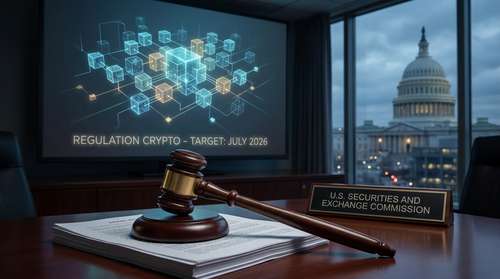
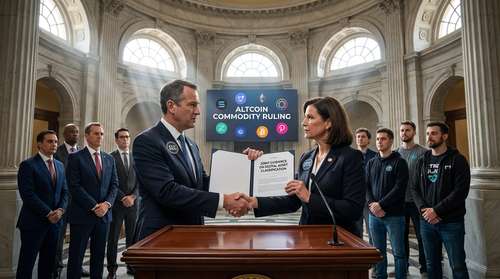
After a decade of turbulent oversight and overlapping jurisdictional claims, the United States regulatory landscape for digital assets has fundamentally shifted. On March 17, 2026, regulators released a highly anticipated 68-page interpretive document that formally categorizes top networks like Ether, XRP, and Solana outside of federal securities laws. This landmark SEC CFTC joint guidance effectively ends the contentious era of "regulation by enforcement," establishing a definitive legal framework for developers, investors, and institutional participants operating in the American market.
The Dawn of Clear Crypto Regulation 2026
The newly published interpretive release stems from "Project Crypto," a collaborative initiative launched in early 2026 to harmonize federal oversight and eliminate duplicative reporting rules. Under the new Atkins SEC crypto policy, the Securities and Exchange Commission has officially abandoned the aggressive, litigation-heavy tactics favored by previous administrations. SEC Chairman Paul Atkins explicitly stated at the DC Blockchain Summit that the agency is no longer the "securities and everything commission," signaling a pragmatic return to core regulatory mandates.
Working closely alongside CFTC Chairman Michael Selig, the regulatory bodies have delivered a binding posture that provides immediate, tangible relief to the industry. By officially determining that a wide spectrum of decentralized networks do not pass the 1946 Howey Test for investment contracts, regulators have given the green light for blockchain innovation to remain stateside. This proactive approach to crypto regulation 2026 marks a decisive victory for builders who previously operated under the constant, looming threat of retroactive lawsuits and overlapping enforcement actions.
Breaking Down the Digital Asset Taxonomy
Central to this historical SEC CFTC joint guidance is the creation of a comprehensive, five-part digital asset taxonomy. Instead of painting the entire industry with a single broad brush, regulators have now divided the ecosystem into distinct, functional categories: digital commodities, digital collectibles, digital tools, stablecoins, and digital securities.
Digital collectibles encompass non-fungible tokens acquired for artistic or cultural purposes, while digital tools cover utility tokens used purely for internal software access. Stablecoins are evaluated based on their specific backing mechanisms. Crucially, only the final category—digital securities representing tokenized versions of traditional financial instruments like corporate stocks or U.S. Treasuries—remains strictly under the SEC's direct purview.
Understanding the Digital Commodity Classification
The most consequential aspect of this joint regulatory release is the formal digital commodity classification applied to major cryptocurrencies. The document explicitly names 16 heavyweight assets—including Bitcoin (BTC), Ethereum (ETH), XRP, Cardano (ADA), Avalanche (AVAX), and Polkadot (DOT)—as digital commodities. Even community-driven meme tokens like Dogecoin (DOGE) and Shiba Inu (SHIB) made the official list, proving that high-activity assets with functional decentralized networks fall under this protective umbrella regardless of their origins.
Particularly noteworthy is the explicit Solana commodity ruling. During the tenure of former SEC Chair Gary Gensler, Solana was frequently cited as an unregistered security in sweeping lawsuits against major centralized exchanges. Today, both the SEC and CFTC acknowledge that Solana derives its intrinsic value from the programmatic operation of a functional crypto system and organic supply-and-demand dynamics. This classification completely divorces the network from the essential managerial efforts of a centralized corporate entity, granting it full commodity status.
Resolving the Crypto Staking Legal Status
For decentralized finance (DeFi) participants and enterprise infrastructure providers, the regulatory ambiguity surrounding network participation has been a massive hurdle suppressing domestic growth. The SEC CFTC joint guidance directly resolves the crypto staking legal status, definitively stating that protocol-level staking does not inherently constitute a securities offering. Regulators clarified that validating transactions and securing a network are administrative, ministerial activities rather than profit-seeking investment contracts.
This protective stance extends to other critical blockchain mechanisms that have sat in legal limbo. Protocol mining on Proof-of-Work networks, standard token wrapping protocols, and broad-based community airdrops have all received blanket clearance from securities classification. By establishing that these core activities are operational functions necessary for network health, regulators have dramatically lowered the compliance barriers for domestic infrastructure providers and node operators.
Market Impact and Legislative Next Steps
The immediate market impact of this historic SEC CFTC joint guidance cannot be overstated. Traditional financial institutions that previously hesitated to engage with altcoins due to crippling compliance risks now have a reliable, agency-backed blueprint. Industry analysts anticipate an accelerated rollout of advanced derivatives and structured investment products built around these newly classified digital commodities.
While the interpretive guidance provides robust and immediate clarity for market participants, lawmakers are already working to cement these definitions permanently. The industry's focus now shifts to the United States Senate Banking Committee, where the pending CLARITY Act awaits critical markup. If passed, this digital asset market structure bill will formally enshrine the SEC and CFTC's new taxonomy into federal statute, ensuring that this pro-innovation framework outlasts any single political administration.
The United States has finally transitioned from an environment of enforcement-driven hostility to one of structured, predictable oversight. Institutional investors, enterprise developers, and everyday retail traders can now navigate the digital asset economy with the confidence that the rules of the road are finally written in ink.