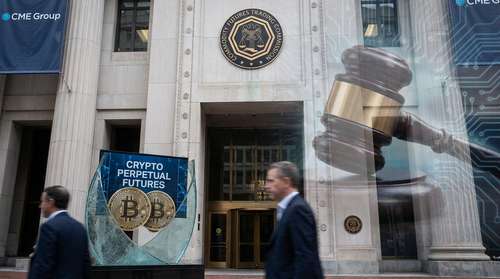
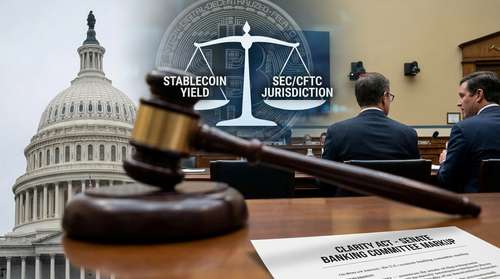
After months of intense negotiations and legislative gridlock, the push for a unified crypto regulatory framework USA is finally accelerating. As of May 8, 2026, a highly anticipated CLARITY Act Senate markup is officially on the horizon. The Senate Banking Committee has circulated draft legislative text to key industry participants, setting the stage for a critical procedural vote that could establish the clearest guardrails yet for the American digital asset sector.
A Breakthrough for the Digital Asset Market Clarity Act
The Digital Asset Market Clarity Act, which overwhelmingly passed the House in July 2025 by a bipartisan 294-134 margin, has faced significant hurdles in the upper chamber since January. Progress was temporarily halted largely due to fierce debates over decentralized finance (DeFi) provisions, tokenized equities, and banking industry objections regarding digital asset rewards. However, recent Senate Banking Committee crypto news shifted dramatically this week following a high-stakes agreement forged by Senators Thom Tillis (R-N.C.) and Angela Alsobrooks (D-Md.).
Senate Banking Committee Chairman Tim Scott emphasized the urgency of the moment, noting that lawmakers are currently "in the red zone" to finalize the legislation before the 119th Congress concludes. With recent nationwide polling indicating that 52% of registered voters back the bill, the political pressure to deliver a concrete federal framework has never been higher. Independent, Republican, and Democratic voters are showing unified support for clear digital asset legislation over regulation by enforcement.
Resolving the SEC vs CFTC Jurisdiction Bill
At its core, the legislation serves as the definitive SEC vs CFTC jurisdiction bill. It strictly divides regulatory oversight based on objective asset classifications. Digital commodities traded on decentralized spot markets will fall under the exclusive regulatory purview of the Commodity Futures Trading Commission (CFTC). Meanwhile, tokens representing equity, debt, or capital-raising ventures remain tightly regulated by the Securities and Exchange Commission (SEC) as investment contract assets. This clear statutory bifurcation aims to end the turf wars that have historically plagued American crypto developers.
Navigating the Stablecoin Yield Regulation 2026 Compromise
The most persistent roadblock delaying the legislation was the highly contentious debate surrounding stablecoin yield regulation 2026. Banking advocates argued that allowing digital asset firms to pass interest-like yields to stablecoin holders effectively created an ecosystem of unregulated shadow banks. The banking lobby demanded strict prohibitions to prevent stablecoins from cannibalizing traditional deposit accounts.
The Tillis-Alsobrooks compromise successfully threads the legislative needle. Under the revised text heading into the CLARITY Act Senate markup, stablecoin issuers are strictly prohibited from offering passive yields that are economically or functionally equivalent to traditional bank deposit interest. Crucially, however, the agreement preserves the ability of crypto platforms to distribute rewards based on actual user engagement and network participation. Coinbase Chief Policy Officer Faryar Shirzad publicly commended this nuanced provision, noting it protects the ability of average Americans to earn rewards tied to real usage of decentralized networks.
Building on the GENIUS Act Stablecoin Update
This specific yield compromise acts as a critical GENIUS Act stablecoin update. When President Donald Trump signed the Guiding and Establishing National Innovation for U.S. Stablecoins (GENIUS) Act into law on July 18, 2025, it mandated 1-to-1 U.S. dollar reserve backing and imposed rigorous anti-money laundering (AML) requirements. However, the traditional financial sector quickly pointed out a lingering gray area: while stablecoin issuers were barred from paying interest directly, third-party cryptocurrency exchanges could still theoretically incentivize holding stablecoins on their platforms. The updated CLARITY text definitively bridges this gap, creating clear boundaries that appease traditional banks while fostering digital ecosystem growth.
What the Senate Banking Committee Crypto News Means for Markets
The economic and geopolitical stakes for the upcoming markup are massive. Treasury Secretary Scott Bessent recently argued that a growing share of digital asset development has relocated offshore due to America's ambiguous rulebook, emphasizing that the benefits of domiciling in the U.S. rarely outweighed the legal risks. Passing this legislation is viewed as the primary mechanism to reverse that capital flight.
With the Tillis-Alsobrooks agreement cemented, industry leaders are urging immediate action. Blockchain Association CEO Summer Mersinger released a statement commending the bipartisan effort, emphasizing that resolving the yield question clears the path to the markup and brings the nation meaningfully closer to comprehensive market structure reform.
Furthermore, national security has emerged as a major catalyst for swift passage. Recent survey data reveals that nearly half of American respondents view offshore cryptocurrency activity outside U.S. oversight as a growing threat to domestic financial influence and national security. Senator Cynthia Lummis capitalized on these findings following the markup announcement, declaring that the American people want the nation to lead the way on digital assets. As prediction markets place the odds of the bill passing this year at roughly 67%, the global financial community is watching Washington closely.