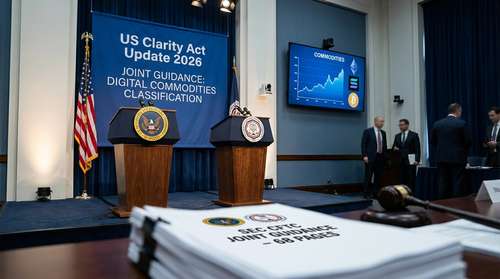
In a historic pivot for digital asset oversight, federal regulators have officially ended a decade of jurisdictional ambiguity. On March 17, 2026, regulators released a highly anticipated 68-page SEC CFTC joint guidance document that definitively restructures the American digital asset landscape. The landmark interpretation officially establishes a digital commodities classification for 16 major tokens, explicitly shifting oversight away from standard securities laws. For network participants and investors alike, the decision formally validates the Ether commodity status and resolves lingering anxieties surrounding the Solana SEC ruling, marking a permanent shift in how decentralized networks operate within the United States.
Establishing a Definitive Digital Commodities Classification
The core of this groundbreaking regulatory framework is a newly established, five-tier token taxonomy designed to provide workable rules of the road for innovators. Developed collaboratively by SEC Chairman Paul S. Atkins and CFTC Chairman Michael S. Selig under the "Project Crypto" initiative, the framework categorizes assets into digital commodities, digital collectibles, digital tools, stablecoins under the GENIUS Act, and tokenized versions of traditional securities.
Under this new paradigm, tokens whose value relies on programmatic network operations and decentralized market dynamics—rather than the direct managerial efforts of a centralized corporate entity—are recognized strictly as digital commodities. This structural distinction effectively neutralizes the legal threats that have historically plagued leading altcoins. By cementing the Ether commodity status and effectively resolving the hostile regulatory stance that drove the earlier Solana SEC ruling controversies, the agencies have provided an immediate green light for institutional market participation. The document also establishes clear guidelines on how a digital asset can transition away from being considered an investment contract once its underlying network achieves sufficient decentralization.
Clear Boundaries for Crypto Staking Regulation
Perhaps the most celebrated aspect of the interpretation is its resolution of long-standing friction surrounding network participation. The guidance explicitly states that fundamental protocol-level activities do not constitute an "investment of money" under the Howey test.
This long-awaited crypto staking regulation clarifies that running validator nodes, participating in protocol mining, wrapping non-security tokens, and receiving decentralized airdrops fall entirely outside federal securities jurisdiction. For years, developers and network participants operated under the constant threat of retroactive enforcement, which stifled domestic innovation and pushed infrastructure providers overseas. The agencies have now acknowledged that penalizing users for securing a blockchain contradicts the technical realities of decentralized infrastructure. By removing these foundational activities from the purview of the Securities Act, developers can reliably incentivize network security without inadvertently triggering restrictive compliance requirements. This exemption provides a massive tailwind for liquid staking providers and node operators based in the United States.
US Clarity Act Update: Bridging the Legislative Gap
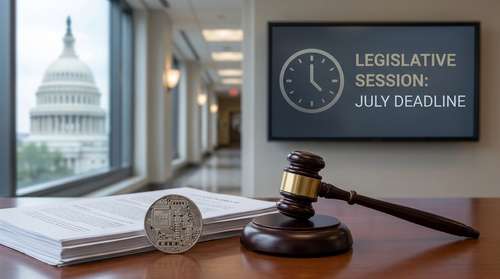
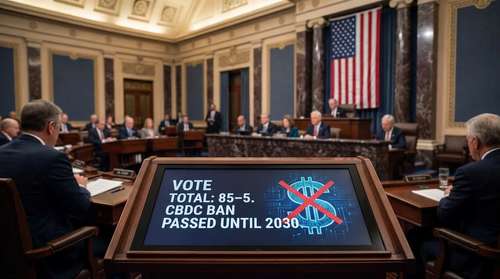
While the joint interpretation provides immediate and substantial relief, agency leaders were quick to emphasize that permanent, future-proofed statutory frameworks still require congressional action. This brings into focus the latest US Clarity Act update. Officially known as the Digital Asset Market Clarity Act, this comprehensive market structure bill successfully passed the House of Representatives in 2025 but has faced heavy friction in the Senate.
The primary legislative roadblock remains a contentious debate over whether platforms should be permitted to pay yield on stablecoins without triggering full federal banking requirements. Traditional banking lobbyists argue that yield-bearing stablecoin accounts are functionally equivalent to savings accounts, while crypto advocates maintain they represent a distinct technological innovation. Regulators acknowledge that the SEC CFTC joint guidance serves as an essential, immediate bridge for the industry while the Senate works to resolve these stablecoin yield provisions. Lawmakers and industry executives have openly signaled that if the legislation does not move through committee by late April, its chances of passing before the 2026 midterm election cycle will diminish significantly, leaving the industry reliant entirely on agency interpretations.
The Landscape of Crypto Regulation 2026
The ramifications of this unified agency action extend far beyond legal semantics. A recent industry survey indicated that 66% of institutional investors viewed an uncertain regulatory environment as their primary barrier to digital asset adoption. With clear jurisdictional lines finally drawn and a coherent taxonomy in place, capital allocators have the framework necessary to integrate digital commodities into traditional financial portfolios without the looming threat of sudden enforcement actions.
The unprecedented collaboration between the SEC and the CFTC signals a rapidly maturing approach to crypto regulation 2026. Rather than engaging in the regulatory turf wars that characterized previous administrations, federal agencies are now coordinating to foster domestic technological innovation. As the market digests the full scope of this comprehensive 68-page framework, the focus will inevitably shift back to Capitol Hill, where the final codification of these principles awaits legislative approval.