Tensions between Washington and Tehran reached a boiling point on Wednesday as President Donald Trump dramatically escalated U.S. involvement in the ongoing Iranian crisis. With the death toll from anti-government protests reportedly surpassing 2,500, Trump issued a direct call for demonstrators to "take over institutions" and promised that American assistance is imminent. The President's fiery rhetoric was matched by swift economic action, as he announced an immediate 25% tariff on any nation continuing to do business with the Islamic Republic.
“Take Over Your Institutions”: Trump's Call to Action
In a Truth Social post that reverberated across global capitals on Tuesday, President Trump abandoned diplomatic caution, directly encouraging Iranian protesters to overthrow the ruling theocracy. "Iranian Patriots, KEEP PROTESTING - TAKE OVER YOUR INSTITUTIONS!!!" the President wrote. He advised demonstrators to "save the names of the killers and abusers," warning that regime officials would "pay a big price" for the violence unleashed on civilians.
The most significant pivot came in his pledge of direct support: "I have canceled all meetings with Iranian Officials until the senseless killing of protesters STOPS. HELP IS ON ITS WAY." While the White House has not yet specified the nature of this "help," the phrasing has fueled speculation ranging from enhanced cyber-warfare capabilities to restore internet access—similar to Starlink initiatives—to potential kinetic military options.
The Economic Hammer: 25% Tariffs on Global Trade
Moving beyond rhetoric, the Trump administration unleashed a massive economic weapon intended to isolate Tehran completely. Effective immediately, the U.S. will impose a blanket 25% tariff on imports from any country that conducts business with Iran. This move places immense pressure on Iran's remaining economic lifelines, particularly targeting major trading partners like China, India, and Turkey.
The tariff announcement sent shockwaves through global markets, with Beijing already vowing to "take all necessary measures" to safeguard its interests. However, the ultimatum forces international corporations to make a stark choice: continue trading with a destabilized Iran or maintain access to the lucrative American market without punitive duties. Analysts suggest this "maximum pressure" strategy aims to bankrupt the regime's security apparatus as it struggles to contain the nationwide uprising.
A Bloodied Nation: Death Toll Climbs to 2,571
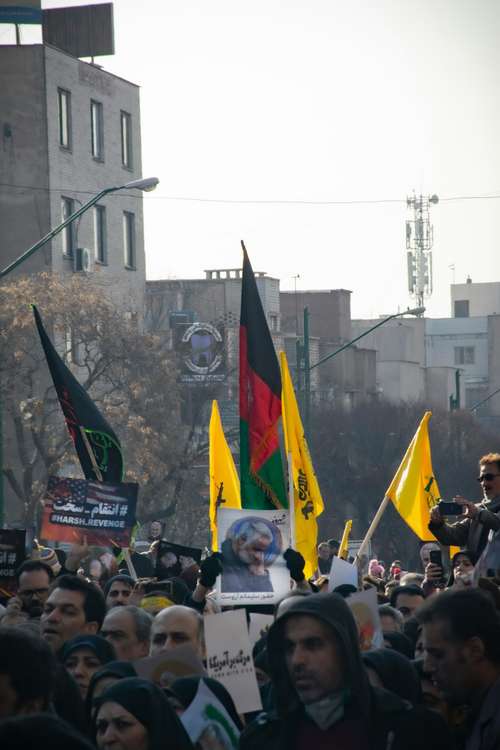
The urgency of the U.S. response follows a harrowing escalation in violence on the ground. According to the U.S.-based Human Rights Activists News Agency (HRANA), the death toll from the crackdown has now reached at least 2,571. The violence, which began in late December 2025 as economic grievances, has morphed into a full-scale revolution against Supreme Leader Ayatollah Ali Khamenei.
Inside the Crackdown
Reports trickling out of the country despite a near-total internet blackout paint a grim picture. Activists describe morgues in Tehran overflowing with bodies, while security forces reportedly use live ammunition indiscriminately against crowds. Beyond the fatalities, human rights groups estimate that over 18,100 people have been detained in mass arrests across 31 provinces. The regime has labeled the protesters as "terrorists" and "foreign agents," a rhetoric often used to justify lethal force and expedited executions.
“All Options on the Table”: The Military Threat
The prospect of U.S. military intervention looms larger than at any point in recent history. White House Press Secretary Karoline Leavitt confirmed on Monday that President Trump is "unafraid" to use military force if the slaughter continues. "Airstrikes would be one of the many, many options that are on the table for the commander-in-chief," Leavitt told reporters, signaling that the administration is moving beyond purely diplomatic warnings.
This threat carries significant weight given the administration's recent aggressive foreign policy maneuvers. With U.S. assets in the region on high alert, the promise that "help is on its way" has led to fears—and hopes—that the U.S. might target the Islamic Revolutionary Guard Corps (IRGC) infrastructure directly to degrade their ability to suppress the population. For now, the world watches as the people of Iran face down their government, bolstered by the most explicit American pledge of intervention since the 1979 revolution.