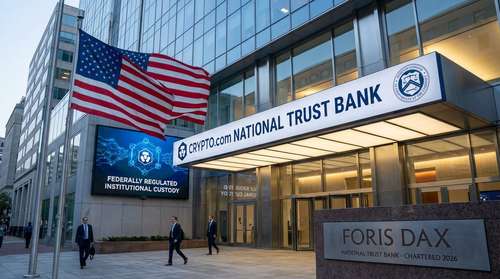
In a watershed moment for the digital asset industry, Crypto.com has received conditional approval from the Office of the Comptroller of the Currency (OCC) to operate as a federally regulated National Trust Bank. The announcement, made earlier this week, marks a decisive shift in the U.S. regulatory landscape, positioning the Singapore-headquartered platform as one of the first global exchanges to bridge the divide between traditional banking standards and blockchain infrastructure. Under the charter, the newly formed entity will operate as Foris Dax National Trust Bank, doing business as Crypto.com National Trust Bank.
A Major Regulatory Breakthrough for Foris Dax National Trust Bank
The OCC’s decision validates a rigorous application process initiated in October 2025, granting Crypto.com the authority to offer institutional-grade fiduciary services under direct federal supervision. Unlike state-level licenses, this OCC crypto bank charter preempts many patchwork state regulations, allowing the firm to operate uniformly across the United States. The charter specifically authorizes the bank to provide custody, trade settlement, and staking services for digital assets, although it will not accept retail deposits or issue loans, maintaining a focused scope as a limited-purpose trust bank.
Kris Marszalek, CEO of Crypto.com, described the approval as the "gold standard" of compliance. "This milestone brings us a major step closer to meeting leading institutions' needs for a one-stop-shop qualified custodian under federal oversight," Marszalek stated. The move is expected to significantly de-risk institutional participation in the crypto market, providing the regulatory certainty that large asset managers and pension funds have long demanded.
Redefining Institutional Crypto Custody
The approval comes at a critical time for institutional crypto custody. With the implementation of the GENIUS Act in July 2025, federal pathways for digital asset banks have widened, yet the standards remain exacting. By securing this charter, Crypto.com distinguishes itself from competitors reliant solely on state trust charters. The federal stamp of approval offers clients a higher degree of bankruptcy remoteness and fiduciary protection, essential features for US digital asset banking news observers.
For institutions, the ability to stake assets across various protocols—including Cronos, Ethereum, and Solana—within a federally chartered bank environment is a game-changer. It integrates yield-generating activities directly into a regulated custody framework, solving a complex compliance puzzle that has previously sidelined capital.
Separation of Services
It is important to note that this new federal entity will operate alongside, but separate from, the existing Crypto.com Custody Trust Company, which remains regulated by the New Hampshire Banking Department. This dual-structure approach allows Crypto.com to maintain continuity for existing clients while building out its new federal capabilities for the federal crypto regulation 2026 landscape.
The Broader Impact on Blockchain Financial Infrastructure
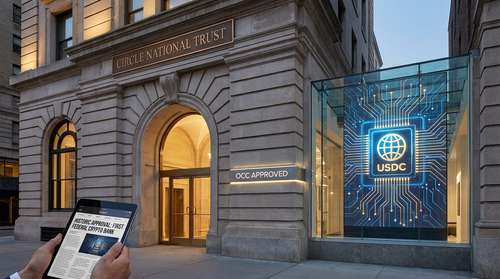
Crypto.com’s success is part of a broader wave of regulatory integration. Following similar conditional approvals for firms like Circle and Ripple in late 2025, the OCC is effectively architecting a new blockchain financial infrastructure embedded within the national banking system. This trend signals that U.S. regulators are moving from a stance of skepticism to one of structured integration, provided firms can meet the high capital and compliance bars set by the OCC.
Industry analysts suggest this "now-or-never" regulatory shift will likely trigger further consolidation, as smaller players struggle to match the compliance resources of giants like Crypto.com. As the company works to satisfy the final conditions for its charter, the industry watches closely. The operational launch of Crypto.com National Trust Bank will not just expand the company's footprint; it will set a precedent for how digital value is banked, secured, and settled in the American economy for decades to come.