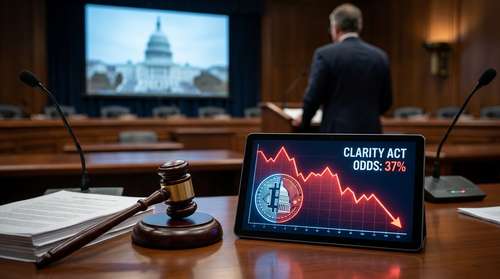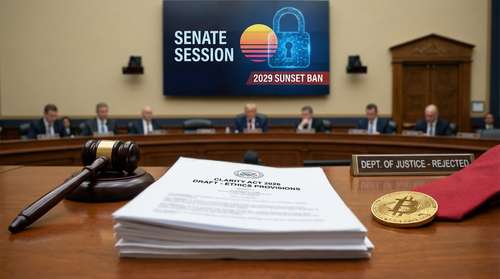
In a stunning reversal that has left Capitol Hill scrambling, Coinbase has officially withdrawn its support for the Senate's version of the CLARITY Act 2026, effectively paralyzing the most significant attempt at U.S. crypto market structure reform to date. The move, announced late last week by CEO Brian Armstrong, forced the Senate Banking Committee to indefinitely postpone a critical markup hearing scheduled for this week, plunging the industry into a fresh state of legislative limbo.
The Dealbreaker: Why Coinbase Walked Away
The collapse of negotiations centers on what Coinbase describes as "untenable" last-minute changes to the Digital Asset Market Clarity Act. While the House version of the bill garnered cautious optimism, the Senate draft—steered by Banking Committee Chairman Tim Scott—introduced provisions that Armstrong argues would cripple the domestic crypto industry rather than regulate it.
At the heart of the dispute is a newly inserted clause regarding DeFi AML requirements 2026. The revised text would mandate that decentralized finance protocols comply with the Bank Secrecy Act (BSA) in a way that critics argue is technologically impossible. By treating open-source software developers as financial institutions, the bill effectively imposes a shadow ban on decentralized exchanges that cannot perform Know-Your-Customer (KYC) checks on users.
Stablecoin Yields and Bank Lobbying
Beyond DeFi, the most contentious battleground appears to be the treatment of stablecoin rewards. Sources close to the negotiations reveal that powerful banking lobbyists successfully pushed for language that would prohibit non-bank stablecoin issuers from offering yield-bearing products to customers. For Coinbase, which generates over $1 billion annually from its partnership with Circle and USDC reserves, this was a non-starter.
In his statement, Armstrong blasted the provision as a blatant protectionist measure designed to shield traditional banks from digital competition. "We cannot support a bill that protects the past at the expense of the future," Armstrong wrote, signaling that the exchange would prefer the current regulatory stalemate over a law that enshrines a banking monopoly on interest-bearing accounts.
Senate Banking Committee in Disarray
The Coinbase Senate bill withdrawal has sent shockwaves through the Senate Banking Committee. Chairman Scott, who had hoped to fast-track the legislation before the mid-term campaign season heats up, is now facing a revolt not just from industry leaders, but potentially from the White House. Reports surfaced late Sunday that administration officials, previously supportive of the CLARITY Act, are reconsidering their stance following Coinbase's exit, labeling the sudden breakdown a "rug pull" of legislative progress.
The delay effectively kills the momentum for passing comprehensive US crypto market structure laws in the first quarter of 2026. With the markup postponed, lawmakers must now decide whether to strip out the controversial banking and DeFi provisions—risking the loss of support from skeptical Democrats like Ranking Member Elizabeth Warren—or abandon the effort entirely for this session.
Expanding SEC Crypto Authority
Another major sticking point for the industry is the bill's shift in regulatory power. Early drafts promised to empower the Commodity Futures Trading Commission (CFTC) over digital commodities. However, the final Senate text appears to slide significant jurisdiction back to the Securities and Exchange Commission.
Legal experts warn that the new language regarding SEC crypto authority 2026 could codify the agency's aggressive "regulation by enforcement" approach. By broadening the definition of "crypto asset securities" to include tokenized equities and potentially even governance tokens, the bill threatens to trap vast swaths of the ecosystem under a regulatory regime that has been historically hostile to digital assets.
Industry Reaction: A House Divided
While Coinbase has taken the lead, the industry's reaction has been mixed. Some institutional players, desperate for any form of regulatory clarity, have quietly expressed frustration with Armstrong's "all or nothing" approach. However, the DeFi Education Fund and major venture capital firms have rallied behind the decision, arguing that the Senate's version of the CLARITY Act had morphed into a Trojan horse that would have legalized the surveillance of private software code.
As Washington wakes up to a stalled legislative calendar this Monday, one thing is clear: without the backing of the largest U.S. exchange, the CLARITY Act is dead in the water. The question now is whether a new compromise can be forged before the 2026 political window closes for good.