Wall Street has waited years for a definitive rulebook, and Washington just delivered. In a historic joint guidance released today, the long-standing jurisdictional turf war over digital asset oversight has finally concluded. The SEC CFTC joint guidance officially reclassifies 16 major cryptocurrencies—including Solana, XRP, Cardano, and Dogecoin—as digital commodities. This aggressive pivot ends an era of regulation-by-enforcement and establishes the legal bedrock required for full-scale institutional crypto adoption.
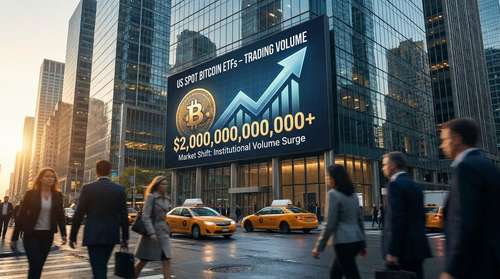
The implications for the broader financial ecosystem are immediate. Asset managers previously sidelined by compliance concerns are now rushing to file paperwork for new structured products. By lifting the heavy 'unregistered securities' label from these top-tier networks, regulators have fundamentally rewritten the SEC crypto classification 2026 playbook, clearing the runway for an influx of institutional capital.
Inside the Historic Joint Regulatory Guidance
For years, the crypto industry operated in a state of exhausting regulatory limbo. Projects launched with the persistent fear that an unexpected agency subpoena could derail their operations overnight. The new framework permanently shifts that dynamic. By publishing an explicit, definitive digital commodities list, regulators have drawn a clear line in the sand between decentralized layer-one networks and traditional investment contracts.
Under the newly established guidelines, secondary-market trading for these 16 assets falls squarely under the Commodity Futures Trading Commission's purview. The Securities and Exchange Commission retains jurisdiction strictly over initial fundraising mechanisms, presales, and tokenized equities. This bilateral agreement effectively shields retail and institutional traders from the legal overhang that previously suppressed liquidity and stifled stateside innovation.
Unlocking Unprecedented Institutional Capital
Clarity acts as the ultimate catalyst for institutional money. Hedge funds, pension plans, and family offices demand predictable compliance frameworks before deploying billions in client capital. Now that the agencies have codified true crypto regulatory clarity, clearinghouses and major custodians can confidently integrate these assets into legacy trading terminals. Prime brokerages are already actively revising their internal risk models to accommodate commodity-grade digital assets, signaling a massive liquidity migration.
Vindication and the New XRP Commodity Status
Perhaps no community feels the weight of this decision more acutely than the XRP ledger ecosystem. After enduring one of the most protracted and bruising legal battles in modern financial history, the XRP commodity status is now an undisputed matter of federal record. The guidance explicitly exempts secondary market sales of the token from stringent securities laws, validating the core arguments championed by its defense team for over half a decade.
Market researchers anticipate a dramatic structural repricing. According to recent commentary from prominent market analysts, this regulatory re-categorization could trigger an 'oil and gold rush' dynamic. In the early days of the U.S. oil industry, crude was often viewed as a messy nuisance before refining infrastructure transformed it into a foundational, global commodity. XRP is tracking a strikingly similar trajectory—moving past years of legal friction to become a baseline utility asset for frictionless cross-border liquidity.
Surging Solana ETF Approval Odds
Beyond XRP, the regulatory pivot immediately changes the fate of high-performance blockchains aiming for Wall Street wrappers. Prior to this guidance, asset managers faced steep uphill battles convincing regulators to greenlight products tied to proof-of-stake networks. The commodity designation just demolished those administrative roadblocks, pushing Solana ETF approval odds from speculative bets to near-certainty.
Several leading Wall Street issuers are currently fast-tracking S-1 registration statements for spot Solana exchange-traded funds. Because Solana now shares the exact same regulatory classification as Bitcoin and Ethereum, the SEC lacks the statutory basis to arbitrarily deny these applications on the grounds of market manipulation or inherent security status. Industry insiders expect the first wave of structured Solana products to hit national exchanges before the end of the third quarter.
The Bifurcation of Digital Assets
The inclusion of networks like Cardano, Avalanche, and Dogecoin on the commodities list highlights regulators' willingness to recognize decentralized operational structures. It proves that network maturity and highly distributed consensus mechanisms actively transition digital assets out of security classifications over time.
However, this creates a two-tiered market. While the 16 recognized assets enjoy their newfound legitimacy, the guidance deliberately leaves thousands of other tokens in the dark. Tokens tied directly to protocol revenues, highly centralized projects, and assets with dividend-like structures remain squarely in the SEC’s crosshairs as unregistered securities.
Financial markets abhor uncertainty. By ending the ambiguity that choked domestic capital formation, the SEC and CFTC have authorized the next major supercycle. Retail investors and Wall Street giants are finally playing on the exact same field, bound by a transparent set of rules. As trading desks scramble to price in this paradigm shift, the digital asset sector permanently crosses the threshold from a speculative tech experiment into a foundational pillar of modern global finance.