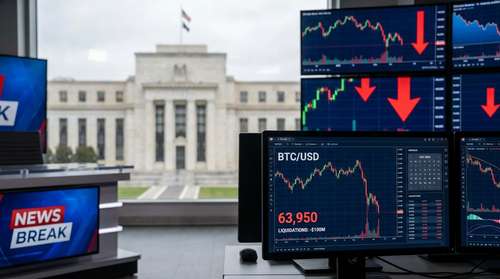

Bitcoin (BTC) remains locked in a tense consolidation phase this Wednesday, struggling to reclaim the critical $90,000 psychological level as traders pivot their focus to Washington. The flagship cryptocurrency has faced heavy sell-side liquidity near $89,500, failing to break through the stiff resistance zone between $90,000 and $93,500. This price action comes just hours before a pivotal moment for the industry: the U.S. Senate Banking Committee’s markup of the Digital Asset Market Clarity Act (CLARITY Act), now rescheduled for January 29, 2026.
Bitcoin Price Analysis: Bulls Struggle at $90K Resistance
As of January 28, Bitcoin is trading near $88,300, having been rejected firmly at the $91,000 level earlier in the week. Technical indicators suggest a cooling of momentum following the early January rally. The divergence between Bitcoin and traditional safe-haven assets has widened, with gold surging toward new highs while crypto assets behave more like high-beta risk instruments in the current macro environment.
Market analysts point to the $87,000 level as the next crucial support zone. A breakdown below this floor could open the door to a deeper correction, while a decisive close above $94,000 is needed to invalidate the current bearish structure. "The market is in a holding pattern," notes one senior analyst. "Institutional capital is sidelined, waiting to see if the regulatory framework proposed in the CLARITY Act will provide the legal certainty needed for major banking integration."
CLARITY Act: The Battle for Banking Integration
The spotlight is firmly on the CLARITY Act Senate markup 2026, a legislative move that promises to redefine the U.S. financial landscape. White House Crypto Czar David Sacks has been a vocal proponent of the bill, aggressively pushing a vision where the "banking and crypto industries will merge into a single digital asset industry."
However, the path to passing this landmark legislation has been rocky. In a dramatic turn of events, Coinbase recently withdrew its support for the Senate version of the bill, citing concerns over provisions that could stifle competition by favoring incumbent banks. The core dispute centers on stablecoin yield. The American Bankers Association (ABA) has lobbied heavily to restrict non-bank stablecoin issuers from offering yield-bearing products, a move critics argue is designed to protect traditional banking margins.
Crypto Czar Sacks Pushes for Compromise
Despite the friction, Crypto Czar David Sacks remains optimistic. In a recent statement, he urged both sides to find common ground, warning that a failure to pass the market structure bill would leave the industry in regulatory limbo. "If there's no deal, banks are going to lose on this issue long-term because they will eventually want to be in the stablecoin business themselves," Sacks argued, framing the legislation as a necessary step for U.S. global competitiveness.
Banking Sector's High-Stakes Gamble
The stakes for U.S. crypto banking integration have never been higher. With the CLARITY Act, federal regulators aim to create a unified framework that allows traditional banks to custody digital assets and issue stablecoins legally. This potential merger of traditional finance (TradFi) and decentralized finance (DeFi) is seen as the catalyst that could propel Bitcoin past the elusive $100,000 mark.
Yet, the immediate hurdle remains tomorrow's markup. If the Senate Banking Committee can advance a version of the bill that satisfies both the banking lobby and key crypto industry players, markets could react violently to the upside. Conversely, another delay or a "watered-down" bill could see Bitcoin test lower support levels as patience wears thin.
What to Watch Next
Traders should keep a close eye on the headlines coming out of Capitol Hill tomorrow afternoon. The rescheduled markup session is expected to begin at 3:30 p.m. UTC on January 29. Any signaling regarding the stablecoin yield provision or amendments addressing Coinbase's concerns will likely be the primary driver of volatility for crypto market news January 28 and beyond.
For now, caution is the watchword. With Bitcoin hovering precariously below resistance and the regulatory future of the industry hanging in the balance, the next 48 hours could define the trajectory of the 2026 crypto market.