
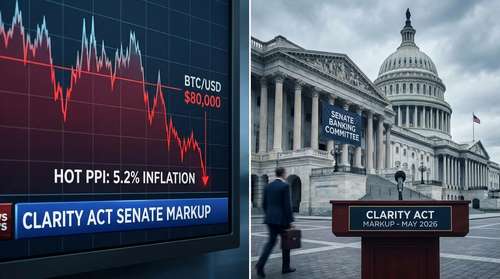
The macroeconomic landscape delivered a brutal wake-up call to digital asset investors early Thursday morning. The April Producer Price Index (PPI) surged to 5.2% year-over-year, significantly exceeding analyst estimates and shattering the prevailing disinflation narrative on Wall Street. This sudden crypto market macro shock sent Bitcoin spiraling below the critical $80,000 support level, liquidating leveraged long positions just hours before one of the most consequential policy events in industry history: today's high-stakes CLARITY Act Senate markup. With inflation running unexpectedly hot and lawmakers drawing battle lines over the future of decentralized finance, traders are navigating an unprecedented collision of economic headwinds and legislative milestones.
The 5.2% Surprise: Decoding the PPI Impact
The unexpectedly hot inflation report has completely upended the market's monetary easing expectations. April's 5.2% PPI reading suggests that upstream wholesale pricing pressures are accelerating rather than cooling, a reality that typically spells trouble for risk-on assets. The hot US PPI inflation data crypto traders had been dreading finally materialized, triggering an immediate institutional flight to safety.
Digital assets, sometimes touted as decentralized inflation hedges, instead traded exactly like high-beta technology stocks as algorithmic trading desks aggressively sold the news. The broader financial sector is now rapidly repricing risk, dialing back expectations for summer easing and digesting the nightmare scenario of renewed Federal Reserve interest rate hikes if these sticky inflation metrics bleed into consumer prices next month.
Bitcoin Loses Critical $80K Battleground
This inflation surprise directly catalyzed the extreme Bitcoin price volatility May 2026 has delivered so far. Over the past 48 hours, the flagship cryptocurrency surrendered a significant portion of its spring momentum, breaking decisively below the vital $80,000 threshold. Market makers are currently attempting to establish a new floor near the $78,500 zone, but sell-side pressure remains intense as spot exchange-traded funds experience their first substantial outflows of the month.
The loss of the $80,000 handle is more than just a short-term technical breakdown. It reflects a broader institutional hesitation to deploy capital into digital assets while the macroeconomic backdrop remains this uncertain. Order book depth has thinned considerably, meaning any further hawkish rhetoric from monetary policymakers over the coming days could exacerbate the downward price action. Analysts point out that if the $78,000 support fails to hold on the daily close, the next major liquidity pocket sits significantly lower, potentially leaving the market vulnerable to a prolonged consolidation phase.
Historic Showdown: The Clarity Act Hits Committee
While traders focus intently on the charts, industry attorneys and policy advocates are glued to Capitol Hill. At 10:30 AM ET today in the Dirksen Senate Office Building, lawmakers convene for the CLARITY Act Senate markup. The 309-page Digital Asset Market Clarity Act represents a sweeping legislative framework that seeks to formally delineate jurisdiction between the SEC and the CFTC, potentially ending years of regulation-by-enforcement. If successful, it would allow digital assets to transition cleanly from securities to commodities once sufficient decentralization is achieved.
However, getting the bill passed the committee phase requires navigating fierce partisan resistance. Reports indicate that over 100 last-minute amendments were filed prior to the Tuesday deadline, including more than 40 hostile amendments from Senator Elizabeth Warren alone. These amendments reportedly target everything from anti-money laundering provisions to developer liability, turning the session into a defining political theater for the digital asset space. The markup is expected to feature intense debates, forcing senators to publicly take a stance on the legitimacy of the digital asset economy.
The Fight Over Stablecoin Yields
The most contentious aspect of today's markup revolves around on-chain economics. In the most fiercely debated stablecoin regulation news of the year, traditional banking trade groups have mounted a massive offensive against the Tillis-Alsobrooks compromise. This critical provision would prohibit stablecoin issuers from paying direct deposit-style interest, but would explicitly protect activity-based rewards, such as staking, loyalty programs, and liquidity provisioning. Traditional financial institutions view this as a direct existential threat to traditional bank deposits. Consequently, American Bankers Association members have reportedly blitzed Senate offices with over 8,000 letters demanding the compromise be stripped entirely from the bill.
A Crucial Turning Point for Decentralized Finance
Simultaneously, the draft text serves as the most critical DeFi legislative update in American history. The current version of the CLARITY Act attempts to shield non-custodial decentralized finance developers from strict financial intermediary liability, provided they do not directly control user funds or operate as traditional exchanges. For the DeFi sector, this would mark an incredible breakthrough, legitimizing open-source financial software in the United States and potentially reversing the trend of projects geoblocking American users.
As the Senate Banking Committee's gavel falls today, the intersection of macroeconomic policy and regulatory clarity has never been more pronounced. Whether Bitcoin can reclaim its $80,000 footing depends as much on the political maneuvering inside Room 538 as it does on Wall Street's interpretation of the latest inflation data. Investors are now watching two distinct battlegrounds: the technical fight for price support, and the legislative fight for the industry's future.