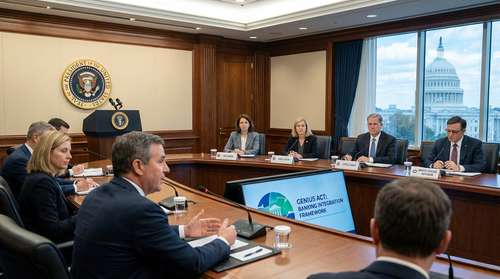
WASHINGTON — In a decisive move to cement the United States as the global leader in digital finance, the White House convened a high-stakes summit today, Monday, February 2, 2026. The gathering brings together top regulators, including Securities and Exchange Commission (SEC) Chair Paul Atkins and Commodity Futures Trading Commission (CFTC) Chair Michael Selig, to establish final federal standards for cryptocurrency interest-bearing products. This landmark meeting comes just days after the agencies jointly announced "Project Crypto," signaling a historic end to the jurisdictional turf wars that have long plagued the industry.
Project Crypto: A Unified Front for SEC and CFTC
The urgency of today's summit follows the January 30 unveiling of Project Crypto, a joint initiative between the SEC and CFTC designed to harmonize federal oversight. For years, the industry struggled under fragmented regulation, with agencies battling over whether digital assets were securities or commodities. Under the leadership of Chair Atkins and Chair Selig, that era appears to be over.
Speaking at the CFTC headquarters last Thursday, Chair Selig described the partnership as a "generational opportunity" to remove duplicative compliance requirements and clarify jurisdictional lines. Today’s White House meeting aims to operationalize this partnership, specifically focusing on how US digital asset banking integration will proceed under the new collaborative framework. With the rescission of Staff Accounting Bulletin 121 (SAB 121) late last year, traditional banks are now cleared to custody digital assets, setting the stage for a massive influx of institutional capital.
Building on the GENIUS Act Legacy
The regulatory groundwork for today's discussions was laid by the GENIUS Act stablecoin legislation (Guiding and Establishing National Innovation for U.S. Stablecoins Act), signed into law by President Trump in July 2025. The Act successfully established a federal framework for payment stablecoins, requiring issuers to maintain 1:1 reserves with low-risk assets.
However, the GENIUS Act primarily addressed payment instruments, leaving a regulatory gap for yield-generating products and staking services. Today's summit seeks to close that gap. Officials are expected to finalize rules that will allow banks and licensed entities to offer crypto interest regulation laws compliant products to retail consumers. This is a critical step in integrating digital assets into the traditional banking sector, ensuring that American consumers can earn yield on their assets with the same protections afforded to traditional financial products.
Defining Yield vs. Securities
A central tension point on the agenda is defining when a crypto yield product crosses the line into a securities offering. Paul Atkins SEC crypto policy has shifted dramatically from the previous administration's "regulation-by-enforcement" approach. Atkins has advocated for a "maximum choice" model where clear disclosures replace outright bans. The summit is expected to produce a finalized taxonomy—initially proposed by Atkins and now being codified jointly with the CFTC—that distinguishes between passive investment contracts and utility-based staking rewards.
The Next Frontier: Tax Reporting and the CLARITY Act
Beyond banking integration, the summit is also addressing the practicalities of mass adoption, specifically crypto rewards tax reporting. With millions of Americans expected to gain access to crypto yield products through their regular bank accounts, the Treasury Department is under pressure to simplify tax guidelines for staking rewards and interest. Industry insiders anticipate a new "de minimis" exemption proposal for small-scale rewards to be unveiled shortly after the summit.
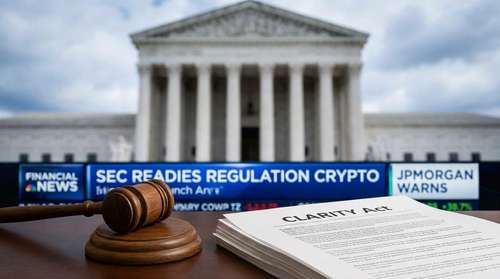
Looking ahead, today's agreements will likely influence the pending CLARITY Act currently making its way through Congress. While the GENIUS Act solved the stablecoin equation, the CLARITY Act aims to provide a comprehensive market structure for all digital assets. By aligning the SEC and CFTC on "Project Crypto" now, the White House hopes to fast-track the CLARITY Act's passage before the mid-term election cycle heats up.
A New Era for Digital Finance
As the summit concludes, the message to the global market is clear: the United States is open for business. By resolving the White House crypto summit 2026 agenda items today, regulators are effectively unlocking the gates for major U.S. banks to enter the fray. For investors and institutions alike, the harmonization of the SEC and CFTC marks the beginning of a mature, integrated, and regulated digital asset economy.