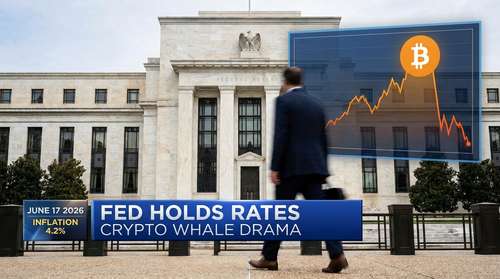
The Federal Reserve concluded its highly anticipated policy meeting on Wednesday, marking a historic shift in monetary communication. During Kevin Warsh first FOMC as Chair, officials voted unanimously to hold interest rates steady in the 3.5% to 3.75% range. The much-awaited Fed interest rate decision June 2026 arrived alongside a radically brief policy statement that instantly rippled through global markets. Digital assets, already trading nervously, saw aggressive price swings as traders scrambled to reprice risk.
A New Communication Regime at the Federal Reserve
Markets looking for the lengthy, nuanced forward guidance characteristic of previous administrations were left empty-handed. The Federal Reserve June 17 2026 statement was notably terse, signaling a major regime change under Warsh's leadership. Instead of placating investors with complex economic caveats, the committee delivered a clear, unvarnished assessment of the domestic economy.
Policymakers made no secret of their willingness to tighten financial conditions further. Warsh left the door wide open for potential rate hikes later in the autumn. Wall Street analysts immediately noted that the pause at the 3.5% to 3.75% band is strictly a data-gathering exercise, not a premature declaration of victory over rising prices.
Fighting Stubborn Price Increases
The core motivation behind this uncompromising stance is clear. With the US inflation rate 4.2 percent year-over-year, the metric remains uncomfortably above the central bank’s historic 2% target. Structural pressures in the services and housing sectors have forced the committee to maintain a hawkish posture. Consequently, risk-on assets like equities and cryptocurrencies are facing a sustained period of elevated capital costs.
The Mysterious Bitcoin Whale and Pre-Decision Jitters
Crypto traders are well accustomed to macroeconomic events driving price action, but Wednesday’s session was uniquely tense. Just hours before Chairman Warsh released the statement, blockchain tracking firms flagged a massive anomaly. The sudden appearance of a mysterious Bitcoin whale 200 million dollars in BTC moving directly to a centralized exchange wallet primed order books for chaos.
Analysts tracking the blockchain noted the funds were systematically split into smaller tranches. This is a classic maneuver frequently used by large entities to liquidate massive positions without triggering immediate slippage. The looming threat of this colossal market sell order effectively drained liquidity from the order books. Retail and institutional traders alike were left paralyzed, which heavily amplified the price swings when the central bank finally confirmed its hawkish pause.
Analyzing the Crypto Market Reaction
As the remarkably brief policy statement hit the terminal wires, the digital asset space experienced intense Bitcoin price volatility. BTC initially dropped 3% within minutes on the realization that rate cuts remain entirely off the table for the remainder of 2026. However, the asset abruptly reversed course in a massive short squeeze as leveraged derivative positions were wiped out.
The broader crypto market reaction mirrored this erratic whiplash. Major altcoins swung wildly within a tight ten-minute trading window, liquidating millions in over-leveraged futures contracts. Despite the turbulence, Bitcoin's resilience amid such a hawkish macroeconomic stance suggests a shifting narrative. Some institutional participants are increasingly viewing the flagship cryptocurrency as a necessary non-sovereign hedge against the persistent inflation that the Fed is currently battling.
What the Hawkish Pause Means for Late 2026
By stripping away dense economic jargon and delivering an uncompromising policy stance, the new Fed Chair has firmly put markets on notice. Investors must now accurately price in the very real possibility of borrowing costs creeping higher by September or November if inflationary data refuses to cool.
For digital asset investors, the coming months will require meticulous risk management. If consumer prices remain sticky, the central bank will likely resume its hiking cycle, putting immediate downward pressure on speculative markets. Until the macroeconomic dust settles from this historic policy shift and the whale's massive transfer is fully absorbed by exchange liquidity, traders should expect market turbulence to remain the new normal.