
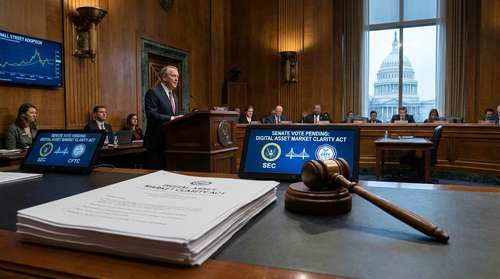
The United States Senate is poised to schedule a definitive vote on the Digital Asset Market Clarity Act, a landmark bill that promises to end years of regulatory ambiguity and ignite a new era of institutional crypto adoption. Following a breakthrough in committee negotiations this week and a confident declaration from CFTC Chair Michael Selig that the legislation is "on the cusp" of final approval, Wall Street and the crypto industry are bracing for a transformative shift in the financial landscape.
Senate Fast-Tracks US Crypto Bill 2026
After months of gridlock, momentum for the US crypto bill 2026 has accelerated significantly in the last 48 hours. The legislation, which passed the House of Representatives with a bipartisan supermajority in July 2025, aims to finally settle the contentious SEC vs CFTC crypto regulation turf war. On Tuesday, CFTC Chair Michael Selig signaled that the White House is pushing to "get this thing across the line" before the spring recess, aiming to harmonize the Senate Agriculture Committee’s recently passed Digital Commodity Intermediaries Act with the Senate Banking Committee’s framework.
For the first time, a clear path to the President's desk is visible. Political pressure has mounted as Treasury Secretary Scott Bessent warned lawmakers that the U.S. risks losing its competitive edge to jurisdictions like the UK and Singapore if the Digital Asset Market Clarity Act is not enacted by mid-year. "We are seeing the final pieces of the puzzle fall into place," stated a senior aide to Senate Banking Chair Tim Scott, referring to the intensive mediation sessions held at the White House to resolve lingering disputes over stablecoin structures.
Wall Street Digital Asset Framework Takes Shape
As the vote nears, traditional financial powerhouses are preparing for a flood of activity. The "Clarity Act" is widely viewed as the green light Wall Street digital asset framework architects have been waiting for. By establishing a definitive statutory distinction between digital commodities and securities, the bill effectively dissolves the "regulation by enforcement" era that characterized the early 2020s.
Major custodians and asset managers are reportedly finalizing infrastructure upgrades to support direct token ownership and trading for institutional clients. Analysts at Goldman Sachs predict that the passage of this crypto market legislation news could unlock upwards of $3 trillion in sidelined capital. The legislation’s provision for "provisional registration" allows existing crypto-native firms to come into compliance without halting operations, a critical bridge that has soothed fears of a market freeze.
Stablecoin Regulation US: The Final Hurdle
The primary friction point remaining in the eleventh-hour negotiations centers on stablecoin regulation US policy—specifically, the issue of yield-bearing stablecoins. Banking lobbyists have argued that allowing non-bank stablecoin issuers to pay interest could trigger a massive migration of deposits out of the traditional banking system. However, sources close to the negotiations indicate a compromise is imminent, likely involving strict reserve requirements for issuers offering yield, leveling the playing field with insured depository institutions.
SEC and CFTC End the Turf War
In a striking display of unity, SEC Chair Paul Atkins and CFTC Chair Selig have publicly endorsed the legislation, launching a joint initiative dubbed "Project Crypto" to facilitate the transition. This collaboration marks a decisive end to the adversarial SEC vs CFTC crypto regulation dynamic. Under the proposed law, the CFTC will gain primary jurisdiction over digital commodities—including Bitcoin and Ethereum—while the SEC retains oversight of digital asset securities.
"Statutory clarity is the only way to future-proof our markets," Chair Atkins testified earlier this week. This alignment between the two top regulators has been a key factor in swaying undecided Senators. With the legislative text now stabilizing and the White House mediating the final "yield" dispute, the industry anticipates a Senate floor vote could occur as early as next month, setting the stage for President Trump to sign the bill into law before the summer.