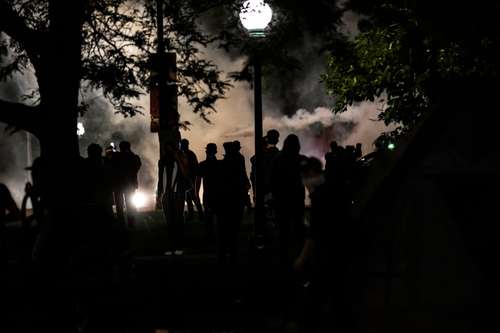
President Donald Trump has threatened to invoke the Insurrection Act 2026 to deploy active-duty federal troops to Minneapolis, marking a severe escalation in the conflict between the White House and Minnesota state officials. The ultimatum, issued Thursday via Truth Social, comes as the Twin Cities face a week of intensifying unrest following two shootings involving Immigration and Customs Enforcement (ICE) agents—one of them fatal.
Trump Vows Military Intervention in Minnesota
In a blistering statement released on social media, President Trump warned that he is prepared to use military force to quell what he termed "insurrectionists" in Minneapolis. The threat follows days of civil disorder sparked by the federal government's aggressive "Operation Metro Surge" immigration crackdown.
"If the corrupt politicians of Minnesota don't obey the law and stop the professional agitators and insurrectionists from attacking the Patriots of I.C.E., who are only trying to do their job, I will institute the INSURRECTION ACT," Trump wrote. He added that he would "quickly put an end to the travesty that is taking place in that once great State."
The Trump military deployment threat is not unprecedented in rhetoric, but the specific mention of the Insurrection Act of 1807—which allows the President to deploy U.S. military and federalized National Guard troops domestically to suppress rebellion—has drawn sharp rebukes from legal scholars and local leaders. Unlike the National Guard, which is typically under state control, these forces would report directly to the President, effectively bypassing Governor Tim Walz's authority.
Renee Good Fatal Shooting Ignites Tensions
The catalyst for the current crisis began on January 7, when 37-year-old Renee Good was shot and killed by an ICE agent in South Minneapolis. Good, a U.S. citizen and legal observer, was reportedly monitoring an ICE arrest operation when she was killed.
While the Department of Homeland Security (DHS), led by Secretary Kristi Noem, initially claimed Good attempted to run over agents with her vehicle—labeling the act "domestic terrorism"—witness accounts and bystander video have fiercely contested this narrative. The footage appears to show agents approaching Good's vehicle with weapons drawn before shots were fired, fueling widespread outrage and allegations of excessive force.
The situation reached a breaking point this Wednesday when a second shooting occurred in North Minneapolis. An ICE officer shot Julio Cesar Sosa-Celis, a Venezuelan national, in the leg. DHS officials stated the agents were "ambushed" by men wielding shovels and broom handles during a targeted traffic stop. However, the rapid succession of violent incidents has deepened the rift between the community and federal law enforcement, triggering fresh waves of Minneapolis ICE protests.
Governor Tim Walz and Local Leaders Push Back
Minnesota officials have responded to the federal crackdown with vehement opposition. Governor Tim Walz's response has been particularly forceful, characterizing the federal operation not as law enforcement, but as an occupation.
"This long ago stopped being a matter of immigration enforcement," Walz said in a televised address Wednesday night. "Instead, it's a campaign of organized brutality against the people of Minnesota by our own federal government." Addressing the federal administration directly, he added, "You've done enough."
State vs. Federal Standoff
Minneapolis Mayor Jacob Frey has echoed these sentiments, describing the influx of federal agents as an "invasion" that has made the city's own policing efforts impossible. In a move to protect residents, Walz has placed the Minnesota National Guard on standby—not to assist ICE, but to protect the rights of peaceful protesters and maintain local order independent of federal directives.
The state Attorney General, Keith Ellison, has also filed a lawsuit challenging the constitutionality of the federal surge, arguing that the aggressive tactics violate the Tenth Amendment. This legal battle sets the stage for a potential constitutional crisis if Trump follows through on his threat to override state objections with military force.
Federal Immigration Crackdown Intensifies
The chaos in Minneapolis is the latest flashpoint in the administration's second-term agenda. The federal immigration crackdown, dubbed "Operation Metro Surge," has seen thousands of federal agents deployed to sanctuary jurisdictions. Critics argue the operation is designed less for effective enforcement and more to provoke political confrontation in Democratic-led cities.
Reports indicate that ICE agents, including tactical units usually reserved for high-risk operations, have been conducting sweeping arrests in residential neighborhoods. The resignation of several federal prosecutors in Minnesota this week, reportedly in protest of the Department of Justice's handling of the Renee Good investigation, suggests internal dissent regarding the administration's tactics.
As Minneapolis civil unrest continues into the weekend, the prospect of active-duty soldiers patrolling American streets looms large. With protesters vowing to continue their demonstrations and the President steadfast in his ultimatum, the coming days will test the limits of federal power and state sovereignty in 2026.