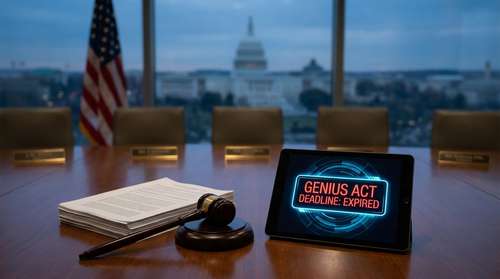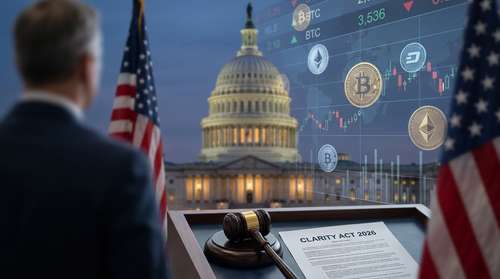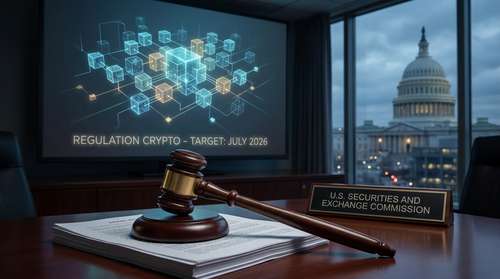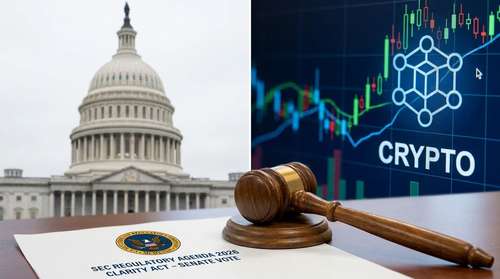

President Donald Trump has ignited a firestorm in Washington, accusing major US financial institutions of "holding hostage" the nation's digital asset future. In a blistering Truth Social post on Tuesday, March 3, Trump claimed that "Big Banks" are actively undermining the GENIUS Act and stalling the critical CLARITY Act 2026. The President's intervention comes just days after a key March 1 drafting deadline passed without a compromise between banking lobbyists and crypto firms, leaving the highly anticipated crypto market structure legislation in limbo. "The Banks are hitting record profits, and we are not going to allow them to undermine our powerful Trump crypto agenda," he declared, warning that American innovation risks fleeing to China.
The Standoff: Stablecoin Yields and the GENIUS Act
At the heart of this legislative deadlock is a fierce battle over stablecoin yields. The GENIUS Act, signed into law in July 2025, established a regulatory framework for stablecoin issuers, requiring strict 1:1 reserve backing. However, a contentious "loophole" has emerged as the primary flashpoint. While the law prohibits issuers from paying interest directly to holders, it does not explicitly ban third-party platforms—such as exchanges like Coinbase—from passing on yields generated from reserve assets like Treasury bills.
Traditional financial giants argue this creates an uneven playing field. Lobbyists for the crypto vs banking lobby have intensified efforts to close this gap in the Senate's version of the CLARITY Act 2026. Their fear is palpable: if digital wallets can offer 4-5% APY on stablecoins while traditional savings accounts offer a fraction of that, banks could face a massive flight of deposits. Jamie Dimon, CEO of JPMorgan, recently pushed back in a CNBC interview, arguing that "if you want to be a bank, become a bank," signaling that Wall Street will not concede easily.
Defining the Rules: The SEC CFTC Jurisdiction Bridge
Beyond the yield dispute, the CLARITY Act 2026 represents the most significant attempt yet to solve the "regulation by enforcement" chaos that has plagued the industry. The bill aims to establish a clear SEC CFTC jurisdiction bridge, finally drawing a line in the sand between digital securities and digital commodities. Under the proposed framework, the CFTC would gain exclusive oversight over "digital commodities" and spot markets, while the SEC would retain authority over assets sold as investment contracts.
This crypto market structure legislation is viewed as essential for institutional adoption. Ripple CEO Brad Garlinghouse publicly supported Trump’s recent outburst, calling it an "extremely pointed message" to those dragging their feet. Without this legislative clarity, industry leaders argue that the US remains stuck in a gray zone, where companies are forced to guess compliance requirements rather than follow clear statutory rules.
The "China" Threat and Economic Innovation
President Trump's rhetoric has successfully reframed this regulatory technicality into a matter of national security and economic liberty. By explicitly mentioning that the Trump crypto agenda prevents jobs and innovation from "going to China," he is leveraging geopolitical anxiety to pressure Senate holdouts. His argument is simple yet resonant: "Americans should earn more money on their money."
This populist economic angle—championing the retail investor's right to higher yields—puts opposing lawmakers in a difficult position. Blocking the digital asset regulation USA framework now risks looking like a favor to Wall Street incumbents at the expense of the average voter. With the 2026 midterms approaching, the political cost of siding with "Big Banks" against a pro-innovation agenda is rising.
What’s Next for the CLARITY Act?
The failure to meet the White House's March 1 drafting deadline was a setback, but not a death knell. Senate Banking Committee markups are now tentatively expected in mid-to-late March. However, the clock is ticking. If a compromise on the GENIUS Act stablecoins yield provision isn't reached soon, the window for passing comprehensive legislation before the midterm election cycle could slam shut.
For now, the industry watches with bated breath. Will the banks retreat under presidential pressure, or will they dig in their heels to protect their deposit base? The answer will decide whether 2026 becomes the year the US finally embraces the digital asset economy or lets it slip away.