The highly anticipated CLARITY Act crypto legislation is walking a dangerous tightrope in Washington. What was originally poised to be a sweeping victory for the American digital asset industry has instead hit a massive political roadblock. Senator Cynthia Lummis (R-WY) has issued a dire warning: if lawmakers do not approve the bill before the fast-approaching 2026 midterm elections, the entire legislative effort could be iced until 2030. The standoff threatens to derail the most comprehensive regulatory framework the industry has ever seen.
While the bill recently cleared the Senate Banking Committee with a 15-9 bipartisan vote, its path to the Senate floor is now blocked by an intensifying debate over ethics. Lawmakers are clashing over newly proposed rules designed to prevent elected officials from participating in private digital asset ventures. This gridlock is heavily fueled by concerns surrounding President Donald Trump’s deep financial ties to cryptocurrency—a dynamic that could determine whether the United States finally establishes clear market structure rules or cedes global leadership to other nations.
The Ticking Clock for the Cynthia Lummis CLARITY Act
For years, Senator Lummis has championed the necessity of comprehensive market rules, making the Cynthia Lummis CLARITY Act a centerpiece of her legislative career. However, with the August recess looming and her term winding down, the window for passing the bill is narrowing drastically.
"If the Clarity Act doesn't pass this Congress, American software developers will be targeted again for prosecution in the near future just for publishing code," Lummis cautioned in a recent post. She emphasized that the current political alignment presents a rare, fleeting opportunity that the nation cannot afford to squander.
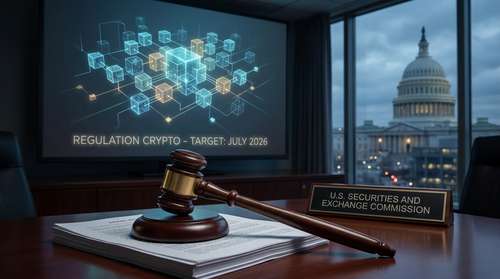
If the bill misses the July 4 legislative window, floor time will rapidly be consumed by the November midterms, causing momentum to collapse. A failure to pass both chambers before the current session ends would force lawmakers to restart the grueling legislative process from scratch in the next Congress. Because of the time required to build fresh coalitions and draft new texts, analysts and lawmakers alike project that the next realistic window for comprehensive crypto legislation would not open until at least 2030.
Ethics Standoff and the Trump Crypto Conflict of Interest
The primary barrier to passing the Senate crypto regulation bill 2026 isn't a disagreement over technology, but rather over the people regulating it. To secure the 60 votes required to bypass a Senate filibuster, the bill desperately needs Democratic support. However, key Democrats are drawing a hard line, demanding strict crypto ethics rules Congress and executive branch members must follow.
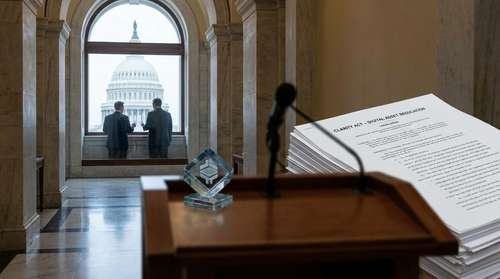
Section 307 of the proposed legislation contains provisions that would restrict the President, the Vice President, and members of Congress from actively trading digital assets or holding direct financial stakes in private token projects. This has transformed the debate into a glaring spotlight on a potential Trump crypto conflict of interest. Since his inauguration, Donald Trump and his family have reportedly generated at least $1.4 billion from crypto-related projects, including World Liberty Financial and various meme coins.
Balancing Partisan Demands
Democrats like Senators Angela Alsobrooks and Ruben Gallego, who supported the bill in committee, insist that without robust conflict-of-interest safeguards, federal officials could personally profit from the very digital asset regulations they write. Conversely, Republicans are hesitant to support amendments that appear strategically engineered to target Trump-affiliated crypto enterprises. This partisan friction leaves the bill in a precarious state, where any compromise risks alienating a crucial voting bloc.
Shaping SEC CFTC Digital Asset Rules
Beyond the political drama, the substantive core of the CLARITY Act seeks to end the regulatory turf wars that have plagued the industry. The legislation fundamentally reshapes SEC CFTC digital asset rules by sorting crypto assets into three distinct legal categories: digital commodities, investment contract assets, and payment stablecoins.
This classification system aims to halt the era of "regulation by enforcement." Newly appointed SEC Chair Paul Atkins has actively supported this transition. Breaking from his predecessor's aggressive approach, Atkins recently introduced "Project Crypto," an initiative designed to provide clearer token classifications and foster closer regulatory coordination with the Commodity Futures Trading Commission (CFTC).
Under this pending framework, the CFTC would gain primary oversight of digital commodities, explicitly limiting the SEC's authority strictly to securities-like tokens. By doing so, the bill provides a much-needed operational foundation for developers, exchanges, and stablecoin issuers who have long navigated a murky legal landscape.
The Future of US Crypto Market Structure Legislation
The stakes for the global digital economy are monumental. The passage of this US crypto market structure legislation is widely viewed as a catalyst that could legitimize the American crypto sector, potentially triggering a massive influx of institutional capital. Banking integration, decentralized finance (DeFi) innovation, and domestic job creation all hang in the balance.
Yet, the path forward requires navigating a deeply polarized Senate. Lobbying groups and industry leaders are aggressively pushing Senate leadership to resolve the ethics gridlock. If a bipartisan agreement on the conflict-of-interest provisions can be reached without shattering the fragile Republican coalition, the CLARITY Act could reach President Trump's desk by late summer.
If not, Senator Lummis' warning will become a harsh reality. The U.S. digital asset industry will face four more years of regulatory uncertainty, leaving innovation to flourish in overseas markets while American developers wait for 2030.