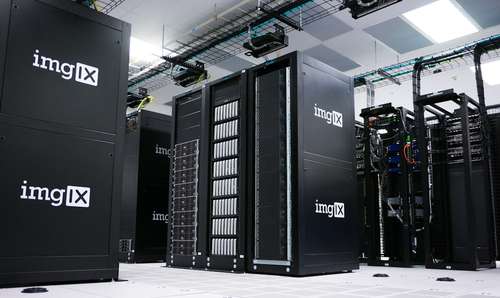
In what analysts are calling "The Great Mining Pivot," the cryptocurrency landscape is undergoing its most significant structural transformation since the 2024 halving. As of January 10, 2026, a distinctive trend has crystallized: while spot Bitcoin ETFs bleed over $1.1 billion in outflows in just three days, major mining firms like IREN (formerly Iris Energy) and Cipher Mining are securing their futures not on the blockchain, but in the server racks of high-performance computing (HPC) centers. This strategic divergence signals a massive institutional rebalancing away from direct asset exposure and toward the picks and shovels of the AI revolution.
The January Reversal: Crypto ETF Outflows Signal Caution
The first trading week of 2026 has delivered a cold shower to digital asset bulls. After a brief surge of optimism to ring in the new year, U.S. spot Bitcoin and Ether ETFs experienced a dramatic reversal. Data from SoSoValue confirms that crypto ETF outflows in January reached a staggering $1.128 billion between January 6 and January 8 alone, erasing nearly all inflows recorded in the year's opening sessions.
This capital flight suggests a cooling of risk appetite among institutional allocators, who appear to be rotating profits from Bitcoin's recent all-time highs into more predictable yields. "We are seeing a clear decoupling," notes a senior analyst at CoinShares. "While direct crypto exposure is facing headwinds, the equity side—specifically for miners pivoting to AI—is attracting aggressive capital." This shift aligns with broader blockchain infrastructure trends where value is migrating from the asset itself to the energy and compute power required to sustain the digital economy.
IREN and Cipher: Leading the Charge to AI
No company epitomizes this pivot better than IREN. Dominating IREN stock news in 2026 is the company's landmark $9.7 billion, five-year agreement with Microsoft to deploy 76,000 NVIDIA GB300 GPUs. This massive deal has effectively reclassified the company in the eyes of Wall Street; once viewed as a pure-play Bitcoin miner, it is now valued as a critical tier-1 partner in the global AI supply chain.
Similarly, Cipher Mining has accelerated its transition, leveraging its 300 MW power portfolio to secure a $5.5 billion lease with Amazon Web Services (AWS). These AI data center mining companies are capitalizing on a unique arbitrage opportunity: they possess the one resource AI hyperscalers desperately need—immediate, massive, and grid-connected power capacity. While traditional Bitcoin mining profitability in 2026 faces the "toughest profit squeeze on record" due to soaring hashrates and difficulty adjustments, these hybrid operators are locking in stable, high-margin revenue streams that traditional mining can no longer guarantee.
The Profitability Divergence
The economics tell the story. While pure-play miners struggle with thinning margins despite Bitcoin's price resilience, hybrid operators are projecting 80-90% operating margins on their HPC contracts. The market has rewarded this foresight; stocks like IREN and Cipher are outperforming their Bitcoin-only peers, creating a bifurcation in the sector that is likely to widen throughout the year.
The Regulatory Catalyst: GENIUS Act Impact
Underpinning this institutional shuffle is the regulatory clarity—and pressure—introduced by the GENIUS Act. Enacted in July 2025, the "Guarding Educational Needs and Infrastructure for U.S." Act (colloquially known as the stablecoin and infrastructure bill) has enforced strict reserve requirements for digital asset issuers. The GENIUS Act crypto impact has been twofold: it has legitimized the sector for bank-grade investment while simultaneously raising compliance costs for smaller players.
For large-scale miners, the Act has indirectly accelerated the Bitcoin mining AI pivot. By enforcing higher capital standards and transparency, the legislation has favored well-capitalized, publicly traded entities that can afford the dual compliance burden of financial regulation and data center security standards. The result is a matured industry where the "Wild West" days are over, replaced by industrial-scale operations that look more like utility companies than crypto startups.
Outlook 2026: The Era of Hybrid Compute
As we move deeper into 2026, the question for investors is no longer just "What is the price of Bitcoin?" but "What is the value of a megawatt?" The convergence of blockchain security and artificial intelligence training has created a new asset class of "energy-backed compute." While the massive crypto ETF outflows in January might suggest a bearish short-term sentiment for tokens, the infrastructure layer is booming. The miners who successfully pivot to become AI hosts will likely survive the 2026 profit squeeze, while those clinging solely to the hash rate race may find themselves powered down.