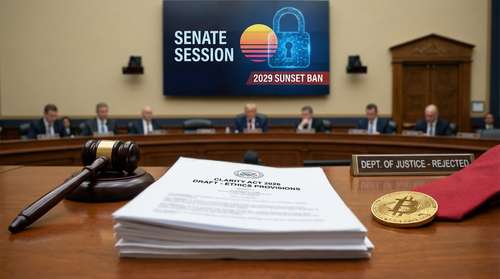

In a historic moment for the digital asset industry, U.S. Securities and Exchange Commission Chairman Paul Atkins has officially introduced the highly anticipated SEC Innovation Exemption. Speaking at the Bitcoin 2026 conference in Las Vegas on April 27, Atkins detailed a bold new framework that promises to fundamentally reshape the domestic financial landscape. The centerpiece of this regulatory overhaul is a structured exemption designed to fast-track compliant on-chain trading. This decisive move officially closes the chapter on the previous administration's enforcement-first approach, cementing a massive US crypto policy shift that market participants have been awaiting for years.
Project Crypto Paul Atkins: A New Era of Market Structure
The newly outlined exemption is the flagship component of Project Crypto, an ambitious SEC-wide initiative spearheaded by Chairman Atkins. Instead of forcing innovative blockchain companies into decades-old compliance structures that were never built for digital networks, the initiative provides a practical runway. Project Crypto Paul Atkins envisions a regulatory sandbox, granting eligible firms a grace period to issue and trade assets without bearing the immediate, full weight of traditional securities registrations.
Under this cabined framework, platforms will be allowed to facilitate the exchange of tokenized assets using principles-based safeguards. This means that builders can focus on technological advancement while still meeting core obligations like anti-money laundering protocols and investor fraud protection. By offering legal breathing room, federal regulators are ensuring that the next wave of financial infrastructure is developed within U.S. borders rather than being driven offshore.
How the Exemption Enables Compliant On-Chain Trading
Historically, the intersection of blockchain technology and federal securities law has been fraught with friction. The new SEC frameworks directly address this gridlock by creating a safe harbor for tokenized securities SEC oversight. Companies leveraging blockchain to tokenize traditional financial instruments, such as equities, bonds, and partnership interests, can now operate side-by-side with non-security tokens on registered alternative trading systems.
This development is crucial for institutional adoption. Through compliant on-chain trading, traditional asset managers finally have the green light to deploy capital using smart contracts and distributed ledgers. The exemption provides temporary regulatory relief, typically spanning 12 to 36 months, allowing markets to stress-test tokenized securities in a transparent, heavily monitored environment before permanent rules are finalized.
The Four-Pillar Token Taxonomy
To support this innovation, the SEC, in coordination with the Commodity Futures Trading Commission, has finalized a formal token taxonomy. Digital assets are now broadly categorized into four distinct buckets:
- Digital Commodities: Decentralized network tokens managed primarily by the CFTC.
- Digital Collectibles: Non-fungible tokens used for art and consumer products.
- Digital Tools: Utility tokens explicitly used for software access and governance.
- Tokenized Securities: On-chain representations of traditional debt or equity.
The Clarity for Digital Assets Act and Agency Harmony
The success of this exemption relies heavily on bipartisan legislative backing and interagency harmony. Atkins recently confirmed that the SEC is actively pursuing a dual-track strategy by providing technical assistance to Congress, which overlaps significantly with the goals of the Clarity for Digital Assets Act. If passed, proactive legislation would permanently codify the safe harbor provisions Atkins is establishing, securing long-term certainty for the digital asset space.
Furthermore, Atkins and CFTC Chair Mike Selig signed a landmark Memorandum of Understanding earlier this year. This unified front eliminates the jurisdictional turf wars that previously plagued the industry. By streamlining oversight, the agencies are crafting a cohesive 2026 crypto regulation blueprint that allows super-apps to legally trade both commodities and securities under a single, unified licensing structure.
Market Reaction: Bitcoin Eyes $80K Amid Regulatory Hope
The market's response to this profound U.S. regulatory pivot has been overwhelmingly positive. As Atkins took the stage at the Bitcoin 2026 event on April 27, Bitcoin traded fiercely against the $79,000 to $80,000 resistance level, recovering dramatically from its brutal February selloffs. Institutional capital, much of which remained sidelined during the Gary Gensler era, is already signaling intent to enter the space now that bright-line rules exist.
Traders and asset managers recognize that the days of regulation by enforcement are definitively over. The proactive approach taken by the current commission means that liquidity can flow into compliant digital infrastructure without the constant threat of unpredictable subpoenas. As the implementation of the SEC Innovation Exemption takes effect over the coming weeks, the financial industry is bracing for a sustained period of explosive, secure, and compliant growth.