In a watershed moment for the digital asset industry, the U.S. Securities and Exchange Commission (SEC) has formally submitted a groundbreaking interpretive guidance to the White House, aiming to redefine how cryptocurrencies are classified under federal law. Filed on March 3, 2026, with the Office of Information and Regulatory Affairs (OIRA), this submission marks the most significant step yet in Chair Paul Atkins’ "Project Crypto" initiative. The proposed framework introduces a definitive SEC token taxonomy designed to end the era of "regulation by enforcement" and provide the regulatory clarity that has eluded the U.S. market for over a decade.
The New Four-Tier Token Taxonomy
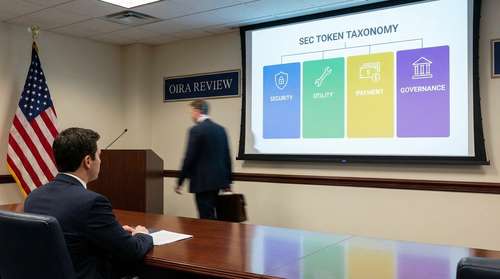
At the heart of the SEC’s submission is a standardized classification system that categorizes digital assets into four distinct buckets. Unlike previous approaches that viewed nearly all tokens through the lens of the 1946 Howey Test, this new taxonomy acknowledges the functional reality of modern digital assets. According to the filing, the SEC now formally distinguishes between:
- Digital Commodities (Network Tokens): Assets that power decentralized networks and function as a medium of exchange or unit of account. Under the new guidance, these do not qualify as securities.
- Digital Collectibles: This category covers Non-Fungible Tokens (NFTs) and other unique digital items intended for collection or use rather than investment, explicitly exempting them from securities laws.
- Digital Tools: A new classification for tokens that provide specific utility or access to software functions, separating functional software from financial instruments.
- Tokenized Securities: Digital representations of traditional financial instruments (like stocks or bonds) that remain under strict SEC purview.
This nuanced crypto asset classification is a direct response to industry demands for a framework that separates software utility from investment contracts. By clearly defining "Digital Tools" and "Digital Commodities," the SEC is effectively ceding jurisdiction over a vast swath of the crypto market to the Commodity Futures Trading Commission (CFTC) or recognizing them as non-financial software assets.
The ‘Termination Pathway’: A Shift in Economic Reality
Perhaps the most revolutionary aspect of the guidance is the introduction of a "termination pathway" for digital assets. Historically, the SEC viewed an asset sold as an investment contract as perpetually remaining a security. Chair Paul Atkins has challenged this view, arguing that "economic reality trumps labels."
The new framework outlines specific criteria under which a token can transition out of being a security. Once a network becomes sufficiently decentralized—meaning the purchasers no longer rely on the "essential managerial efforts" of a central entity—the asset sheds its status as an investment contract. This "morphing" concept aligns federal securities laws crypto regulation with the technological lifecycle of blockchain projects, allowing tokens to start as securities during a fundraising phase and mature into commodities or tools.
OIRA Crypto Review: Why This Submission Matters
The submission to the OIRA crypto review process is a critical procedural step that elevates this guidance above mere staff-level opinion. Unlike the "Staff Accounting Bulletins" of the previous administration, which were often criticized for bypassing the Administrative Procedure Act, this is a "Commission Interpretation."
Once approved by OIRA, this interpretation will carry significant legal weight, binding the SEC’s enforcement division to these new standards. It signals a definitive end to the aggressive litigation strategy that characterized the 2020-2024 period. Legal experts anticipate that this guidance could lead to the dismissal or settlement of several high-profile legacy lawsuits currently clogging the courts, as many tokens involved would likely fall into the "Digital Commodity" or "Digital Tool" categories under the new rules.
Clarifying SEC vs CFTC Jurisdiction
The overlap between SEC vs CFTC jurisdiction has been a major source of friction in Washington. This new framework dovetails with the CFTC’s own recent submission regarding prediction markets, suggesting a coordinated effort between the two agencies to carve up the regulatory landscape.
By explicitly defining what constitutes a "Digital Commodity," the SEC is effectively endorsing the CFTC’s authority over the spot markets for major assets like Bitcoin and Ethereum, while retaining tight control over tokenized securities. This cooperative approach aims to eliminate the "regulatory limbo" that forced many American crypto firms to move operations offshore to jurisdictions with clearer rules, such as the EU (under MiCA) or the UAE.
What Comes Next for Digital Asset Regulation in 2026?
The OIRA review process typically takes anywhere from a few weeks to a few months. However, given the priority status of digital asset regulation 2026 within the current administration’s economic agenda, analysts expect an expedited timeline. If approved, the guidance could come into full effect by early Q2 2026.
For investors and builders, the message is clear: the U.S. is moving toward a disclosure-based regime that respects the unique properties of blockchain technology. As "Project Crypto" moves from rhetoric to policy, the American market is poised to recapture its position as the global hub for digital innovation.