
The financial landscape shifted fundamentally this week. On March 17, 2026, federal regulators dismantled a decade of jurisdictional gridlock by issuing a 68-page binding interpretive rule classifying 16 leading cryptocurrencies as digital commodities. Coupled with the aggressive integration of GENIUS Act stablecoins into the traditional banking system, this double-barreled breakthrough is unlocking billions in sidelined capital and establishing an unprecedented level of crypto regulatory clarity.
The era of 'regulation by enforcement' has officially concluded. As Wall Street digests the new framework, asset managers, fintech innovators, and traditional banks are moving aggressively to capitalize on defined rules of engagement. Here is exactly how the historic SEC digital commodities ruling 2026 and the accompanying stablecoin legislation are rewiring the global financial system from the ground up.
A Historic Taxonomy: SEC and CFTC Draw the Line
For years, innovators and investors faced the paralyzing question of which digital assets constituted unregistered securities. That waiting game ended when SEC Chairman Paul Atkins and CFTC Chairman Michael Selig simultaneously signed off on a definitive taxonomy at the DC Blockchain Summit. The joint binding rule explicitly categorizes 16 major tokens as commodities, placing their spot markets under the clear, undisputed jurisdiction of the CFTC.
The approved list encompasses the market's heaviest hitters: Bitcoin (BTC), Ethereum (ETH), Solana (SOL), and Cardano (ADA), alongside decentralized infrastructure plays like Chainlink (LINK), Avalanche (AVAX), and Polkadot (DOT). Perhaps most notably, the official XRP commodity classification resolves one of the industry's longest-running legal battles, opening the floodgates for bank-level adoption of the Ripple network for cross-border settlements.
Even more surprising to traditional analysts was the inclusion of Dogecoin (DOGE) and Shiba Inu (SHIB). The agencies determined that these assets derive their value from supply-demand dynamics and programmatic operation, rather than the essential managerial efforts of a central enterprise.
The overarching Paul Atkins crypto policy marks a stark departure from the previous administration's adversarial stance. 'We are not the Securities and Everything Commission anymore,' Atkins stated directly to attendees, signaling a commitment to fostering domestic innovation. By additionally granting blanket clearance for staking, mining, airdrops, and token wrapping, the SEC has provided the exact operational blueprint the industry has demanded for over a decade.
The GENIUS Act: Stablecoins Enter the Banking System
While the digital commodity ruling captures the retail headlines, the parallel rollout of the Guiding and Establishing National Innovation for U.S. Stablecoins (GENIUS) Act is quietly transforming core corporate payment systems. Originally signed into law in July 2025, the framework's practical integration is now taking full effect under the oversight of the Office of the Comptroller of the Currency (OCC) and state regulators.
Under the developing FDIC stablecoin rules and associated regulatory frameworks, non-bank fintechs and traditional financial institutions now possess a unified national payments license. GENIUS Act stablecoins must maintain a strict 1:1 backing with U.S. dollars or short-term Treasuries. While these assets are explicitly barred from paying yield to consumers, they benefit from rigorous consumer protections, simple monthly reserve disclosures, and mandatory annual audits for issuers exceeding $50 billion in market capitalization.
Crucially, the legislation bridges the gap between decentralized finance and Wall Street compliance. Permitted issuers must implement robust Anti-Money Laundering (AML) programs and maintain the technological capability to freeze illicit funds. Banks are currently spinning up dedicated subsidiaries to serve as payment stablecoin issuers, utilizing regulated digital dollars as the ultimate settlement layer for global commerce.
Establishing an Institutional Bitcoin Floor Amid Macro Volatility
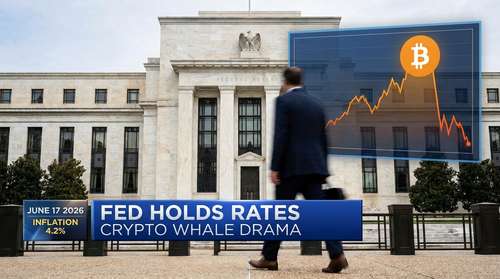
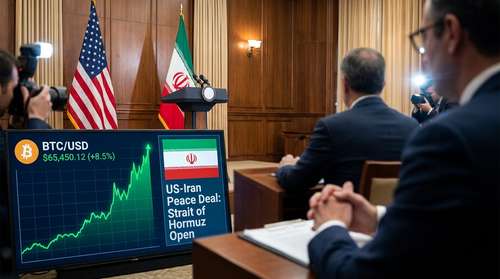
The timing of these regulatory breakthroughs is critical. Recent weeks have seen aggressive macroeconomic headwinds, including the Federal Reserve holding rates steady amid stubborn inflation forecasts. Combined with rising global energy costs due to Middle East tensions and disruptions in the Strait of Hormuz, these pressures recently forced a localized liquidation cascade, briefly dragging Bitcoin down to the $70,500 range and wiping out over $142 million in long positions in a single day.
However, market structure has fundamentally changed. The unprecedented legal certainty from Washington is forging a robust institutional Bitcoin floor. Industry analysts note that digital assets are currently exhibiting a 92% correlation with gold, acting increasingly as an inflation hedge rather than a speculative tech play.
Unlike previous cycles where regulatory panic compounded macro sell-offs, the current environment is defined by strategic accumulation. Sovereign wealth funds, pension managers, and institutional custodians now possess the legal cover necessary to allocate significant capital to digital assets without fearing sudden enforcement actions.
What This Means for Market Participants
The downstream effects of this policy shift are already materializing across trading desks and corporate boardrooms:
- New Product Horizons: With 16 assets officially recognized as non-securities, the pipeline for diversified ETFs, complex derivatives, and structured financial products is wide open.
- Safe Harbor Capital: The SEC is advancing bespoke pathways for crypto startups to raise capital legally, stopping the brain drain of developers to overseas jurisdictions.
- Frictionless Payments: Compliant stablecoins will increasingly power peer-to-peer wallets, payroll distribution, and merchant settlement without the prohibitive costs of legacy bank partnerships.
The regulatory paradigm has irreversibly shifted. As federal agencies pivot from aggressively prosecuting the digital asset industry to securely integrating it, the foundational infrastructure for the next generation of global finance is officially live.