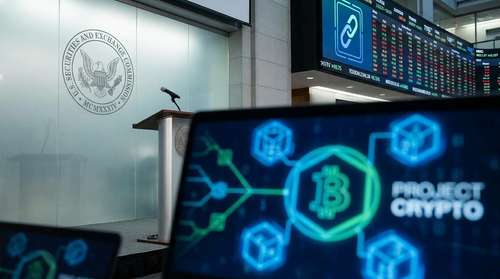

The era of regulatory ambiguity for the United States digital asset sector may finally be drawing to a close. In a landmark move on January 29, 2026, Securities and Exchange Commission (SEC) Chairman Paul Atkins and Commodity Futures Trading Commission (CFTC) Chairman Michael Selig officially launched Project Crypto, a joint initiative designed to harmonize federal oversight of the cryptocurrency market. This unprecedented collaboration signals a definitive end to the "regulation by enforcement" strategy that has plagued the industry for years, replacing it with a unified framework aimed at fostering onshore innovation and providing much-needed crypto regulatory clarity.
Ending the Turf War: A New Era of Harmonization
For over a decade, the US digital asset landscape has been defined by jurisdictional friction between its two primary market regulators. Market participants often found themselves navigating a maze of overlapping and sometimes contradictory rules, leading many to flee to clearer jurisdictions offshore. Project Crypto represents a fundamental philosophical shift, with both agencies committing to what Chairman Atkins termed the "minimum effective dose of regulation."
Speaking at the CFTC headquarters in Washington, D.C., Atkins emphasized that the days of inter-agency competition are over. The initiative is designed to eliminate duplicative compliance requirements and clarify the often-blurry lines between securities and commodities. This cooperative stance is a direct response to the previous administration's approach, which critics often referred to as "Operation Chokepoint 2.0," a strategy that allegedly sought to stifle the industry through aggressive enforcement actions rather than clear rulemaking.
The Mandate for Clarity
The primary goal of this harmonization is to create a predictable environment where businesses can build without fear of sudden legal retribution. By aligning their enforcement priorities and rule-making agendas, the SEC and CFTC harmonization effort aims to transform the US from a regulatory minefield into the global "gold standard" for digital asset policy.
Establishing a Unified Digital Asset Taxonomy
One of the most critical components of Project Crypto is the development of a shared "taxonomy" for digital assets. For years, the industry has struggled with the binary classification of tokens: are they securities subject to SEC jurisdiction, or commodities under the CFTC's purview? The new initiative seeks to codify a practical framework that distinguishes digital securities from digital commodities, collectibles, and utility tools.
According to Michael Selig, this taxonomy will clarify that many digital assets do not fit the traditional definition of a security, even if they are sold as part of an investment contract. This distinction is vital for the development of a healthy market structure. By agreeing on these definitions now, the agencies are effectively creating an interim rulebook that allows the industry to operate with confidence while Congress finalizes broader market structure legislation.
Unlocking Innovation: Tokenized Collateral and Prediction Markets
Beyond mere definitions, Project Crypto is focused on unlocking specific high-value innovations that have been stalled by regulatory uncertainty. A key area of focus is tokenized collateral. Chairman Selig highlighted the necessity of allowing high-quality, blockchain-based assets to serve as collateral in financial markets. This capability is essential for enabling true 24/7 trading cycles and real-time risk management, features that traditional financial plumbing struggles to support.
Furthermore, the initiative signals a green light for the responsible development of prediction markets. Previously a contentious topic, event contracts are now being viewed as a legitimate financial tool for hedging risk and gathering information. The CFTC is expected to issue new rules that will bring these markets onshore, allowing them to operate under a regulated federal framework rather than in the gray markets or offshore exchanges.
Future-Proofing US Digital Asset Policy
While Project Crypto provides immediate relief and guidance, both Atkins and Selig acknowledge that it is a bridge to permanent legislation. The initiative coincides with significant movement in the Senate, where a comprehensive US digital asset policy bill is advancing. The ultimate objective is to "future-proof" these regulations, ensuring that the progress made today cannot be easily reversed by future political shifts.
This coordinated effort comes at a crucial time. With other global financial hubs like London, Singapore, and Dubai aggressively courting crypto firms, the United States is under pressure to reassert its dominance. By replacing antagonism with cooperation, the SEC and CFTC are laying the groundwork for a robust, transparent, and innovative American digital asset market.