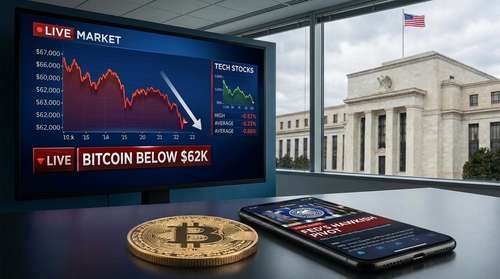
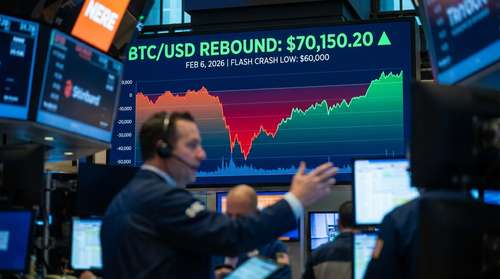
In one of the most volatile trading sessions of Feb 2026, Bitcoin (BTC) staged a miraculous V-shaped recovery, surging back above the psychological $70,000 threshold after a violent flash crash saw prices wick down to a 15-month low of $60,008 on Friday. The chaotic 12% swing, characterized by panic selling and massive liquidation cascades, has left the market questioning whether the dreaded institutional "death spiral" has been averted or if further turbulence lies ahead. As the dust settles on this historic rebound, the Bitcoin price recovery Feb 2026 narrative is shifting from fear to cautious optimism.
Anatomy of the $60,000 Flash Crash & V-Shaped Recovery
The capitulation began late Thursday and accelerated into Friday morning, driven by a perfect storm of macro headwinds and leverage flushes. Data from Coinglass reveals that the BTC flash crash $60,000 event triggered over $2.67 billion in total liquidations across the crypto market in less than 24 hours, with long positions accounting for nearly 85% of the wipeout. The move to $60,000—a level not seen since late 2024—tested the resolve of even the most hardened "diamond hands."
However, the crypto market rebound today was equally ferocious. As prices touched the $60,000 institutional buy wall, aggressive bid volume flooded the market, propelling Bitcoin back to $72,500 by Saturday morning. Analysts point to a "leverage reset" as a necessary step to clear out frothy speculation, setting the stage for a healthier market structure.
The Alphabet Catalyst: How AI Spending Spooked Crypto
While technical factors played a role, the primary trigger for the sell-off originated in the traditional equity markets. A broader tech rout was sparked by Alphabet’s massive AI spending outlook, which revealed a staggering capital expenditure forecast of nearly $180 billion for 2026—double its previous spend. This news sent shockwaves through the Nasdaq, dragging down risk assets heavily correlated with the tech sector.
“Bitcoin is currently trading like a high-beta tech stock,” explained Vincent Liu, a senior strategist at Kronos Research. “When Alphabet and Amazon signaled that AI profitability might be further out than expected, it triggered a liquidity exit that spilled directly into crypto.” This correlation highlights the continued sensitivity of digital assets to Wall Street’s risk appetite, specifically regarding the sustainability of the AI boom.
MicroStrategy Volatility & The Institutional 'Death Spiral' Fears
The crash put immense pressure on corporate treasuries, most notably MicroStrategy (MSTR). MicroStrategy stock volatility spiked significantly, with shares plunging 17% on Friday as Bitcoin’s price dipped below the company’s average acquisition cost of roughly $76,000. This inversion reignited fears of a "death spiral," where forced selling to service debt could trigger further price collapses.
However, Bitcoin institutional selling did not materialize as feared. Instead, data suggests that institutional players used the dip to accumulate. MicroStrategy’s executive leadership reiterated that their balance sheet is structured to withstand volatility, noting that a forced liquidation would only become a risk if Bitcoin fell to theoretical lows near $8,000. The rapid recovery in MSTR share prices in after-hours trading suggests that the "death spiral" narrative remains, for now, a bear market ghost story rather than reality.
Crypto Liquidation Data: A Historic Flush
The crypto liquidation data from this event is staggering. Over $5.4 billion in leveraged positions have been wiped out in the last 72 hours, effectively resetting open interest to levels last seen in Q3 2025. This massive deleveraging event often signals a local bottom, as the "weak hands" are forced out, leaving stronger, capital-rich holders in control.
Bitcoin Price Prediction 2026: Is the Bottom In?
With the $60,000 support level successfully defended, the focus now turns to the Bitcoin price prediction 2026. Technical analysts argue that the bounce off the $60,000 region—a zone heavily defended by institutional limit orders—confirms it as a definitive floor for the year.
"The defense of $60k was textbook institutional absorption," noted a lead analyst from TD Cowen. "We expect consolidation between $70,000 and $80,000 for the remainder of Q1 before a potential attempt to reclaim the $100,000 mark later this year." While the "crypto winter" of late 2025 has been harsh, this latest recovery suggests that the bulls are far from defeated.