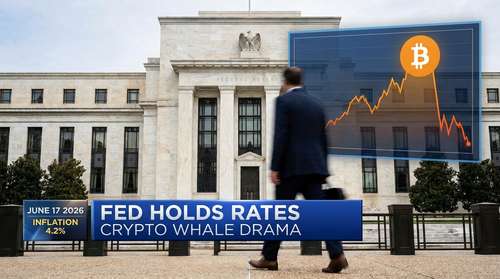

Bitcoin has plummeted toward the critical $70,000 support level, triggering a massive wave of forced selling that has wiped out over $2.56 billion in leveraged positions across the crypto market. The sell-off, which marks one of the most severe downturns of the Bitcoin price drop 2026 cycle, intensified sharply after US Treasury Secretary Scott Bessent explicitly ruled out government intervention to stabilize digital asset markets. As panic spreads, the Crypto Fear and Greed Index has crashed to a multi-year low of 12, signaling "Extreme Fear" among investors who are now grappling with the realization that the federal safety net does not extend to cryptocurrency.
The "No Bailout" Shock: Treasury Stands Firm
The catalyst for the latest leg down in the crypto market crash today was a tense congressional hearing on Wednesday, where Treasury Secretary Scott Bessent faced pointed questioning from lawmakers. In a fiery exchange with Representative Brad Sherman, a vocal crypto skeptic, Bessent was pressed on whether the Treasury would direct banks to purchase Bitcoin or use taxpayer funds to shore up the asset class during a collapse.
Bessent’s response was blunt and unequivocal: "I am Secretary of the Treasury, I do not have the authority to do that, and as chair of the Financial Stability Oversight Council, I do not have that authority." This explicit Scott Bessent crypto statement shattered the hopes of some institutional bulls who had speculated that the administration's "Strategic Bitcoin Reserve"—established by executive order in March 2025—might function as a buyer of last resort. Bessent clarified that while the US will retain its $15 billion stockpile of seized assets, it will not intervene in private markets to halt a price slide.
Billions Evaporate: Liquidation Data Explodes
The market's reaction to the Treasury's hands-off stance was immediate and violent. Bitcoin liquidations data reveals a cascade of forced closures, with long positions accounting for nearly 90% of the $2.56 billion wiped out in the last 48 hours. As Bitcoin pierced the $73,000 level, stop-losses were triggered in rapid succession, creating a feedback loop of selling that pushed prices perilously close to the psychological $70,000 barrier.
The carnage wasn't limited to Bitcoin. The broader market capitalization shrank by nearly $468 billion in a single day. While some capital rotated into defensive assets, the sheer scale of the leverage flush suggests that the "buy the dip" mentality that characterized 2025 has completely evaporated. Analysts note that this level of capitulation often precedes a bottom, but with the Crypto Fear and Greed Index sitting at 12, sentiment remains at its lowest ebb since the depths of the 2022 bear market.
Technical Peril: Will $70,000 Hold?
Technical analysts are now eyeing the $70,000 mark as the "line in the sand" for the bull market. A sustained break below this level could open the floodgates for a deeper correction toward $60,000, a level not seen since early 2025. The 200-week moving average, currently sitting near $58,000, serves as the ultimate backstop, but a drop to that zone would represent a catastrophic failure of the current market structure.
Compounding the bearish outlook is a developing "head and shoulders" pattern on the weekly chart, with a neckline just above current prices. If confirmed, this reversal pattern could signal a prolonged crypto winter. However, not all signals are bearish. In a surprising twist, Ethereum price 2026 forecast models have seen a slight uptick in relative strength, as some traders rotate capital into ETH ETFs, which recorded modest inflows even as Bitcoin products saw heavy outflows. This divergence suggests that smart money may be hedging rather than exiting the ecosystem entirely.
The Macro Storm: Fed Hawks and AI Jitters
The crypto rout is not happening in a vacuum. The Fed interest rate crypto impact has returned to the forefront following the nomination of Kevin Warsh as the next Federal Reserve Chair. Known for his hawkish stance on monetary policy, Warsh's potential confirmation has spiked bond yields and strengthened the dollar, creating a hostile environment for risk assets. Simultaneously, a sharp correction in the AI sector—triggered by fears of peaking investment returns—has dragged down tech stocks, spilling over into the high-beta crypto markets.
As the market braces for the weekly close, all eyes are on the $70,000 level. With the Treasury stepping back and the Fed likely to tighten, Bitcoin is facing its first true test of resilience in the post-ETF era. For now, "Extreme Fear" is the dominant narrative, and the days of easy money appear to be over.