
On March 30, 2026, United States Senators Cynthia Lummis (R-WY) and Bill Cassidy (R-LA) introduced landmark legislation poised to fundamentally reshape the global digital asset industry. Dubbed the Mined in America Act, this groundbreaking bill tackles a critical vulnerability in the national supply chain while formally establishing a permanent U.S. Strategic Bitcoin Reserve. By merging industrial manufacturing policy with digital asset management, lawmakers are pushing to position the United States as the undisputed global leader in cryptocurrency while eliminating a dangerous reliance on foreign technology.
The Core of US Bitcoin Legislation 2026: Securing the Supply Chain
For years, the United States has dominated the operational side of the global hash rate, currently controlling roughly 38% of the world's total Bitcoin mining power. However, a glaring blind spot has alarmed federal officials: approximately 97% of the specialized hardware powering this vast network is manufactured by companies tied to foreign adversaries, primarily located in China. The new Cynthia Lummis Bitcoin bill aims to rectify this massive imbalance by treating the production of mining equipment as a matter of Bitcoin mining national security.
To combat this supply chain vulnerability, the Mined in America Act directs the Department of Commerce to create a voluntary certification program for cryptocurrency mining facilities and data pools. Data centers that earn this specialized certification will be granted preferential access to lucrative federal energy and rural development programs. In exchange, these certified operators must commit to a phased transition away from mining rigs built by foreign entities like Bitmain and MicroBT, pivoting instead toward American-made alternatives by the end of the decade.
Incentivizing Onshore Crypto Mining
Building a domestic manufacturing base from scratch is no small feat, especially in an industry heavily reliant on advanced semiconductors. Recognizing this immense challenge, the legislation enlists the National Institute of Standards and Technology (NIST) alongside the Manufacturing Extension Partnership. These federal agencies will provide direct support to U.S. manufacturers, helping them develop secure, highly energy-efficient chips and mining rigs.
By fostering onshore crypto mining hardware production, the U.S. government hopes to bypass the shipping bottlenecks and customs seizures that have recently plagued the sector. This shift mirrors the sentiment behind the 2022 CHIPS and Science Act, applying similar logic to the decentralized finance ecosystem to create a robust, self-sufficient hardware pipeline.
Codifying the Sovereign Bitcoin Reserve
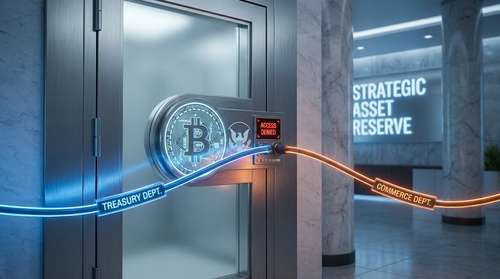
Beyond hardware and supply chains, the Mined in America Act serves a broader macroeconomic purpose. A central pillar of the legislation is the formal codification of President Donald Trump's March 2025 executive order, which initially established a U.S. Strategic Bitcoin Reserve within the Department of the Treasury. Lawmakers are now pushing to cement this policy into binding statutory law, ensuring that the federal government treats Bitcoin as a permanent strategic asset immune to shifting political winds.
Under the proposed framework, this sovereign Bitcoin reserve would not merely hold seized or forfeited digital assets. It actively creates a synergetic relationship between federal holdings and domestic industrial output. Facilities boasting the new federal certification could potentially supply newly minted coins directly to the government. This creates a secure and reliable pipeline to pad the national reserve while keeping the entire lifecycle of the digital asset—from the physical microchip to the final block reward—within U.S. borders.
Economic Implications for Blue-Collar America
Industry advocates have strongly backed the measure. Dennis Porter, CEO of the Satoshi Action Fund, which helped shape the legislation, emphasized that allowing foreign adversaries to control the hardware supply chain is a liability rather than a demonstration of leadership. This bill is designed to break that dependency by building a virtuous cycle of local manufacturing, grid-strengthening energy infrastructure, and an unshakeable national stockpile.
Furthermore, Senator Cassidy has heavily framed the Mined in America Act around domestic job creation and economic revitalization. As publicly traded mining companies increasingly pivot toward hosting artificial intelligence workloads, the demand for massive data centers and advanced energy infrastructure is skyrocketing. The integration of Bitcoin mining into existing rural development initiatives means that forgotten industrial towns could become the beating heart of America's digital financial future.
By transforming digital asset mining from a niche financial activity into a cornerstone of American industrial policy, lawmakers are sending a clear signal. The convergence of the Mined in America Act and the push for a national stockpile underscores a bipartisan recognition that Bitcoin is critical 21st-century infrastructure. If passed, this comprehensive legislation will not only secure the global hash rate but also guarantee that the future of decentralized finance is built, maintained, and protected entirely within the United States.