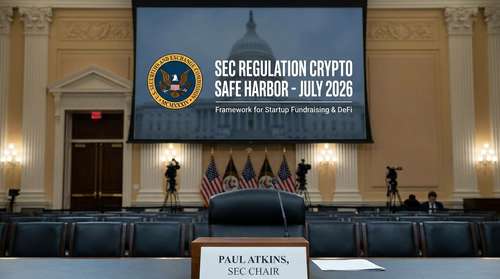
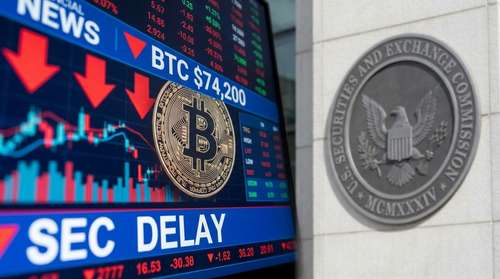
The cryptocurrency market faced a brutal reality check this week, with the Bitcoin price crash May 2026 erasing billions in value overnight. Bitcoin abruptly tumbled to a monthly low of roughly $74,200 following an unexpected regulatory roadblock from Washington. The U.S. Securities and Exchange Commission (SEC) officially postponed its highly anticipated proposal designed to allow crypto platforms to trade digital versions of traditional equities.
This setback triggered an aggressive market-wide sell-off. For traders relying on margin, the sudden downside volatility was catastrophic. Over $500 million in crypto market liquidations today hit leveraged futures across the industry within a 24-hour window, underscoring how deeply regulatory shifts still dictate digital asset momentum. The vast majority of these wipeouts affected long position holders who had bet heavily on a continued bullish trajectory fueled by favorable U.S. policy.
The Innovation Exemption SEC Delay Explained
For months, financial institutions and digital asset exchanges have eagerly anticipated the so-called innovation exemption SEC framework. Originally expected to be unveiled this week, the regulatory sandbox would have permitted on-chain trading of tokenized versions of publicly traded U.S. stocks. The core idea was to blend the liquidity, fractional ownership, and 24/7 trading capacity of blockchain technology with traditional equities like Apple or Nvidia.
However, the SEC's draft was suddenly stalled amid internal and external market structure concerns. Skeptics, including high-profile investors like Michael Burry, have voiced apprehension regarding the rapid push toward a fully digital, 24/7 market, pointing to potential risks surrounding volatility and manipulation. SEC Commissioner Hester Peirce recently sought to clarify the agency's stance, drawing a sharp regulatory distinction between digital representations of actual underlying securities and synthetic crypto instruments that merely track stock prices without proper backing. Regulators remain hesitant to greenlight frameworks that could inadvertently shift regulated equities into an unregulated environment without strict custodian guarantees.
If you were expecting immediate clarity on how traditional finance integrates with blockchain infrastructure, this SEC tokenized stocks delay serves as a stark reminder that Washington's regulatory wheels turn deliberately slowly.
Impact on Tokenized Real World Assets News
The postponement sends immediate shockwaves through the broader digital asset ecosystem, dominating tokenized real world assets news. The RWA sector has been one of the primary catalysts for institutional blockchain adoption throughout the year. In fact, open interest on decentralized platforms for RWA trading recently hit an all-time high of over $2.6 billion, driven by the intense demand for borderless, round-the-clock trading.
Companies preparing to launch their tokenized asset projects must now continue to wait, significantly pushing back original timelines for integrating stocks onto blockchain networks. Traditional asset management firms and crypto-native platforms alike are essentially stuck in regulatory limbo. The momentum required to finalize a compliant, cross-border tokenized equities market has hit a major wall. While other jurisdictions like the European Union advance their DLT Pilot Regimes, the U.S. hesitation forces domestic project developers to rethink their near-term launch strategies or look overseas for friendlier testing grounds.
Technical Outlook: Bitcoin Support Levels 75000 Broken
While the SEC delay technically centers on traditional equities, Bitcoin bore the brunt of the broader market's sudden panic. Traders had aggressively priced in the expectation of a more permissive U.S. regulatory environment. When the news of the delay broke, selling pressure immediately overwhelmed the bulls, crushing the highly watched Bitcoin support levels 75000.
Historically, the $75,000 threshold served as a robust psychological and technical floor during recent consolidations. Slipping to $74,200 exposes the market to further downside vulnerability. Market makers who were heavily positioned long found their stops triggered in rapid succession, resulting in the massive flush of leveraged positions that cascaded across major exchanges.
Analysts are now closely watching the $72,500 and $71,000 zones to see if buyers step back in to defend the trend. Until the regulatory dust settles, traders should expect heightened volatility as market participants reevaluate the short-term viability of an immediate crypto-friendly pivot in Washington.
What This Means for Crypto Regulatory News 2026
This week's events highlight a defining theme in crypto regulatory news 2026: the deep friction between rapid technological innovation and cautious bureaucratic oversight. The ambition to create a parallel, blockchain-based stock market is profound, but it requires a level of regulatory coordination that the SEC is clearly not yet ready to finalize.
The temporary pause on the innovation exemption does not mean the end of tokenized stocks in the United States. Rather, it indicates that the agency is determined to narrow the scope of the framework to ensure proper investor protection, transparency, and custody standards are enforced before the floodgates open. Until that comprehensive rulebook arrives, the crypto market will have to navigate the choppy waters of speculation, relying on core network fundamentals rather than imminent regulatory green lights to sustain upward price action.