
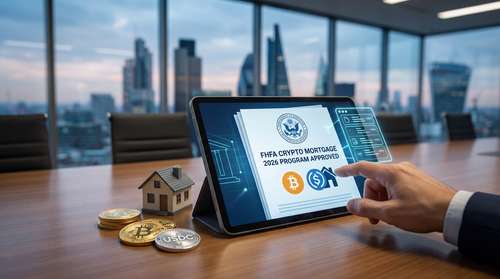
In a landmark shift for the American real estate sector, homebuyers can now officially leverage their digital wealth to secure traditional home loans. Moving from abstract policy to concrete market reality, the first major crypto mortgage 2026 offerings have arrived. Backed by the Federal Housing Finance Agency (FHFA), Fannie Mae has partnered with Better Home & Finance and Coinbase to allow buyers to pledge Bitcoin and USDC as collateral for down payments.
This development fundamentally alters the FHFA digital asset policy, transforming how lenders evaluate borrower reserves. For years, investors were forced to liquidate their portfolios into U.S. dollars to qualify for conventional financing. Now, an entirely new financial gateway has opened, seamlessly blending decentralized finance with government-backed lending.
How the Fannie Mae Crypto Assets Program Works
The mechanics of the new program move beyond the experimental pilot phases seen in previous years. Rather than directly issuing a single loan against the entire property using digital currency, the new framework utilizes a dual-loan structure. Borrowers secure a standard 15- or 30-year conventional mortgage through Better Home & Finance that adheres to standard agency underwriting guidelines.
Simultaneously, the buyer takes out a secondary loan to cover the down payment, which is entirely collateralized by their digital holdings held at Coinbase. The integration requires a seamless partnership between traditional originators and regulated custodians. Coinbase acts as the secure vault, ensuring the assets are properly documented and held securely throughout the life of the loan. By recognizing these Fannie Mae crypto assets as valid reserves, the government-sponsored enterprise (GSE) essentially treats digital currency with the same legitimacy as conventional fiat deposits.
Currently, the eligible assets are restricted to major, highly liquid coins like Bitcoin and the dollar-pegged stablecoin USDC. Once the digital funds are pledged, they cannot be traded, effectively locking them as a guarantee against the down payment loan. Notably, there are no immediate margin calls if the price of Bitcoin drops, but borrowers who miss their monthly payments for two consecutive months risk having their collateral liquidated.
The Appeal of Cryptocurrency Mortgage Collateral
The massive demand for digital asset home loans is deeply rooted in Internal Revenue Service (IRS) regulations. Historically, anyone looking to buy a home with bitcoin had to sell their digital property for cash. Because the IRS treats virtual currencies as property, selling them triggers a significant capital gains tax event.
By shifting to cryptocurrency mortgage collateral, buyers completely sidestep this taxable event. They retain ownership of their coins, meaning they can still profit from any future price appreciation while successfully closing on a physical property. Data highlights the severe need for this alternative. According to a recent Redfin survey, nearly 13% of Millennial and Gen Z buyers had previously liquidated their digital holdings to fund down payments. The new financing model preserves their long-term investment strategies while unlocking homeownership.
Understanding the Premium Costs
While preserving investment upside is highly attractive, these novel mortgage products come with specific financial tradeoffs. Managing two simultaneous loans—the primary conventional mortgage and the collateralized down payment loan—increases the overall cost of borrowing. Industry reports indicate that the combined interest rates for this specialized financing can run up to 1.5 percentage points higher than a standard agency mortgage backed by a traditional cash down payment. Buyers must weigh the immediate tax savings of holding their assets against these higher monthly servicing costs.
The Evolution of FHFA Digital Asset Policy
This market breakthrough did not happen overnight. The foundation was laid in June 2025 when FHFA Director William J. Pulte issued a sweeping directive ordering Fannie Mae and Freddie Mac to draft underwriting proposals that recognized digital currencies without mandating their conversion to dollars. The mandate aligned with the Trump administration's broader push to establish the United States as a global hub for the digital asset industry.
Following Pulte's initial directive, major non-bank lenders began preparing for the shift. Mortgage giant Newrez recently announced its own programs to evaluate digital reserves for mortgage qualifications, illustrating a rapid modernization of credit assessment. Before this federal push, crypto real estate lending was largely confined to niche fintech operators. Companies like Milo introduced alternative home financing in 2022, though they primarily targeted foreign nationals or specialized high-net-worth buyers who didn't fit standard credit profiles. Fannie Mae's direct involvement brings immediate standardization and massive liquidity to the space.
What This Means for the Future of Real Estate
As approximately 14% of American adults now hold some form of digital currency, according to Gallup data, the intersection of blockchain wealth and real estate was inevitable. The entry of a government-backed enterprise into this sector validates the long-term viability of decentralized finance in everyday consumer transactions.
While the initial rollout is heavily structured to protect taxpayer-backed entities from severe market volatility, the successful execution of these loans could prompt further expansion. If default rates remain low, the market could soon see Freddie Mac unveil competing products, potentially driving down interest rate premiums and making tokenized wealth a standard pillar of American housing finance.