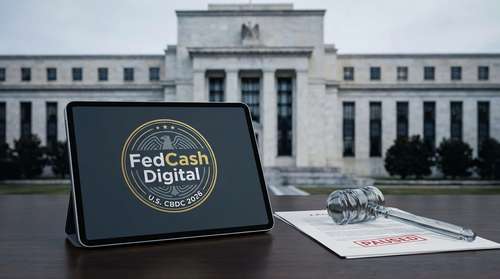
Speculation has reached a fever pitch across the financial sector regarding the highly anticipated U.S. CBDC launch 2026. Over the past several days, vibrant discussions have centered around the idea that the Federal Reserve has initiated a live retail pilot for FedCash Digital—a proposed sovereign digital currency designed to facilitate instant consumer transactions and programmable payments. Proponents of this concept envisioned it as the most significant evolution of the U.S. monetary system since the end of the gold standard, promising unprecedented efficiency in everyday commerce. However, a comprehensive analysis of verified, up-to-date legislative and institutional developments reveals a starkly different reality for the Federal Reserve digital dollar.
Rather than officially ushering in the era of a retail digital currency, American lawmakers and central bank officials have decisively hit the brakes. During the final weeks of March 2026, landmark legislative actions and definitive official statements have fundamentally reshaped the trajectory of American finance. These events have definitively paused any immediate plans for a centralized digital currency, steering the nation toward alternative methods of financial modernization.
The Reality of the U.S. CBDC Launch 2026
While rumors of a "FedCash Digital" pilot captured the imagination of crypto enthusiasts and financial analysts, the United States Senate took concrete, bipartisan steps to prevent the implementation of such a system. On March 16, 2026, the Senate overwhelmingly passed legislation that strictly prohibits the Federal Reserve from developing, testing, or issuing a central bank digital currency until at least the year 2030.
This critical restriction was passed in a decisive 89-10 vote as an embedded provision within the broader 21st Century ROAD to Housing Act. Lawmakers from across the political spectrum united over profound concerns regarding financial privacy, potential government overreach, and the extensive surveillance risks inherently associated with a programmable sovereign digital currency. By directly tying this anti-CBDC prohibition to a major, must-pass economic reform package, Congress effectively guaranteed that no retail digital dollar pilot will see the light of day in the near future. This reflects a growing unease in Washington about rushing into uncharted technological territories without exhaustive oversight.
Federal Reserve Confirms No Digital Dollar Plans
In tandem with the Senate's legislative blockade, the central bank itself has proactively clarified its institutional position on a U.S. CBDC launch 2026. On March 27, 2026, Federal Reserve legal official Brett Guynn publicly confirmed that the institution currently possesses no active plans to pursue or develop a CBDC. This explicit confirmation perfectly aligns with ongoing assertions from Federal Reserve Chair Jerome Powell, who has consistently maintained that the central bank would never issue a retail digital currency under his leadership without explicit, dedicated congressional authorization.
Instead of pursuing a Federal Reserve digital dollar, the central bank continues to rely heavily on modernizing its existing infrastructure. Solutions like the FedNow service—which provides instant, around-the-clock clearing and settlement for financial institutions—offer many of the speed and efficiency benefits of a digital currency without introducing a controversial new central bank liability directly to consumers.
FedCash vs Bitcoin and Decentralized Assets
The ongoing industry debate surrounding FedCash vs Bitcoin highlights a fundamental philosophical divide regarding the future of digital payments. A theoretical retail central bank digital currency would be directly issued and controlled by the government, inherently creating a centralized ledger of all consumer transactions. In stark contrast, Bitcoin and other decentralized cryptocurrencies operate on permissionless, distributed blockchain networks, offering varying degrees of anonymity and functioning entirely outside of direct state control.
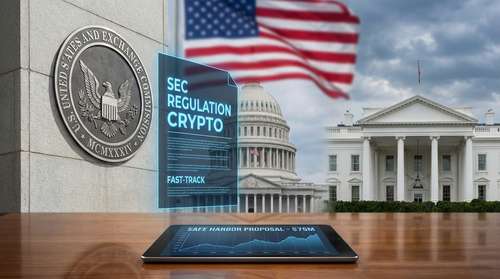
Critics of CBDCs forcefully argue that a government-controlled digital dollar could lead to an unprecedented erosion of financial privacy, allowing authorities excessive control over individual spending habits. This core concern is precisely why the United States has deliberately chosen a divergent path, favoring private-sector innovation operating under strict cryptocurrency regulation rather than establishing a state-run monopoly on digital cash.
The Future of Digital Payments and Cryptocurrency Regulation
If the United States is officially rejecting a FedCash Digital system, how is the nation adapting to the hyper-competitive global digital economy? The answer lies in the robust, comprehensive regulatory frameworks established over the past twelve months. Following the passage of the landmark GENIUS Act (Guiding and Establishing National Innovation for U.S. Stablecoins) in 2025, the U.S. has successfully positioned itself as a premier global hub for regulated digital assets.
As we navigate the end of March 2026, regulatory focus has entirely shifted toward enforcing these new stablecoin guidelines. Issuers are currently subject to stringent first-quarter requirements, which include mandatory full-reserve backing and regular independent audits to ensure consumer protection. This pragmatic approach allows the United States economy to enjoy the tangible benefits of digital currencies—such as programmable payments, enhanced financial inclusion, and instant cross-border transfers—without forcing citizens to accept the privacy trade-offs inherent in a centralized CBDC.
While other major global jurisdictions, including the European Union and China, are aggressively pursuing and deploying their own central bank digital currencies, the U.S. strategy has officially crystallized. The future of digital payments in America will be driven by heavily regulated, privately issued stablecoins and modernized bank payment rails. For the foreseeable future, the much-debated era of an American sovereign digital currency remains firmly on hold.