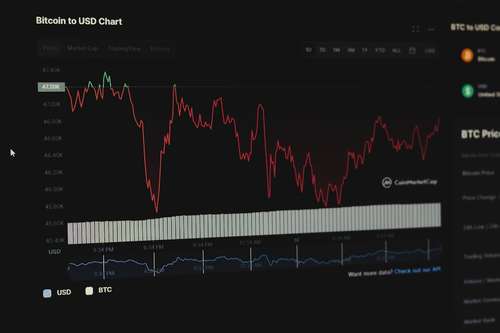
Bitcoin (BTC) has entered a critical consolidation phase, trading precariously near the $78,000 mark after testing major support at $75,000 earlier this week. The flagship cryptocurrency is currently navigating a sharp 35% correction from its late-2025 all-time high of $126,000, a move that has shaken investor confidence and triggered a massive leverage washout. Data from CoinGlass reveals that over $2.5 billion in trading positions were liquidated in the last 48 hours alone, as a wave of "risk-off" sentiment swept through global financial markets.
The 'Warsh Shock': Macro Forces Hammer Crypto and Equities
The primary catalyst for the sudden market downturn appears to be the aggressive shift in macroeconomic sentiment following President Trump's nomination of Kevin Warsh as the next Federal Reserve Chair. Known for his hawkish stance on monetary policy, Warsh's nomination sent shockwaves through Wall Street, signaling that the era of loose money might be coming to an abrupt end to combat persistent inflation.
This "Warsh Shock" triggered an immediate sell-off in high-growth assets. Equities took a hit, with the tech-heavy Nasdaq stumbling after disappointing earnings from AI bellwether Microsoft (MSFT), which cited ballooning infrastructure costs. Bitcoin, often correlated with global liquidity conditions, was not spared. The drop to $75,000 marks its lowest level since April 2025, wiping out months of gains and forcing over 190,000 traders out of their leveraged positions.
MicroStrategy (Strategy) Buys the Dip Despite Paper Losses
Amid the sea of red, one institutional giant continues to accumulate. Strategy (formerly known as MicroStrategy) announced on Monday that it had purchased an additional 855 Bitcoin for approximately $75.3 million. The purchase was executed at an average price of roughly $87,974 per coin, meaning the firm is currently sitting on unrealized losses for this specific tranche.
Despite the short-term pain, Executive Chairman Michael Saylor remains undeterred. This latest acquisition brings Strategy's total holdings to a staggering 713,502 BTC, acquired at a total cost of roughly $54.26 billion. With an average cost basis of $76,052 per Bitcoin, the company's massive treasury is perilously close to its breakeven point. Market analysts are watching closely; a sustained drop below $75,000 could place the world's largest corporate Bitcoin holder underwater, potentially triggering further algorithmic selling pressure.
Tom Lee: "The Bottom is In" at $77,000
While fear dominates the current sentiment, Fundstrat's Tom Lee is doubling down on his bullish outlook. In a note to clients on Tuesday, Lee argued that the Bitcoin price correction of 2026 has likely run its course. He identifies the $77,000 level as a "fundamental bottom," driven by valuation models that suggest Bitcoin is now oversold relative to the broader M2 money supply.
The Great Rotation: From Gold to Crypto?
Lee points to an interesting divergence: while precious metals also slumped on the Fed news, he predicts a capital rotation is imminent. "We are seeing the exhaustion of the gold trade," Lee stated on CNBC. "As the 'Warsh risk' gets priced in, we expect institutional capital to rotate back into high-beta assets like Bitcoin, which has historically front-run monetary policy shifts." He maintains that the BTC support level at $75k is robust and expects a rebound toward $90,000 by late Q1 2026.
Liquidations and the Path Forward
The scale of the recent crypto market liquidations cannot be overstated. With $2.5 billion wiped out, the derivatives market has been significantly reset. Funding rates have turned negative for the first time in months, indicating that short sellers are now paying longs—a classic contrarian signal that often precedes a "short squeeze" rally.
However, risks remain. If the $75,000 support fails to hold, technical analysts warn of a potential slide toward the $68,000 - $70,000 range. For now, all eyes are on the Federal Reserve's upcoming comments and whether the "buy the dip" demand from institutions like Strategy can absorb the panic selling from retail traders.